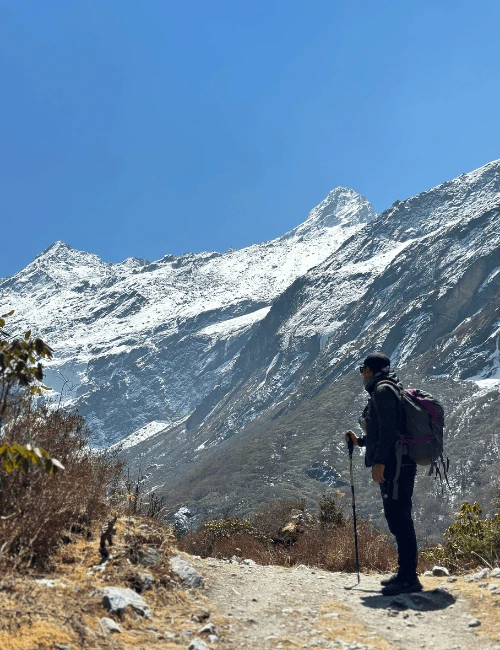
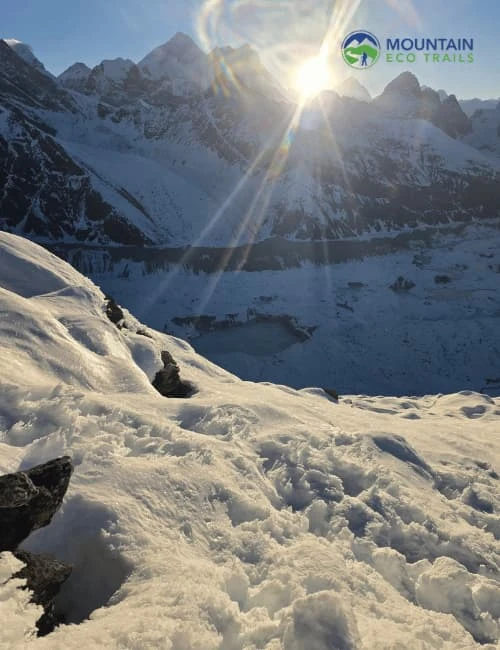
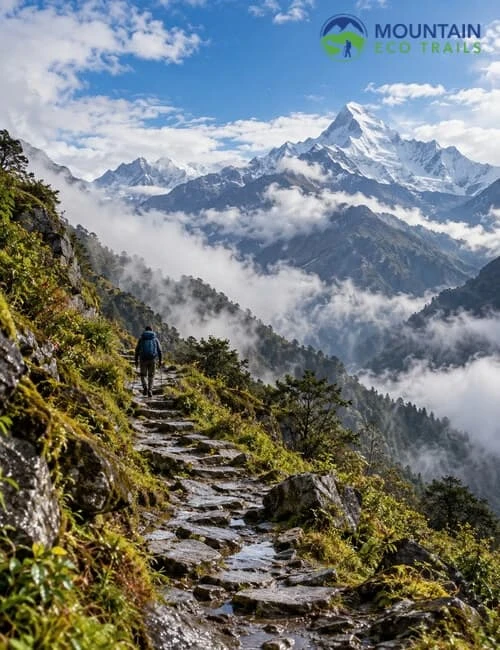
The Annapurna Base Camp Trek Difficulty is moderate, but the trail still demands strong stamina, steady legs, and altitude awareness. Trekkers walk 5–7 hours daily, climb steep stone steps, and reach 4,130 meters at Annapurna Base Camp. This guide explains the ABC trek difficulty level, daily challenges, altitude sickness risk, fitness requirements, comparison with Everest Base Camp, and practical tips for seasoned trekkers planning a safe and rewarding Himalayan journey.
Key Factos of ABC Trek Difficulty
How Hard Is the ABC Trek Really?
The Annapurna Base Camp (ABC) trek is rated moderate to challenging. It reaches 4,130m (13,549 ft) and covers 110–120 km over 7–12 days. Most healthy adults with basic hiking experience can complete it. The main challenges are altitude gain, long daily walks (5–8 hours), steep stone steps, and variable weather. Acclimatisation, good fitness, and the right season make a significant difference in overall difficulty.
Introduction: Why ABC Trek Feels Easier on Paper Than on the Trail
Many trekkers see the Annapurna Base Camp altitude of 4,130 meters and assume the trek is easier than Everest Base Camp or the Annapurna Circuit. In some ways, it is. It is shorter, lower, and more accessible from Pokhara. But the trail has its own personality. The ABC trek difficulty comes from steep stone steps, humid lower valleys, cold upper sections, long walking days, and constant elevation changes. One day, you are walking through bamboo forests; the next, you are climbing toward Machhapuchhre Base Camp with thinner air and colder wind.
For seasoned trekkers, the Annapurna Base Camp trek is not extreme. It is a compact Himalayan challenge that rewards strong legs, smart pacing, and respect for altitude. However, if you are first-time trekkers, the Annapurna Base Camp Trek difficulty can be challenging as well.
Is Annapurna Base Camp Trek Difficult?
Yes, the Annapurna Base Camp Trek is moderately difficult. It is suitable for fit trekkers with hiking experience, but it can be challenging because of daily walking hours, steep stone staircases, altitude gain up to 4,130 meters, and unpredictable mountain weather. No technical climbing is required.
Difficulty rating: Moderate
Maximum altitude: 4,130 meters
Daily walking hours: 5–7 hours
Best for: Fit beginners to seasoned trekkers
Main challenge: Stairs, endurance, altitude, and weather
The Annapurna Base Camp Trek is a moderate Himalayan trek that reaches 4,130 meters. It is not technical, but trekkers need good fitness for long walking days, steep stone steps, and repeated uphill and downhill sections. Altitude sickness is possible but less common than on higher treks when the itinerary is well-paced.
Annapurna Base Camp Trek Difficulty Level Explained
The Annapurna Base Camp trek difficulty level sits between easy cultural treks and high-altitude expedition-style routes. It is harder than the famous Poon Hill and Mardi Himal for most trekkers, but usually easier than Everest Base Camp or Annapurna Circuit.
| Factor | Details |
|---|---|
| Maximum Altitude | 4,130 m (13,549 ft) |
| Total Distance | 110–120 km (round trip) |
| Daily Walking Hours | 5–8 hours |
| Trek Duration | 7–12 days |
| Highest Risk | Altitude sickness (AMS) |
| Terrain Type | Jungle trails, stone steps, moraine paths |
| Difficulty Rating | Moderate to Strenuous (6/10) |
What Makes the ABC Trek Challenging?
The Annapurna Base Camp hike difficulty comes from a mix of terrain, altitude, and trail rhythm. Unlike some treks where you gradually move upward, the ABC route often climbs and drops repeatedly.
Main Difficulty Factors of this Annapurna Base Camp Trek are:
- Long stone staircases, especially around Chhomrong and Jhinu Danda
- Repeated uphill and downhill sections
- Daily walking of 5–7 hours
- Cold temperatures near Deurali, MBC, and ABC
- Altitude gain above 3,000 meters
- Basic teahouse comfort in higher sections
- Slippery trails during rain or snow
- Knee strain during descents
The stone steps are often underestimated. Many trekkers say the descent feels harder than the climb because the knees take continuous pressure.
ABC Trek Difficulty by Day: Easy, Moderate, and Hard Sections
The Annapurna Base Camp trek difficulty by day depends on your itinerary. A shorter route feels harder because you cover more distance and elevation in fewer days.
Trek Section | Difficulty | Why It Feels This Way |
Pokhara to lower trailhead | Easy | Drive and short warm-up walk |
Ghandruk / Jhinu to Chhomrong | Moderate | Stone steps and village climbs |
Chhomrong to Bamboo | Moderate | Long descent and forest trail |
Bamboo to Deurali | Moderate to hard | Continuous uphill sections |
Deurali to MBC to ABC | Hard | Altitude, cold air, and final climb |
ABC to Bamboo | Moderate to hard | Long descent, knee pressure |
Bamboo to Jhinu / road access | Moderate | More steps and tired legs |
Hardest Day of the ABC Trek
The hardest day is usually the walk from Deurali to Machhapuchhre Base Camp and Annapurna Base Camp. The trail reaches a higher altitude, temperatures drop, and the body starts feeling the effect of thinner air.
Altitude Difficulty: Is 4,130m High Enough to cause AMS?
Yes, Annapurna Base Camp altitude sickness is possible because the trek reaches 4,130 meters. The risk is lower than at Everest Base Camp, but it should not be ignored.
Most trekkers feel mild symptoms such as headache, reduced appetite, light fatigue, or poor sleep when they reach higher villages. Serious altitude sickness is less common when the itinerary is gradual and trekkers stay hydrated.
How to Reduce Altitude Risk
- Walk slowly above 3,000 meters
- Drink enough water
- Avoid alcohol during the trek
- Eat warm meals even when appetite drops
- Do not rush from Bamboo to ABC in one push
- Tell your guide immediately if symptoms worsen
Altitude is not the only difficulty on ABC, but it is the one you should respect most.
Altitude on ABC Trek
Annapurna Base Camp sits at 4,130 meters, so altitude sickness is possible. The risk is moderate and usually manageable with slow pacing, hydration, warm meals, and a sensible itinerary. Trekkers should avoid rushing and should report headaches, nausea, dizziness, or unusual fatigue to their guide.
Fitness Level Required for Annapurna Base Camp Trek
The Annapurna Base Camp trek fitness level should be good enough for multi-day hiking. You do not need to be an athlete, but you should be comfortable walking uphill and downhill for several hours.
Check out: Preparation for the ABC Trek for more details
ABC Trek Difficulty With Porter vs Without Porter
Carrying your own backpack makes the ABC trek harder. A full pack adds pressure on your knees, shoulders, and energy levels, especially during stair sections.
| Factor | With Porter | Without Porter |
|---|---|---|
| Pack Weight | 3–5 kg daypack | 12–18 kg full pack |
| Daily Fatigue | Moderate | High–Very High |
| AMS Risk | Lower (less exertion) | Slightly higher |
| Knee Stress | Low | High (descents) |
| Recommended for | Everyone | Very fit ultralight trekkers |
A porter does not make the trail easy, but it helps you walk with better balance and less fatigue. For seasoned trekkers, this can mean more energy for photography, side exploration, and enjoying the sanctuary views. Likewise, for beginners, hiring a porter can be more than handy. Beginners can feel more at ease carrying only a backpack rather than carrying 12-18 kg of bag.
7-Day vs 10-Day Annapurna Base Camp Trek Difficulty
A 7-day ABC trek is noticeably harder than a 10-day itinerary. The trail is similar, but the pace changes everything.
Itinerary | Difficulty | Best For |
7 Days | Harder | Fit and experienced trekkers with limited time |
8 Days | Moderate to hard | Strong hikers who can handle a steady pace |
10 Days | Moderate | Better acclimatisation and recovery |
12+ Days | Easier | Trekkers who want Poon Hill or a slower pace |
Check out:
Annapurna Base Camp vs Everest Base Camp Difficulty
The Annapurna Base Camp vs Everest Base Camp difficulty comparison is one of the most common questions among trekkers.
Factor | ||
Max altitude | 4,130m | 5,364m |
Typical duration | 7–12 days | 12–15 days |
Altitude risk | Moderate | Higher |
Trail difficulty | Moderate | Moderate to hard |
Technical climbing | No | No |
Main challenge | Stairs and steep sections | Altitude and long duration |
Overall difficulty | Easier than EBC | Harder than ABC |
Everest Base Camp is usually harder because it is higher and longer. However, ABC can feel more intense in the legs because of the stone staircases and repeated climbs.
Also Check: How Hard is the Everest Base Camp Trek
Annapurna Base Camp vs Annapurna Circuit Difficulty
Annapurna Circuit is generally harder than Annapurna Base Camp because it crosses Thorong La Pass at 5,416 meters. That is much higher than ABC.
ABC is shorter and more direct. Annapurna Circuit demands more acclimatisation, longer travel time, and stronger high-altitude endurance.
Choose ABC if you want a shorter but scenic sanctuary trek. Choose the Annapurna Circuit if you want a longer journey with a high mountain pass.
Best Season to Reduce ABC Trek Difficulty
The best seasons for reducing ABC trek difficulty are spring and autumn.
Best Months
- March
- April
- May
- September
- October
- November
Spring brings rhododendron forests and warmer temperatures. Autumn brings clearer skies and stable mountain views. Winter is quieter but colder, with possible snow near Deurali, MBC, and ABC. Monsoon makes the lower trail wet, slippery, and humid.
Whether you are an experienced trekker or a beginner, October and November are the best months for stable conditions and strong mountain visibility.
Who Should and Should Not Do the ABC Trek?
ABC Trek Is Good For
- Seasoned trekkers looking for a short Himalayan challenge
- Fit travellers with limited time in Nepal
- Hikers who want big mountain views without technical climbing
- Trekkers who can manage stone stairs and long descents
- Travellers who want a guided trek from Pokhara
ABC Trek May Not Be Ideal For
- Trekkers with serious knee problems
- People who cannot walk 5–7 hours per day
- Travellers who want luxury comfort every night
- Anyone trying to rush the trek without acclimatisation
- Trekkers who ignore altitude symptoms
The ABC trek is not dangerous when planned well, but it becomes risky when trekkers rush, underestimate the weather, or ignore their bodies.
FAQs About Annapurna Base Camp Trek Difficulty
1. How hard is the Annapurna Base Camp trek?
The Annapurna Base Camp trek is moderately difficult. It does not need climbing skills, but it requires good stamina for 5–7 hours of daily walking, steep stone stairs, forest trails, altitude gain, and changing weather. Fit trekkers usually complete it comfortably with proper pacing.
2. What is the Annapurna Base Camp trek distance?
The Annapurna Base Camp trek distance is usually around 70–95 km, depending on the starting point, ending point, road access, and whether side routes like Ghandruk or Poon Hill are included. Shorter itineraries feel harder because the same elevation is covered faster.
3. Is Annapurna Base Camp difficult for seasoned trekkers?
For seasoned trekkers, ABC is manageable but still physically satisfying. It is not technically hard, but the stone steps, long descents, cold upper sections, and repeated elevation changes make it more demanding than a simple moderate hike.
4. Can I get altitude sickness on Annapurna Base Camp Trek?
Yes, altitude sickness can happen because Annapurna Base Camp reaches 4,130 meters. The risk is moderate and lower than higher treks, but trekkers should still walk slowly, drink water, eat well, and avoid rushing from lower villages to base camp.
5. How many hours do you walk daily on the ABC trek?
Most trekkers walk 5–7 hours per day on the Annapurna Base Camp trek. Some days are shorter, while the climb toward Deurali, Machhapuchhre Base Camp, and Annapurna Base Camp can feel longer because of altitude and colder conditions.
6. Is Annapurna Base Camp harder than Everest Base Camp?
Annapurna Base Camp is generally easier than Everest Base Camp because it is shorter and reaches a lower altitude. Everest Base Camp goes above 5,300 meters, while ABC reaches 4,130 meters. However, ABC has many stone stairs that can be tough on the knees.
7. What is the hardest day of the Annapurna Base Camp Trek?
The hardest day is often the walk from Deurali to Machhapuchhre Base Camp and then Annapurna Base Camp. This section feels tougher because the altitude increases, temperatures drop, and trekkers are already tired from previous walking days.
8. How fit do I need to be for the ABC trek?
im to hike 5–6 hours comfortably, including steep uphill sections. Regular cardio fitness and leg strength are the most important factors. Being able to manage a 15 km day hike with a 5–7 kg pack is a good benchmark for readiness.
Final Verdict: Is ABC Trek Worth It despite its difficulty?
Yes, the Annapurna Base Camp Trek is absolutely worth it. It may not be the hardest trek in Nepal, but it offers one of the most complete Himalayan experiences in a shorter timeframe.
You walk from warm villages to deep forests, climb through the Modi Khola valley, pass Deurali and Machhapuchhre Base Camp, and finally enter the dramatic Annapurna Sanctuary. The final view from ABC feels huge, close, and emotional.
The real answer to how hard the Annapurna Base Camp trek is this: it is not extreme, but it deserves respect. With good fitness, smart pacing, and the right itinerary, ABC becomes a powerful and memorable Himalayan trek.
Plan Your ABC Trek With the Right Pace
If you are unsure whether to choose a 7-day, 8-day, or 10-day Annapurna Base Camp itinerary, the best choice depends on your fitness, travel dates, and altitude experience.
Mountain Eco Trails can help you choose a balanced ABC route with permits, guide, accommodation, meals, and safe pacing included. A good itinerary does not just take you to base camp; it helps you enjoy the journey without burning out.
Contact us via email or WhatsApp us at +9779849790153.

Anil Lamsal
Call us on WhatsApp+977 9849790153OrChat with us