

Short Mardi Himal Trek - 5 Days

The Short Mardi Himal Trek is a five-day guided route from Pokhara to Mardi Himal Base Camp at approximately 4,500 meters. Designed for fit, time-limited hikers, the trek climbs from Kande through Forest Camp and High Camp before descending via Badal Danda and Siding. Expect approximately 40–45 kilometres of walking, steep elevation changes and close views of Machhapuchhre, Annapurna South and Hiunchuli. Private packages start from USD 499 and include permits, meals, teahouse accommodation, licensed guide service and specified Pokhara transfers.

  • DestinationNepal
  • Duration5 Days
  • Difficulty Level Moderate
  • Max. Altitude4500 meters
  • Starts/EndsKande/Siding
  • Trip StyleTrekking
  • Group SizeMin 1 Pax.
  • Best SeasonSpring and Autumn

The Short Mardi Himal Trek is a five-day guided trek from Pokhara to Mardi Himal Base Camp at 4,500 meters. The point-to-point route begins at Kande, climbs through Forest Camp and High Camp, and descends through Badal Danda to Siding. Covering approximately 40–45 kilometres, this compact itinerary is best for fit hikers comfortable with steep ascents, exposed ridges and consecutive trekking days.

Mountain Eco Trails offers private departures from USD 499 per person, including permits, meals, teahouse accommodation, a licensed guide and ground transportation.

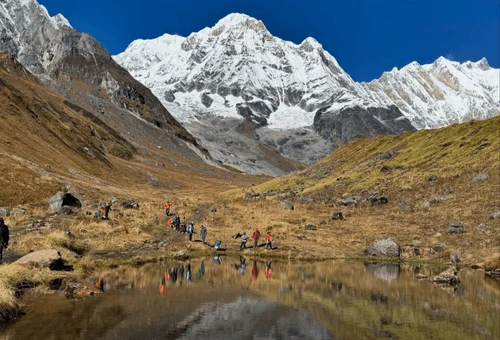
Mardi Himal is close to Pokhara, but the mountain experience feels far removed from city life. Within a few days, the trail rises from subtropical forest to a narrow alpine ridge below Machhapuchhre, Annapurna South and Mardi Himal.

The challenge is fitting that elevation into a short schedule without turning the trek into a race. This 5 Day Mardi Himal Trek is designed for seasoned trekkers and fit travellers who want to begin in Pokhara, reach the high viewpoint or Base Camp, and return without adding unnecessary days in Kathmandu.

It is compact, scenic and demanding enough to feel earned—not an “easy trek for everyone.”

Short Mardi Himal Trek at a Glance

Trek factDetails
Duration5 days from Pokhara
Trekking days4 walking days plus return transfer
Starting pointKande, about a one-hour drive from Pokhara
Ending pointSiding, followed by a jeep transfer to Pokhara
Highest pointMardi Himal Base Camp, approximately 4,500m
Highest overnight stayHigh Camp, approximately 3,580m
Estimated distanceApproximately 40–45km, depending on lodge and road access
DifficultyModerate to challenging on a compact itinerary
Daily walkingApproximately 5–8 hours
Accommodation mountain teahouses
Meals on trekBreakfast, lunch and dinner
Best seasonsMarch–May and late September–November
PermitsACAP and TIMS
GuideLicensed trekking guide required under the revised TIMS provision
Published priceFrom USD 499 per person
Trek stylePrivate or small-group guided trek
Best forFit, time-limited hikers starting from Pokhara

Check your preferred date: Mountain Eco Trails offers flexible private departures rather than making you wait for a large fixed group.

Short Mardi Himal Trek Highlights

  • Begin with a private transfer from Pokhara to Kande.
  • Walk from subtropical forest to open alpine terrain in two trekking days.
  • Follow the ridge above Badal Danda with Machhapuchhre directly ahead.
  • Sleep at High Camp beneath the Annapurna skyline.
  • Attempt Mardi Himal Base Camp at approximately 4,500 meters.
  • See Machhapuchhre, Mardi Himal, Annapurna South and Hiunchuli from close range.
  • Descend through a different trail to Siding instead of retracing the entire route.
  • Stay in locally operated teahouses within the Annapurna Conservation Area.
  • Complete the principal trail experience without adding Kathmandu travel days.
  • Trek privately with a licensed guide and a schedule adapted to your pace.

Short Mardi Himal Trek Route at a Glance

The Short Mardi Himal Trek is a point-to-point route, not a round trip. It begins at Kande, climbs through Forest Camp and High Camp, reaches the Mardi Himal ridge, and descends through Badal Danda to Siding. A road transfer then returns trekkers to Pokhara.

Route sequence:

Pokhara → Kande → Australian Camp → Pitam Deurali → Forest Camp → Low Camp → Badal Danda → High Camp → Upper Viewpoint → Mardi Himal Base Camp → Badal Danda → Siding → Pokhara

The trekking distance is approximately 40–45 kilometres. The final GPS distance varies according to the selected lodge, trail conditions, whether the group reaches the Upper Viewpoint or Base Camp, and where the jeep can collect trekkers near Siding.

Starting and ending points

Kande, at approximately 1,770 meters, is the standard trailhead. It is accessible by road from Pokhara and allows the group to begin walking the same morning.

Siding, at approximately 1,700 meters, is the exit point. Descending through Siding creates a more interesting point-to-point journey and avoids repeating the full ridge trail.

Mardi Himal Base Camp versus Upper Viewpoint

The Upper Viewpoint and Mardi Himal Base Camp are not in the same location.

The Upper Viewpoint is generally placed around 4,200 meters, while Mardi Himal Base Camp is commonly described as approximately 4,500 meters. Snow, strong wind, poor visibility, trail condition and group health may make the Upper Viewpoint the safer turnaround point.

Mountain Eco Trails’ standard itinerary targets Base Camp when conditions allow. The guide makes the final decision based on safety—not on pressure to reach a label on the map.

Check our Mardi Himal Trek Route Map in Detail. 

Short Mardi Himal Trek 5-Day Itinerary Facts

Completing the Mardi Himal Trek in 5 days might sound ambitious, but it’s a well-paced itinerary that maximises your experience. Most trekkers either start or end in Pokhara, Nepal’s lakeside city, gateway to the Annapurnas. Here’s a quick look at how a 5-day Mardi Himal Trek unfolds:

DayRouteApprox. distanceElevation profileWalking time
1Pokhara–Kande–Forest Camp12–14km1,770m to 2,500m5–6 hours
2Forest Camp–High Camp8–10km2,500m to 3,580m5–7 hours
3High Camp–Base Camp–Badal Danda12–14km3,580m–4,500m–3,210m7–8 hours
4Badal Danda–Siding7–9km3,210m to 1,700m5–6 hours
5Siding–PokharaShort walk if required1,700m to approximately 822m2–3-hour drive

Despite being just 5 days, this itinerary touches all the highlights: panoramic mountain views at sunrise, varied terrains each day, and a taste of local mountain culture. It’s important to note that trek itineraries can be flexible. If you’re extremely fit or short on time, the trek can be squeezed into 4 days. Alternatively, if you prefer a slower pace or additional side trips, you could extend it to 6-7 days.

Mountain Eco Trails specialises in crafting the perfect route for your needs, ensuring you get the most out of your 5-day adventure. Now, let’s break down the itinerary day by day to see what each day has in store.

How Difficult Is the Short Mardi Himal Trek?

The Short Mardi Himal Trek is moderate to challenging because it reaches approximately 4,500 meters in a compact schedule. No ropes, crampons or mountaineering skills are normally required, but trekkers face steep forest climbs, an exposed ridge, a summit-day ascent of about 920 meters and a long descent. It is best for fit hikers with previous multi-day walking experience.

The word “short” describes duration, not effort. Four concentrated trekking days make this itinerary more demanding than a relaxed seven- or nine-day program.

Daily ascent and descent

Day 2 includes an approximate 1,080-meter net ascent from Forest Camp to High Camp. Day 3 then climbs about 920 meters toward Base Camp before descending roughly 1,290 meters to Badal Danda.

Day 4 adds another long descent toward Siding. Strong cardiovascular fitness helps, but muscular endurance and stable downhill movement matter just as much.

Altitude considerations

The highest sleeping point is High Camp at approximately 3,580 meters, while the route reaches around 4,500 meters during the Base Camp attempt.

Altitude can affect fit and experienced trekkers. Headache, unusual fatigue, nausea, dizziness or poor coordination must be reported to the guide. The appropriate response may include stopping the ascent or descending; reaching Base Camp never takes priority over health.

This itinerary has limited acclimatisation time. Travellers arriving directly from sea level should spend time in Nepal—and ideally at least a night in Pokhara—before beginning.

Recommended previous experience

You should be able to:

  • walk six to eight hours on consecutive days;
  • climb 800–1,000 vertical meters without exhausting yourself;
  • descend steep trails with control;
  • carry a 5–8kg daypack;
  • remain comfortable in cold, wind and changing visibility;
  • Follow guide decisions when conditions require a turnaround.

A regular hiking routine, hill walking, and stair training in the weeks before departure are more useful than relying solely on gym-based fitness.

Short Mardi Himal Trek 5-Day Cost 2026,2027

The Short Mardi Himal Trek cost for 2026 starts at USD 499 for one private traveller. The price is USD 449 per person for two to three trekkers and USD 420 per person for 4-7 trekkers. The package covers guided trekking, permits, meals, teahouse accommodation and specified Pokhara transfers.

Note: The Short Mardi Himal Trek cost varies depending on the services, itinerary, and group size. Check the Mardi Himal Trek cost breakdown

As of 2026, a private 5-day Mardi Himal Trek with Mountain Eco Trails costs approximately USD 499 per person. This rate is for a dedicated trek just for you, offering flexibility in schedule and pace. We handle all the logistics so you can trek with ease. If you opt to join a group trek, the cost goes down to roughly USD 399 per person for a small group of more than 8-12 trekkers.

Check Dates or Customise Your Trek and Book Short Mardi Himal Trek Today

Have strong hiking fitness and five open days in Pokhara? This itinerary gives you the essential Mardi Himal ridge experience without padding the schedule with unnecessary arrival and departure days.

Contact Mountain Eco Trails with:

  • your preferred starting date;
  • group size;
  • recent trekking experience;
  • current location in Nepal;
  • porter requirement;
  • dietary needs;
  • Preferred private or group format.

WhatsApp: +977 9849790153

Email: [email protected]

Starting price: USD 599 per person

Departure style: Flexible, private and small-group departures

Itinerary

After an early breakfast, meet your guide in Pokhara and drive for approximately one hour to Kande. The trek begins at around 1,770 meters and climbs toward Australian Camp, where clear mornings reveal the first broad views of the Annapurna range.

Continue through Pothana and Pitam Deurali before entering a quieter rhododendron forest. The final section toward Forest Camp includes steady climbing and fewer settlements.

Forest Camp sits at approximately 2,500 meters. It is a peaceful first-night stop surrounded by woodland rather than an open mountain panorama.

  • Max Altitude:2500 meters
  • Accommodation:Tea House
  • Time:5-6 hours
  • Meals:Lunch and Dinner

This is the largest sleeping-altitude gain of the itinerary. The trail climbs through dense forest toward Low Camp before emerging onto the ridge near Badal Danda.

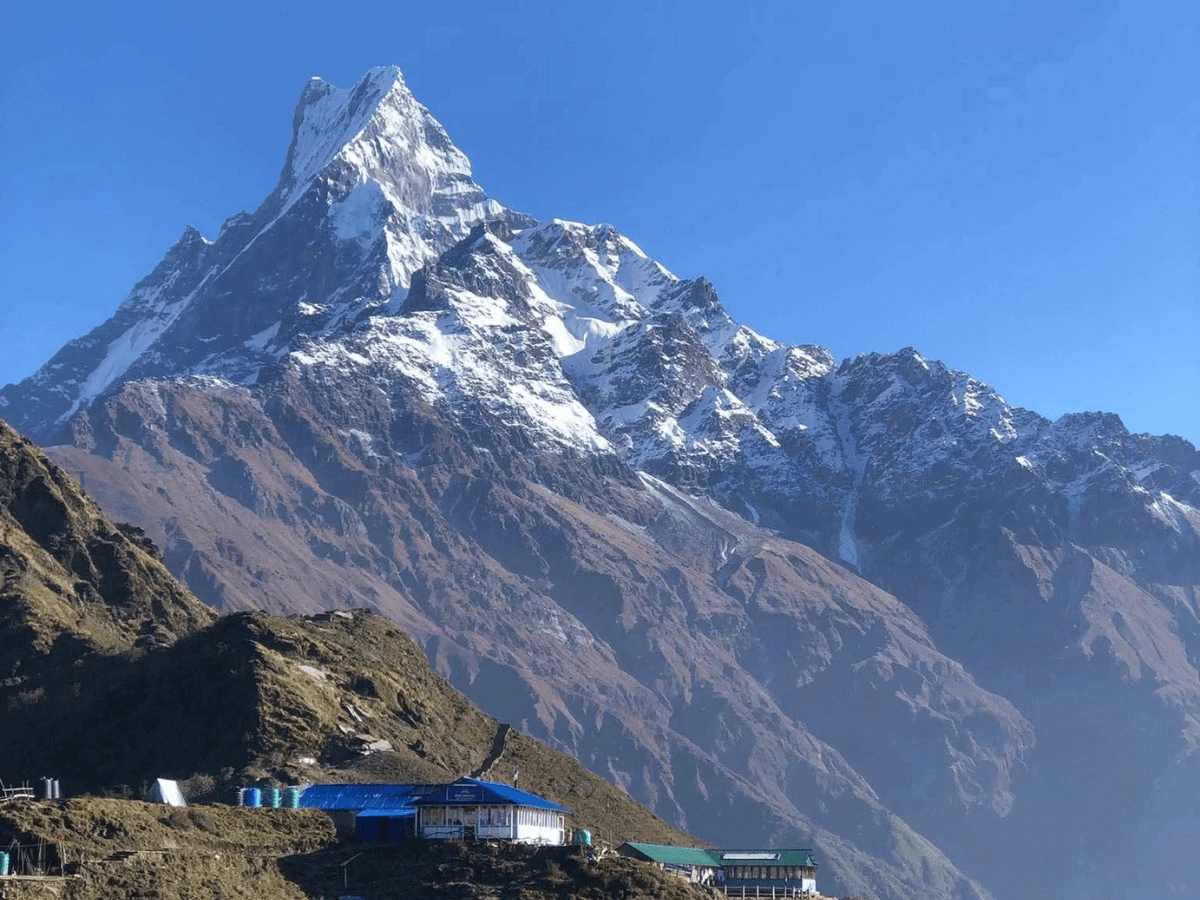
Once above the trees, Machhapuchhre begins to dominate the skyline. The route becomes more exposed, and wind or afternoon cloud can change conditions quickly.

Continue along the ridge to High Camp at approximately 3,580 meters. Walk slowly during the final climb, hydrate and tell your guide about any unusual symptoms. Reaching High Camp early enough to rest is more valuable than racing for a faster time.

  • Max Altitude:3580
  • Accommodation:Tea House
  • Time:5-6 Hours
  • Meals:Breakfast, Lunch, Dinner

Day 3 is the defining stage of the Mardi Himal Base Camp Trek. Leave before sunrise with a headlamp, warm layers, water and only the equipment needed for the climb.

The narrow ridge rises toward the Upper Viewpoint. The terrain is non-technical in normal conditions, but sections are steep, rocky and exposed. Snow or ice can considerably increase the difficulty.

If health, weather and trail conditions remain suitable, continue toward Mardi Himal Base Camp at approximately 4,500 meters. Machhapuchhre rises immediately ahead, while Annapurna South and Hiunchuli frame the western skyline.

Return to High Camp and descend to Badal Danda for a lower overnight stay. This combination of ascent and descent makes Day 3 the hardest part of the itinerary.

  • Max Altitude:3000 meters
  • Accommodation:Tea House
  • Time:7-8 hours
  • Meals:Breakfast, Lunch, Dinner

Leave the exposed ridge and descend toward Siding through rhododendron and mixed forest. Although the altitude falls quickly, the long downhill section can be demanding on knees and quadriceps.

Trekking poles are particularly useful here. Walk steadily rather than rushing on loose soil, roots or wet stone.

Siding offers a warmer, lower-altitude finish and a closer look at rural life beyond the main ridge. Depending on road conditions and the final package arrangement, you either stay in Siding or position closer to the vehicle pickup point.

  • Max Altitude:1700 meters
  • Accommodation:Tea House
  • Time:5-6 Hours
  • Meals:Breakfast, Lunch, Dinner

After breakfast, walk to the accessible roadhead if the vehicle cannot reach the lodge. A jeep then returns you to Pokhara through the middle hills.

The drive normally takes about two to three hours, although monsoon road conditions can make it longer. Arrival is generally expected by midday or early afternoon.

Check into your Pokhara hotel and enjoy a hot shower, a proper rest and the evening beside Phewa Lake.

  • Max Altitude:850 meters
  • Accommodation:Hotel
  • Time:3-4 Hours
  • Meals:Breakfast
Cost Includes
  • Annapurna Conservation Area Project Permit Card.
  • Trekkers Information Management Permit Card.
  • Pokhara-kande Private Vehicle costs.
  • Siding-Pokhara Private Jeep costs.
  • English-speaking and experienced guide. 
  • Expenses of the guide, including his salary, meals, accommodation, and insurance.
  • Meals during the trek. (Breakfast, Lunch, Dinner)
  • Accommodation during the trek on a sharing basis.
  • Necessary Arrangement of the rescue operation if needed. 
  • Seasonal fruits during the trek after dinner every day. 
  • First Aid Kit carried by the guide
  • All government and local taxes.
Cost Excludes
  • Any personal expenses like hot or cold drinks, snacks, Wi-Fi, Hot Shower, etc.
  • Porter expenses. (If required we can manage it for you. It costs $22 per day)
  • Kathmandu-Pokhara any kind of transportation. (if you want you can contact us)
  • Extra night in Kathmandu or Pokhara in case of early arrival or late departure. Also, an extra night in the mountains if there are any weather changes or unforeseen situations which are not in our hands.
  • Your travel insurance, rescue, and medical bills if needed.
  • Tips to guide and Porter.
Availability
Select a Departure Month
Start DateEnd DatePriceStatus 
Start DateStarts: SundayJul 26, 2026End DateEnds: ThursdayJul 30, 2026PricePriceUS$499StatusStatusAvailable
Good to Know

Can You Complete the Mardi Himal Trek in Five Days?

Yes. A fit hiker can complete the Mardi Himal Trek in five days from Pokhara. The schedule includes four trekking days and one return-transfer day. The hardest section climbs from High Camp to around 4,500 meters before descending to Badal Danda. It is possible without technical climbing, but it should not be marketed as an effortless trek.

Is This Five-Day Mardi Himal Trek Right for You?

The Mardi Himal Short Trek works best when your available time is limited, but your mountain fitness is not. It removes the Kathmandu arrival and departure days found in longer packages and concentrates on the actual trekking route from Pokhara.

You still follow the core Mardi Himal trail. The shorter duration comes from longer walking stages and efficient road transfers—not from removing the main mountain experience.

Best suited to

Choose the five-day itinerary if you:

  • are already staying in Pokhara;
  • have completed multi-day hikes or high-altitude treks before;
  • can walk for five to eight hours on steep terrain;
  • are comfortable ascending more than 1,000 vertical meters in a day;
  • want a private guide and flexible pace;
  • have limited vacation time;
  • prefer a compact trekking challenge over a slow introductory trek;
  • Understand that weather can affect the Base Camp objective.

Previous Himalayan experience is helpful but not compulsory. Experience on consecutive mountain days, steep descents or uneven trails is more relevant than speed on flat ground.

Choose the longer itinerary if

Consider the 9-day Mardi Himal Trek from Kathmandu if you:

  • are new to multi-day trekking;
  • want shorter daily stages;
  • prefer Kathmandu-to-Kathmandu logistics;
  • need more time to adapt to altitude;
  • want additional recovery time;
  • are travelling with children or mixed-ability companions;
  • Prefer cultural stops over a performance-oriented schedule.

The five-day and nine-day packages reach the same mountain region. They serve different travellers, so neither should be presented as universally better.

Five-Day vs Nine-Day Mardi Himal Trek

Quick Comparison: Choose the five-day trek if you are fit, already in Pokhara, and want a compact route. Choose the 9-Day Mardi Himal Trekking if you require Kathmandu logistics, shorter walking stages and a more relaxed introduction to altitude. Both visit the Mardi Himal region; the main difference is pace and package coverage.

Factor5-day trek9-day trek
Start and endPokharaKathmandu
Trekking paceCompactRelaxed
Best forFit, time-limited hikersFirst-time or slower-paced trekkers
LogisticsRegionalFull Nepal arrival-to-departure
AcclimatizationLimitedMore gradual
Daily effortLonger concentrated stagesShorter stages
Published priceFrom USD 499From USD 799
Main advantageEfficient mountain experienceCompletely supported holiday

Unsure which version fits your experience? Send Mountain Eco Trails your recent hiking history, available dates and preferred daily walking time for an honest recommendation. Contact us via email or WhatsApp us at +9779849790153.

Best Time for the Short Mardi Himal Trek

The best times are spring, from March to May, and autumn, from late September to November.

Spring brings warmer daytime temperatures and blooming rhododendrons. April usually offers the best combination of flowers, trail conditions and manageable cold.

October generally has stable post-monsoon weather and clear mountain views, but it is also busier. November is colder, often clearer and sometimes quieter.

Winter trekking is possible for experienced hikers, but snow and ice can prevent access beyond the Upper Viewpoint. Monsoon brings clouds, rain, leeches in the forest and slippery trails.

Read the complete Mardi Himal Trek weather and best-time guide before choosing an off-season date.

Permits and Licensed Guide Requirements

 Foreign trekkers on the Mardi Himal route require an Annapurna Conservation Area Permit and a TIMS card. Nepal Tourism Board lists Mardi Himal among routes covered by the revised guide and TIMS provision. The foreigner ACAP entry fee is currently NPR 3,000. Mountain Eco Trails arranges both documents before departure through its registered trekking operation.

The two relevant documents are:

  • ACAP: Annapurna Conservation Area Permit
  • TIMS: Trekkers’ Information Management System card

The Nepal Tourism Board’s TIMS information lists Mardi Himal under the Annapurna routes requiring a licensed guide and an agency-issued TIMS card.

The NTNC permit portal currently lists the ACAP entry fee as NPR 3,000 for foreign nationals and NPR 1,000 for SAARC nationals. Permit charges can change, so verify the rate at booking.

Mountain Eco Trails handles the application process using your passport details and travel dates. Carry digital and printed copies while trekking.

Safety and Weather Contingency Plan

A short itinerary needs clear turnaround rules. It does not have spare days to absorb every weather or health delay.

Mountain Eco Trails’ guide checks the forecast, trail condition and group health before the Base Camp attempt. If snow, strong wind, poor visibility or altitude symptoms create unnecessary risk, the guide may turn the group around at the Upper Viewpoint or earlier. 

Check our Safety Procedure during the trek. 

The company’s published trekking safety procedures include:

  • government-licensed guides;
  • pre-trek safety briefings;
  • altitude-symptom monitoring;
  • first-aid equipment;
  • 24/7 coordination support in Kathmandu;
  • communication with rescue and insurance providers;
  • immediate descent when symptoms worsen;
  • weather-based itinerary changes;
  • Responsible guide-to-client ratios.

Travel insurance should cover trekking up to at least 4,500 meters, medical treatment, trip interruption and emergency evacuation. Rescue coordination is included; rescue bills are not.

Good to know: 


Written by:Mountain Eco Trails Trekking Team
Technical review:  Sanjya Lamsal, Annapurna-region trekking guide
Last fact-checked: July 18, 2026
Official sources checked: Nepal Tourism Board and NTNC

FAQs
  • The point-to-point walking route covers approximately 40–45 kilometers from Kande to Siding. The final distance varies with the selected teahouse, road access, small trail diversions and whether the group reaches the Upper Viewpoint or Mardi Himal Base Camp. Vehicle travel is not included in this estimate.

  • Yes. This package is specifically designed as a Short Mardi Trek from Pokhara. Mountain Eco Trails collects you in Pokhara, drives to Kande and begins trekking that morning. Kathmandu–Pokhara transportation is not included unless you request it as an additional service.

  • Mardi Himal Base Camp lies at an altitude of 4500 meters

  • Yes. Private departures are available for solo travelers, couples and small groups. A private trek allows flexible dates and a pace matched to your group. It does not remove safety requirements, and the guide may still change the schedule when health, weather or trail conditions require it.

  • Yes, a 5-day Mardi Himal Trek is a common itinerary from Pokhara.

  • Yes, internet is available on the Mardi Himal Trek

  • Both the treks have their charm. Poon Hill Trek takes you closer to Mt. Dhaulagiri Range. Whereas, Mardi Himal Trek takes you near the Macchapuchre.

  • The standard Short Mardi Himal Trek is 5 days of trekking, usually with an additional day on each end for travel or preparation (one day to get from Kathmandu to Pokhara, and one day returning, if coming from Kathmandu). So altogether, about a week is ideal from start to finish. Some experienced trekkers complete the trail in 4 days by trekking longer hours, but this can be very strenuous and leaves little time to enjoy the views

  • The total trekking distance for the Mardi Himal route is approximately 40 km (25 miles) round-trip. This distance is typically covered throughout the trek (excluding any drives).

  • Yes, two permits are required for the Mardi Himal Trek: the Annapurna Conservation Area Permit (ACAP) and the Trekkers’ Information Management System (TIMS) card.

  • In light of new regulations, trekking without a guide is no longer allowed for foreign nationals on routes like Mardi Himal (within conservation areas) for foreign nationals.

  • The Mardi Himal Trek is moderate in difficulty. Due to the 5 Day Itinerary, the difficulty can be great due to the rush and long walking hours. The main challenges are the steep ascents/descents and the high altitude at Base Camp. If you are a beginner and fit then you can do otherwise better to choose the 9-Day Mardi Himal Trekking for a relaxed itinerary.

  • It is very rare to get altitude sickness on this Short Mardi Trek. However, we suggest being aware of this sickness. This 5 Day Itinerary is compact and a bit rush which can lead you to the sickness. 

SimilarTrips
You may also like
Did not find what you are looking for? No worries!

Let us help you plan your perfect holiday.