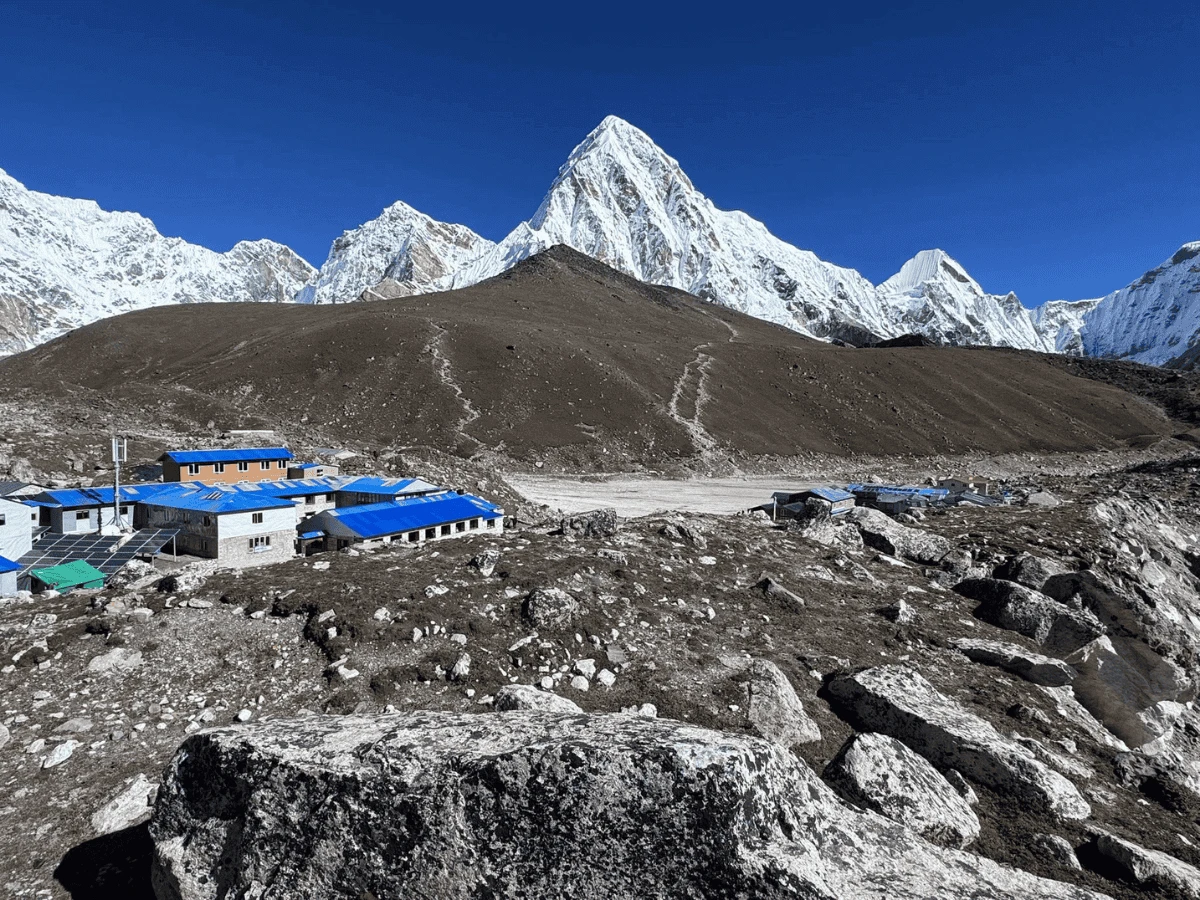


Kala Patthar is a steep, non-technical viewpoint hike from Gorak Shep in Nepal’s Everest region. The return walk covers approximately 3–4 kilometres and usually takes 3–4 hours, with around 380–400 metres of ascent. Its reward is the clearest close-range trekking view of Mount Everest, which is partly hidden from Everest Base Camp.
The Kala Patthar hike in Nepal is an unmissable adventure for trekkers on the Everest Base Camp (EBC) trail. This relatively short yet steep hike takes you to the famous Kala Patthar summit, a rocky vantage point offering a close-up view of Mount Everest.
Trekkers often hike to this viewpoint early in the morning to witness a breathtaking sunrise view above Everest and the surrounding peaks in golden hues. At 5,545 meters, Kala Patthar is higher than Everest Base Camp itself, rewarding you with a panoramic Himalayan sunrise like no other.
Quick Details about Kala Patthar
Fact | Details |
Location | Above Gorak Shep in the upper Khumbu region of Nepal |
Starting altitude | Approximately 5,164 m/16,942 ft at Gorak Shep |
Common trekking viewpoint | Approximately 5,545 m/18,192 ft |
Approximate distance | 1.5–2 km each way; roughly 3–4 km return |
Elevation gain | Approximately 380–400 m/1,247–1,312 ft |
Ascent time | Usually 2–3 hours |
Descent time | Approximately 1–1.5 hours |
Total hiking time | Approximately 3–4 hours; longer for some trekkers |
Difficulty | Strenuous because of altitude, but non-technical |
Mountaineering equipment | Not normally required |
Best seasons | March–May and late September–November |
Popular hiking times | Before sunrise or during the late afternoon |
Main reward | A clear view of Mount Everest, Nuptse, Lhotse, Pumori and the Khumbu Glacier |
Accommodation | There is no accommodation on Kala Patthar; trekkers stay in Gorak Shep |
Acclimatisation required | Yes—reaching Gorak Shep gradually is essential |
What Is Kala Patthar?
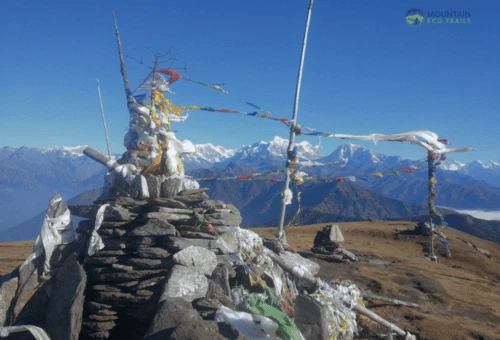
Kala Patthar, meaning “Black Rock,” is a dark, rocky viewpoint rising above Gorak Shep beneath Mount Pumori. It is not a technical climbing peak, and reaching it does not normally require ropes, crampons or mountaineering experience in dry conditions.
What makes Kala Patthar exceptional is its position. The viewpoint overlooks the Khumbu Glacier, allowing trekkers to look over the valley towards some of the highest mountains on Earth.
Although the walk from Gorak Shep is short on a map, Kala Patthar should never be treated like an ordinary hill walk. The entire ascent takes place above 5,000 metres, where every uphill step requires more effort.
Why Does Kala Patthar Offer a Better Everest View Than Base Camp?
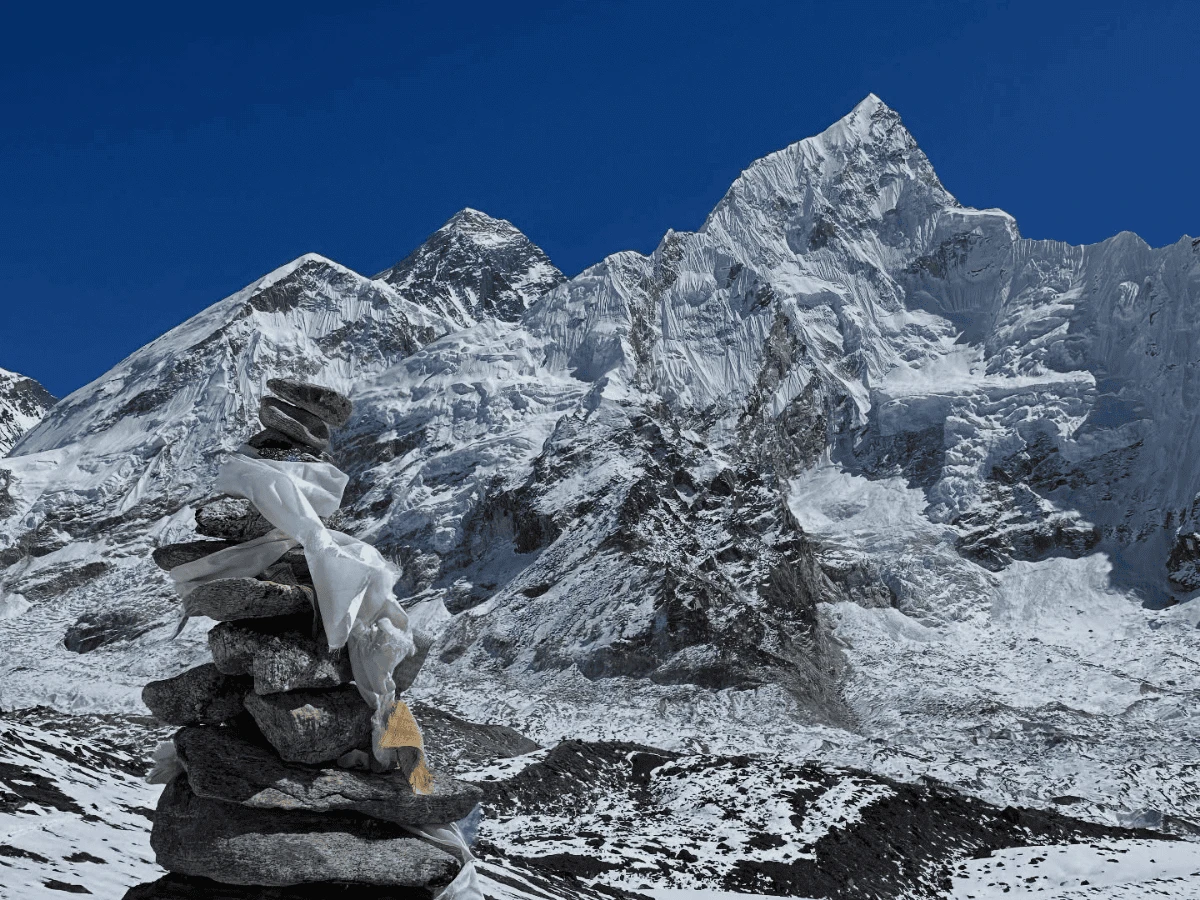
Everest Base Camp is the symbolic destination of the classic Everest trail, but it does not provide the clearest view of Mount Everest’s summit. The angle from Base Camp is low, and the enormous wall of Nuptse partly blocks Everest from view.
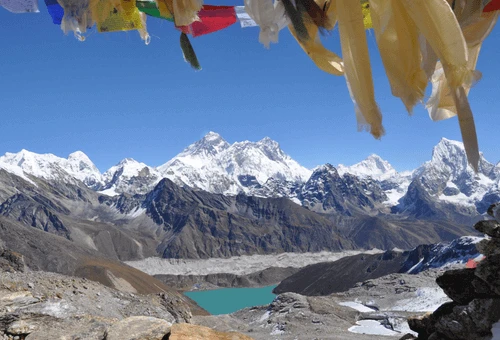
Kala Patthar offers a higher, more open perspective. From the viewpoint, trekkers can see the upper section and summit of Mount Everest rising behind the surrounding ridges. The view also includes the Khumbu Icefall and glacier below, creating a much broader sense of the Everest landscape.
This creates two very different experiences:
- Everest Base Camp brings you to the foot of the mountain and the edge of the Khumbu Icefall.
- Kala Patthar gives you the panoramic Everest view many trekkers imagined before coming to Nepal.
Neither location replaces the other. Base Camp delivers the emotional sense of arrival, while Kala Patthar delivers the defining mountain panorama.
What is the actual elevation of Kala Patthar?
You may see Kala Patthar’s altitude listed as either 5,545 metres or approximately 5,644 metres. The difference exists because trekkers, maps and GPS devices do not always refer to the same point on the rocky ridge.
The elevation of 5,545 metres is widely used for the established trekking viewpoint. Some measurements place the higher geographical point on the ridge at approximately 5,643–5,644 metres.
For practical trek planning, Mountain Eco Trails uses 5,545 metres as the standard Kala Patthar viewpoint altitude. Your guide may stop at the safest established viewpoint rather than continuing to a higher rocky position, particularly when there is snow, strong wind or deteriorating visibility.
The experience is about reaching a safe panoramic viewpoint—not chasing a particular number on a GPS watch.
How Do You Reach Kala Patthar?
There is no road to Gorak Shep or Kala Patthar. Most visitors reach the area on foot through the Khumbu Valley after flying to Lukla.
The classic approach passes through:
Lukla → Phakding → Namche Bazaar → Tengboche → Dingboche → Lobuche → Gorak Shep
From Gorak Shep, Kala Patthar is reached on a separate return hike. There are no teahouses, shelters or permanent facilities on the viewpoint itself.
Access normally requires:
- Sagarmatha National Park entry permission
- Khumbu Pasang Lhamu Rural Municipality entry permission
Requirements and fees can change, so verify the current arrangements before travelling. Sagarmatha National Park is a UNESCO World Heritage Site recognised for its mountains, glaciers, valleys, biodiversity and Sherpa culture.
Via the Classic Everest Base Camp Route
Kala Patthar is normally approached as part of a gradual journey through the Everest region. Travellers sleep at progressively higher villages, using acclimatisation stops before reaching Lobuche and Gorak Shep.
Once in Gorak Shep, there are two common arrangements:
- Visit Everest Base Camp in the afternoon and hike Kala Patthar the following morning.
- Hike Kala Patthar in the late afternoon and visit Base Camp at another suitable time.
The best order depends on weather, energy level and the following day’s plan. Trying to complete Lobuche to Gorak Shep, Everest Base Camp and Kala Patthar in one rushed push is unsuitable for most trekkers.
Where It Fits into a 12- or 14-Day Itinerary
Kala Patthar is generally the highest point of the Everest Base Camp Trek.
In a Kathmandu-to-Kathmandu itinerary, the hike is commonly included on the morning after reaching Gorak Shep. A longer arrival-to-departure plan may use the same mountain schedule while adding Kathmandu arrival, preparation and departure days.
Do not compare itineraries only by the number in their title. Check:
- Number of nights before Gorak Shep
- Acclimatisation stops
- Sleeping elevations
- Whether Kala Patthar is combined with a long descent
- Whether flight-delay buffer days are included
- Whether arrival and departure days are counted
Our Everest Base Camp duration guide explains how 10-, 12-, 14- and longer schedules differ.
Kala Patthar Hike Distance, Time and Elevation Gain
The Kala Patthar hike begins and ends in Gorak Shep, the final settlement with teahouse accommodation on the classic Everest trail.
Most measurements place the route at approximately 1.5–2 kilometres each way. Different GPS tracks produce slightly different distances depending on where recording begins in Gorak Shep and which point on the ridge is used as the turnaround location.
Route section | Approximate distance | Typical time | Elevation change |
Gorak Shep to Kala Patthar | 1.5–2 km | 2–3 hours | Gain of approximately 380–400 m |
Kala Patthar to Gorak Shep | 1.5–2 km | 1–1.5 hours | Loss of approximately 380–400 m |
Complete return hike | 3–4 km | 3–4 hours | Returns to the starting elevation |
What Can You See from Kala Patthar?
Kala Patthar offers one of the broadest mountain panoramas accessible to trekkers in the upper Khumbu.
The highest peaks you can see from Kala Patthar include:
- Mount Everest: The upper pyramid and summit appear behind the surrounding ridges.
- Nuptse: The enormous wall dominating much of the view.
- Lhotse: The world’s fourth-highest mountain, rising close to Everest.
- Pumori: The elegant peak directly above and behind Kala Patthar.
- Changtse: Visible across the border on the Tibetan side of Everest.
- Lingtren and Khumbutse: Prominent peaks above the glacier.
- Ama Dablam: Visible farther down the Khumbu Valley in clear conditions.
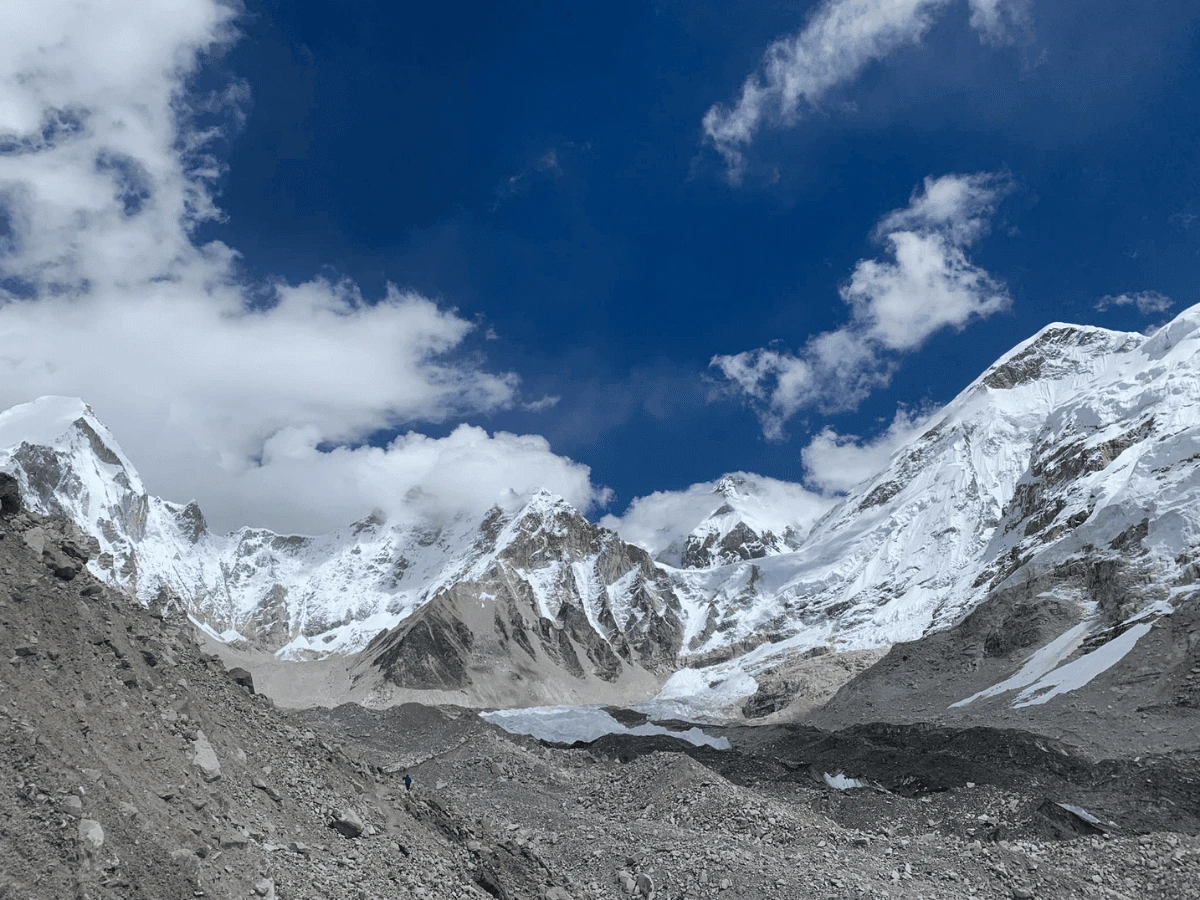
- Khumbu Glacier: Stretching through the valley below.
- Khumbu Icefall: The broken ice formation above Everest Base Camp.
- Gorak Shep: The small settlement appears far below the viewpoint.
The landscape changes as you climb. Lower positions provide excellent views of Pumori and the valley, while the Everest panorama becomes increasingly open higher on the ridge.
How Difficult Is the Kala Patthar Hike?
The Kala Patthar hike difficulty level is short, strenuous and non-technical.
You do not need mountaineering skills, but you need sufficient fitness, proper acclimatisation, warm equipment and the willingness to turn around if your body or the weather gives you a reason.
The difficulty comes from four factors working together:
- Extreme altitude
- Continuous uphill walking
- Cold and wind
- Fatigue accumulated during the journey to Gorak Shep
Trekkers who felt comfortable walking to Everest Base Camp can still struggle on Kala Patthar the following morning. That does not necessarily indicate poor fitness. It reflects how differently the body performs above 5,000 metres.
Is Kala Patthar Hike the best viewpoint to see Mount Everest?
The Kala Patthar Hike offers the closest and most dramatic viewpoint of Mount Everest that trekkers can reach on foot. Standing at 5,545 meters, Kala Patthar offers a direct view of Everest’s summit, making it one of the most rewarding experiences in the Everest region. For many travellers, this hike delivers the moment they imagine when dreaming of the Himalayas.
One of the biggest highlights of the Kala Patthar trek is the sunrise and sunset views. As the first light touches Everest, Nuptse, and Lhotse, the mountains glow with changing colours that cannot be seen from Everest Base Camp. The short but powerful Kala Patthar hike from Gorakshep is designed for steady acclimatisation, making it achievable for well-prepared trekkers.
The route follows a clear trekking trail, guided by experienced local experts from Mountain Eco Trails, ensuring safety and comfort throughout the journey. Many trekkers choose this hike as a perfect side trip to view Mount Everest.
Add Kala Patthar Hike to Your Everest Base Camp Trek
Kala Patthar should be included as part of a gradual itinerary—not treated as a quick standalone summit attempt from a low altitude.
Mountain Eco Trails’ 14-Day Everest Base Camp Trek includes acclimatisation in Namche Bazaar and Dingboche before reaching Everest Base Camp and Kala Patthar. The schedule is designed for travellers who want a complete Everest experience without compressing the upper-mountain stages unnecessarily.
Planning your Everest journey?
Speak with our local trekking team about your experience, fitness, available dates and preferred pace. We can help you understand where Kala Patthar fits into a safe, realistic itinerary. Email our Local Expert from Everest or WhatsApp us at +9779849790153 for prompt communication.