The Everest Three Passes Trek without a porter is a demanding high-altitude adventure best suited to seasoned trekkers carrying their own gear. Covering roughly 160–170 km, the route crosses Kongma La, Cho La and Renjo La while connecting Everest Base Camp with Gokyo Valley. Trekking porter-free offers greater independence but requires proven endurance, careful packing, proper acclimatisation, suitable insurance and flexible contingency days. Current Nepal Tourism Board guidance lists a licensed guide and agency-issued TIMS for this route. A guide-only trek can balance personal challenge with local expertise, legal compliance and logistical support.
Is it possible to do Three High Passes Trek without a porter?
Everest Three Passes Trek Without a Porter: A Practical Guide for Experienced Trekkers
Yes, an experienced trekker can complete the Everest Three Passes Trek without hiring a porter by carrying their own equipment. However, “without a porter” does not automatically mean “without a guide.” Current route-specific Nepal Tourism Board guidance lists the Three Passes Trek among routes requiring a licensed guide and an agency-issued TIMS card. Confirm the rules before departure.
The Everest Three Passes Trek without a porter is not simply the standard route with a heavier backpack. Carrying your own equipment changes your pace, recovery, food requirements and margin for error. That difference becomes most noticeable on Kongma La, Cho La and Renjo La, where long climbs, rough terrain and thin air amplify every unnecessary item in your pack.
For seasoned trekkers, going porter-free can offer independence and a satisfying sense of self-sufficiency. But the decision should be based on tested ability—not pride, budget alone or previous success on a shorter trek.
Everest Three Passes Trek Quick Facts
| Trek detail | Practical information |
|---|---|
| Route duration | Approximately 18–21 trekking days |
| Approximate distance | Around 160–170 km/99–106 miles, depending on side trips |
| Kongma La elevation | Approximately 5,535 m/18,159 ft |
| Cho La elevation | Approximately 5,420 m/17,782 ft |
| Renjo La elevation | Approximately 5,360 m/17,585 ft |
| Best seasons | March–May and late September–November |
| Recommended experience | Previous multi-day trekking above 4,000 m, proven load-carrying ability and confidence on rough terrain |
| Guide status | NTB’s route-specific TIMS guidance currently lists a licensed guide and agency-issued TIMS for the Three Passes route |
| Porter status | A porter is not compulsory for carrying luggage; experienced trekkers may carry their own pack |
| Accommodation | Teahouses and mountain lodges |
| Route direction | Counterclockwise or clockwise |
| Last rule and price review | July 17, 2026 |
| Important note | Rules, permit systems, flights and trail prices can change; reconfirm before travel |
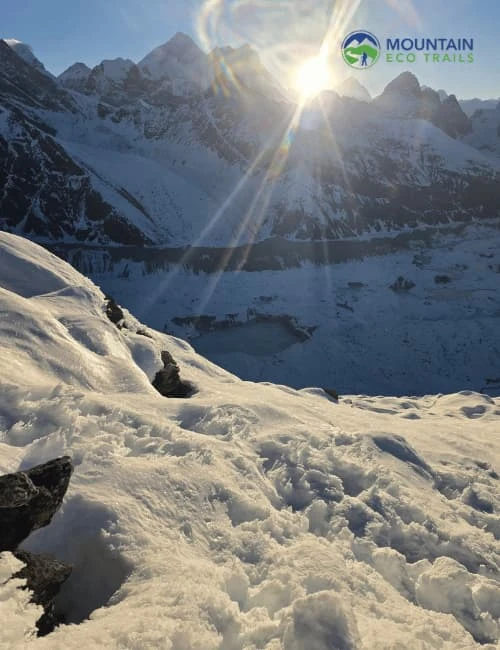
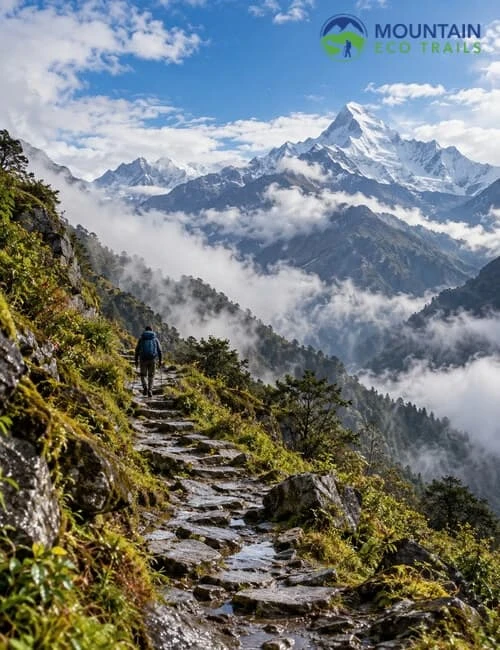
The Everest Pass Trek travels through Sagarmatha National Park, a high-altitude protected area covering the upper Dudh Koshi and Bhote Koshi catchments. It links Everest Base Camp, the Khumbu Glacier, Gokyo Lakes and four distinct valleys into one demanding circuit.
Can You Trek the Everest Three Passes Without a Porter?
Yes—if you have appropriate high-altitude experience, have trained with your complete trekking load and follow an itinerary with sufficient acclimatisation.
A porter-free Everest Three Passes Trek means you carry your own clothing, sleeping bag, personal equipment, water and daily essentials. It does not require carrying camping equipment or several weeks of food because teahouses provide rooms and meals along the established route.\
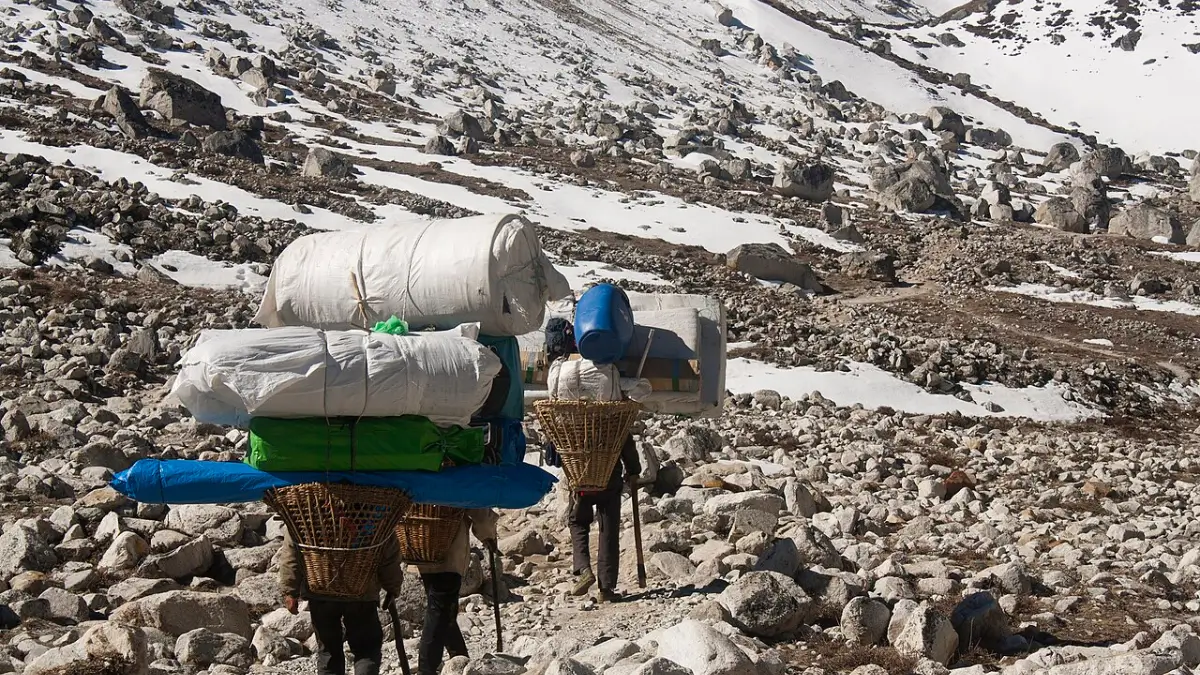
The real question is not whether the route can be completed without a porter. Many capable trekkers can do that. The better question is whether carrying your full load leaves enough physical and mental reserve to make careful decisions when conditions deteriorate.
If your backpack makes you significantly slower, affects your balance or leaves you exhausted before reaching higher settlements, the apparent independence may reduce your safety margin.
Without a porter, versus without a guide
A guide and a porter perform different jobs.
A licensed trekking guide manages route decisions, local logistics, permits, accommodation, communication and emergency coordination. A porter primarily carries an agreed luggage load. Some professionals are trained as porter-guides, but that combined role should be clearly discussed before booking.
Therefore, you can complete the Everest Three High Passes Trek without a porter while still trekking with a licensed guide. For many experienced visitors, guide-only service provides a useful balance: you retain the satisfaction of carrying your own equipment while gaining local knowledge and logistical support.
The word “solo” also needs clarification. A solo booking can mean one traveller with a private guide; it does not necessarily mean walking unaccompanied.
Current guide and TIMS position
Nepal’s trekking regulations have changed several times, and published information is not always consistent across national and local sources.
The route-specific Nepal Tourism Board TIMS page currently includes the Three Passes Trek among routes requiring a licensed trekking guide and agency-issued TIMS. Meanwhile, Khumbu Pasang Lhamu Rural Municipality operates its own Trek Card system. Its official page lists the Trek Card fee as NPR 3,000 for most international visitors and NPR 2,000 for SAARC nationals and Chinese visitors, with registration available at the Tourist Information Centre in Lukla. See the official Khumbu Trek Card information.
Because national TIMS guidance and local Khumbu systems have not always been described consistently, obtain written confirmation from a registered agency shortly before departure. Do not assume that hiring only a porter fulfils a licensed-guide requirement.
Is Carrying Your Own Pack the Right Choice?
Experience checklist
You are a stronger candidate for a porter-free Three High Pass Trek if you can answer yes to most of the following:
- Have you completed a multi-day trek above 4,000 m/13,123 ft?
- Have you crossed rough or snow-covered passes in changing weather?
- Can you walk consecutive six-to-eight-hour days with your planned load?
- Have you tested the exact backpack, footwear and layering system you will use?
- Can you maintain balance on boulders, loose moraine and steep descents?
- Are you comfortable slowing down or abandoning a pass when conditions are unsuitable?
- Does your itinerary include proper acclimatisation and contingency days?
- Can you organise your equipment without carrying unnecessary “just in case” items?
- Will you still have energy to eat, hydrate and make careful decisions after a long pass day?
Previous completion of Kilimanjaro, the Annapurna Circuit or Everest Base Camp is useful experience, but none automatically proves that you can carry a full backpack across all three passes. Terrain, duration and pack demands matter as much as maximum altitude.
When should you use a porter?
Consider hiring a porter if you are recovering from an injury, have not trained with your complete load, are carrying bulky camera equipment, struggle with balance or want more energy for photography and side hikes.
A porter is also valuable when your schedule is tight. Carrying less does not eliminate altitude risk, but it may help you preserve energy during long stages. That extra reserve can matter on Kongma La and Cho La, where delays caused by terrain or weather can turn an already long day into an exhausting one.
Hiring a porter is not a failure to trek independently. Porters are central to the Khumbu trekking economy. The ethical concern is not whether you hire one; it is whether the person receives fair pay, insurance, appropriate equipment, food, accommodation and a reasonable load.
Self-carry, shared porter or full porter comparison
| Support style | Advantages | Limitations | Best suited to |
|---|---|---|---|
| Self-carry with a guide | Independence, lower support cost, and full control of gear | Greater fatigue and slower pass days | Experienced, well-trained trekkers |
| Shared porter | Reduces load and divides cost | Less immediate access to packed items | Couples or small groups |
| Dedicated porter | Maximum flexibility and a lighter daypack | Higher cost and planning are required | Photographers or trekkers prioritising energy |
| Porter-guide | Can provide limited guidance and load support | Qualifications and carrying capacity vary | Simpler routes or carefully defined roles |
| Full guide-and-porter team | Strong logistical support | Highest service cost | Private, comfort-focused or fully supported treks |
Porter-Free Three Passes Route and Itinerary
Counterclockwise route overview
The counterclockwise route travels from Namche Bazaar toward Tengboche, Dingboche and Chhukung before crossing Kongma La. It then reaches the Everest Base Camp side of the circuit, crosses Cho La to Gokyo Valley, and finishes with Renjo La before descending through Lungden and Thame.
This direction provides staged acclimatisation through Dingboche and Chhukung before Kongma La. However, Kongma La arrives while your pack still contains most of your consumables and is often considered the longest pass day.
Clockwise route overview
The clockwise route leaves Namche via Thame and Lungden, crosses Renjo La to Gokyo, continues over Cho La, and finishes at Kongma La toward Chhukung.
Some experienced trekkers prefer this order because Renjo La can provide a more gradual introduction to the three passes, and the pack may become lighter before Kongma La. The disadvantage is that route planning before Renjo La must still create sufficient acclimatisation.
Neither direction is automatically safer. Weather, snow, itinerary design, personal adaptation and current lodge availability matter more than a universal clockwise-versus-counterclockwise rule.
Acclimatisation and contingency days
A careful itinerary normally includes acclimatisation around Namche and Dingboche or Chhukung, with another flexible day around Gokyo Lakes. These are not wasted “rest” days. They create space for gradual adaptation, equipment adjustments and condition checks.
Sample counterclockwise porter-free itinerary
Distances and elevation changes below are approximate. GPS tracks, lodging choices, and side trips yield different figures.
| Day | Route | Sleep | Distance | Time | Pack difficulty |
|---|---|---|---|---|---|
| 1 | Lukla–Phakding | 2,610 m | 8 km | 3–4 hr | Easy |
| 2 | Phakding–Namche | 3,440 m | 10–11 km | 6–8 hr | Moderate |
| 3 | Namche acclimatisation hike | 3,440 m | 6–8 km | 4–5 hr | Light |
| 4 | Namche–Tengboche | 3,860 m | 9–10 km | 5–6 hr | Moderate |
| 5 | Tengboche–Dingboche | 4,410 m | 10–11 km | 5–7 hr | Moderate |
| 6 | Dingboche acclimatisation | 4,410 m | 5–6 km | 4–5 hr | Light |
| 7 | Dingboche–Chhukung | 4,730 m | 5 km | 3–4 hr | Moderate |
| 8 | Chhukung acclimatisation | 4,730 m | 4–6 km | 4–6 hr | Light–hard |
| 9 | Chhukung–Kongma La–Lobuche | 4,940 m | 10–12 km | 8–10 hr | Very hard |
| 10 | Lobuche–EBC–Gorak Shep | 5,164 m | 12–15 km | 7–9 hr | Hard |
| 11 | Kala Patthar–Lobuche | 4,940 m | 8–10 km | 5–7 hr | Hard |
| 12 | Lobuche–Dzongla | 4,830 m | 6–7 km | 3–4 hr | Moderate |
| 13 | Dzongla–Cho La–Thagnak | 4,700 m | 10–12 km | 8–10 hr | Very hard |
| 14 | Thagnak–Gokyo | 4,790 m | 4–5 km | 3–4 hr | Moderate |
| 15 | Gokyo acclimatisation | 4,790 m | Variable | 3–6 hr | Optional |
| 16 | Gokyo–Renjo La–Lungden | 4,380 m | 12–14 km | 7–9 hr | Hard |
| 17 | Lungden–Thame–Namche | 3,440 m | 14–16 km | 6–8 hr | Moderate |
| 18 | Namche–Phakding | 2,610 m | 10–11 km | 5–7 hr | Moderate |
| 19 | Phakding–Lukla | 2,860 m | 8 km | 3–4 hr | Moderate |
Which Pass Is Hardest With a Full Backpack?
Kongma La is usually the longest and most physically demanding, while Cho La can become the most condition-dependent because of snow and ice. Renjo La is often considered the least complicated of the three, but it still involves a long ascent and descent above 5,000 m.
| Pass | Terrain | Elevation | Typical crossing | Bailout limitations |
|---|---|---|---|---|
| Kongma La | Boulder fields, moraine, steep ascent and descent | 5,535 m | 8–10 hours | No lodge on the pass; retreat may be long |
| Cho La | Rock, steep sections, snow or ice and glacier-influenced terrain | 5,420 m | 7–10 hours | Dzongla and Thagnak are separated by the pass |
| Renjo La | Steep trail, stone sections and exposed high terrain | 5,360 m | 7–9 hours | Gokyo and Lungden are the main safe endpoints |
Kongma La
Kongma La often feels hardest with a full backpack because of its length, boulder terrain and the absence of a convenient settlement between Chhukung and Lobuche. Starting early is important, but an early departure should never be used to justify crossing in unsuitable conditions.
The best preparation is not aggressive speed. It is reaching Chhukung well acclimatised, keeping the pack efficient and accepting that Kongma La may need to be postponed or bypassed.
Cho La
Cho La changes character with temperature, recent snowfall and overnight freezing. A dry-season crossing may feel very different from a morning with hard ice or fresh snow.
Its difficulty is therefore less predictable than a simple ranking suggests. Check conditions with guides and lodges on both sides rather than relying on reports from several days earlier.
Renjo La
Renjo La is often described as the easiest of the Everest Three High Passes, but “easiest” is relative. The climb from Gokyo and descent toward Lungden still require endurance, balance and stable weather.
For clockwise trekkers, Renjo La may be the first pass; for counterclockwise trekkers, it is the final one, when fatigue may offset the benefits of acclimatisation.
Packing List for a Porter-Free Three Passes Trek
Clothing and insulation
Build a layering system rather than carrying a separate outfit for every day:
- Moisture-managing base layers
- Trekking shirt and trousers
- Fleece or active mid-layer
- Warm insulated jacket
- Waterproof and windproof shell
- Thermal leggings
- Warm hat and sun hat
- Liner gloves and insulated gloves
- Several pairs of trekking socks
- Comfortable lodge clothing that can double as a sleeping layer
Choose insulation for the season and expected conditions. A forecast is not a guarantee of pass-level temperature or wind.
Sleep system
Teahouses normally provide beds and blankets, but a suitable sleeping bag remains important at higher settlements. Select a comfort rating appropriate to the season and your personal sleeping pattern. A liner can improve hygiene and add some warmth without much bulk.
Footwear and traction
Use broken-in hiking boots or robust trekking footwear that performs well with your loaded pack. Pack gaiters when snow, mud or loose debris is likely.
Microspikes and technical crampons are not the same:
- Microspikes provide extra grip on compact snow and relatively low-angle ice. They are light and fit many trekking boots.
- Technical crampons use more aggressive points for harder or steeper ice. They require compatible footwear, correct fitting and appropriate skills.
Technical crampons are not automatically required for the standard Three Passes route. Traction needs depend on current conditions. Ask your guide and check pass reports before leaving the last settlement.
Navigation, power and communication
Carry an offline map on your phone, a paper map as backup, a headlamp with spare power, a power bank and minimal charging cables. A satellite communicator can add redundancy but does not replace conservative decisions or professional rescue coordination.
Share your itinerary and check-in schedule with someone who knows what to do if communication stops.
First-aid and water treatment
Carry a compact personal kit for minor wounds, blisters and prescribed medication. Discuss altitude-related medication with a qualified medical professional rather than self-prescribing from a trekking blog.
Use a reliable filter, purification tablets or another proven water-treatment system. Refillable bottles reduce both cost and plastic waste.
Items commonly overpacked
Frequent sources of unnecessary weight include:
- Too many shirts and trousers
- Full-size toiletries
- Multiple heavy camera lenses
- Large quantities of snacks available locally
- Duplicate chargers and power banks
- Heavy casual shoes
- A full towel
- Books, laptops and city clothing
- Excessive emergency equipment without knowledge of how to use it
Cost of the Everest Three Passes Trek Without a Porter
Costs rise with altitude and change by season, lodge, appetite and service level. The following estimates are planning ranges, not fixed quotations.
| Expense | Approximate planning range |
|---|---|
| Licensed Three Passes guide | USD 45–70 per day |
| Permit, Trek Card and TIMS administration | Allow roughly USD 55–75; verify current combination |
| Return Lukla flights | Approximately USD 400–500 |
| Teahouse room | Around USD 5–25 per night |
| Three daily meals | Approximately USD 35–60 per day |
| Water treatment/refills | USD 40–100 total |
| Charging and Wi-Fi | USD 50–150 total |
| Hot showers | USD 30–80 total |
| Travel insurance | Varies by nationality, age and coverage |
| Gear rental | Approximately USD 80–250 |
| Weather/logistics contingency | USD 200–400 |
| Estimated 18–20-day guide-only budget | Approximately USD 1,950–3,000, excluding international flights, insurance and major personal gear |
A porter commonly adds a daily service cost plus tips and employment-related logistics. Avoiding a dedicated porter may save approximately USD 500–800 across a full trek. If two travellers shared one porter, the saving per person is usually smaller.
Mountain Eco Trails can arrange a guide-only Everest Three Passes Trek for experienced trekkers who want to carry their own equipment while retaining legal, logistical and route support. Contact us via email or WhatsApp us at +9779849790153
Can You Hire a Porter From Lukla or During the Trek?
Yes, Mountain Eco Trails can arrange a porter from Lukla for the Three Passes Trek, but booking is more reliable than arriving and hoping someone is available.
During peak spring and autumn weeks, experienced Khumbu porters may already be committed to trekking groups and expeditions. Last-minute hiring becomes even less dependable after Lukla or Namche. A lodge may know someone locally, but availability, insurance, equipment and the person’s willingness to cross all three passes cannot be assumed.
A responsible booking should confirm:
- Total load and maximum weight
- Route and number of days
- Wage, food and accommodation
- Insurance
- Equipment suitable for the passes
- Transport to and from the starting point
- Tips and payment process
- Whether the porter is expected to cross all three passes
If you may need support later, discuss a contingency plan with your agency before the trek. It is easier to arrange a backup from Lukla or Namche than from Chhukung, Dzongla or Gokyo at short notice.
Safety Considerations When Trekking Without a Porter
It is a real risk while trekking at high altitude without any safety measures. Therefore, you should consider taking preventive and safety measures to tackle the difficulties while doing the Everest 3 High Passes Trek. Here are the measures you can take during the trek:
- Follow the golden rule of Climb High, Sleep Low, and utilise your acclimatisation days properly.
- Always check the weather forecast before leaving the stopovers. Especially in the high altitudes like Kongma La Pass (5535m), Cho La Pass (5420m), and Renjo La Pass (5360m).
- Use necessary gear like crampons while crossing the passes.
- Take an essential break, drink plenty of water during the day, and listen to the response of your body.
- If you start to feel the symptoms of altitude sickness, do not panic. If it starts to get worse, descend to a lower altitude.
- Inform other local people or trekkers (on the way) if the situation gets worse due to altitude sickness. Also, if you can, inform your close ones to contact your insurance.
General FAQs
Can I trek the Three Passes without a porter?
Yes. Experienced trekkers can carry their own equipment because the route uses teahouses rather than camping. The decision should be based on tested load-carrying ability, previous high-altitude experience and a properly acclimatised itinerary.
Do I need a guide if I carry my own pack?
Yes, you will need a guide for the Three Passes Trek even if you carry your own backpack. Current route-specific NTB guidance lists the Three Passes Trek among routes requiring a licensed guide and agency-issued TIMS. Carrying your own backpack removes the need for porter service; it does not automatically remove the guide requirement.
Is the Three Passes Trek suitable for solo travellers?
It can suit a solo traveller with strong experience and a private licensed guide. A solo booking means travelling without other clients; it should not be confused with walking unaccompanied.
How heavy should my backpack be?
There is no universal correct weight. Your load should be based on your equipment, itinerary, season and proven ability to carry it on consecutive steep days. Test the complete pack—including water and electronics—before travelling.
Which pass is hardest with a full pack?
Kongma La is generally the longest and most physically demanding. Cho La may become more difficult when snow and ice create challenging traction conditions. Renjo La is often more straightforward but remains a serious high-altitude crossing.
How much money do I save without a porter?
Avoiding a dedicated porter may save approximately USD 500–800 over an 18–20-day itinerary. If two trekkers had shared one porter, the saving per person would be lower.
Can I hire a porter in Lukla?
Yes. A porter can be arranged in Lukla, but booking is recommended during peak seasons. Confirm the porter’s insurance, equipment, agreed load, wages, route and responsibility for crossing all three passes.
Can I add a porter after starting the trek?
Sometimes, but it should not be guaranteed. Availability is better in Lukla or Namche than in remote settlements. Discuss a support contingency with your agency before departure.
Is porter-free trekking to Three High Passes harder than Everest Base Camp?
Yes. The Three Passes route is longer and crosses Kongma La, Cho La and Renjo La above 5,000 m. Carrying your own backpack increases fatigue, particularly on long ascents, rough moraine and steep descents.
How Difficult is the Everest Three Passes Trek without a porter?
The Everest Three High Pass Trek without a porter can be difficult if you are a beginner and carrying your own pack. Even experienced trekkers can feel fatigue carrying the backpack and crossing high passes above 5000 meters. Overall, the journey is challenging and demands stamina and experience.
Final Recommendation From a Local Three Passes Guide
Experienced trekkers who have carried a tested load on consecutive mountain days can reasonably complete the Everest Three Passes Trek without a porter. They should still use a gradual itinerary, maintain contingency time and keep enough physical reserve for difficult conditions.
Hire a porter if your load affects your balance, pace or recovery; if you are carrying specialist equipment; or if your previous high-altitude experience did not involve a full backpack.
For many seasoned visitors, guide-only support offers the best balance. You carry your own equipment and retain a strong sense of independence, while a licensed local professional manages route conditions, regulations, accommodation and emergency coordination.
Planning a porter-free Everest Three Passes Trek? Mountain Eco Trails can customise a private guide-only itinerary, review your route and arrange a porter from Lukla if you prefer additional support.

Anil Lamsal
Call us on WhatsApp+977 9849790153OrChat with us