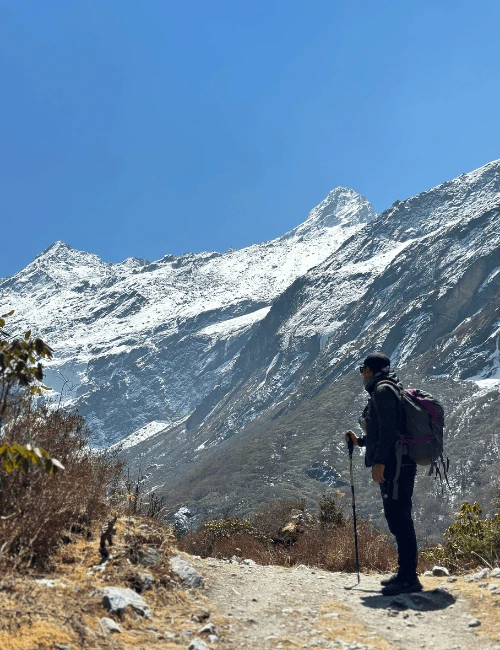
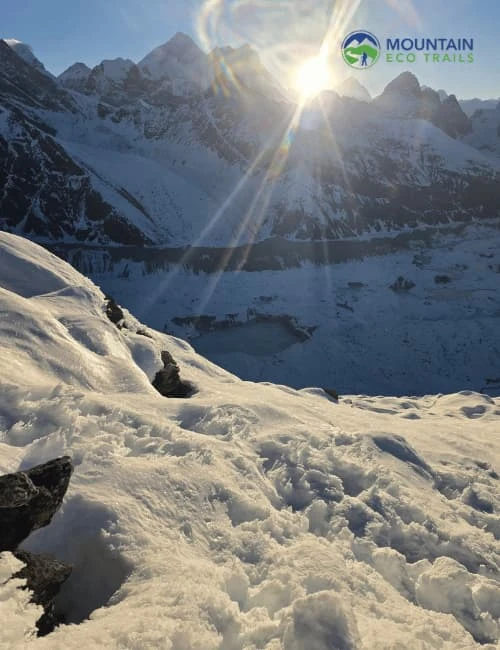
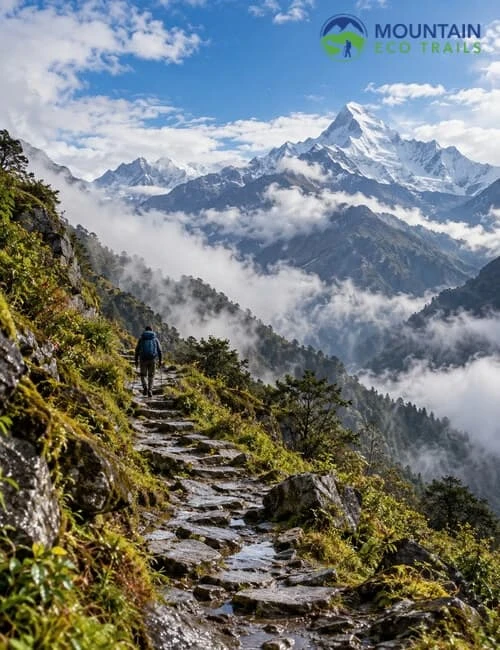
First thing first, how hard is a trek to Everest Base Camp? It is an easy to moderate trek if you have enough time, good physical fitness, and proper preparation. Every year, many trekkers without previous trekking experience also make it up to the Everest Base Camp.
Everest Base Camp Trek Difficulty Level Explained
Everest Base Camp Trek – Quick Difficulty Overview
| Factor | Details |
|---|---|
| Overall Difficulty | Moderate to Challenging |
| Trek Duration | 12–15 Days |
| Highest Altitude | 5,364 m (Everest Base Camp) |
| Daily Walking Time | 5–7 hours |
| Technical Skills | Not required |
| Main Challenges | Altitude, long days, cold weather |
| Suitable for Beginners | Yes, with preparation |
How Hard is it to climb to the base camp of Mount Everest?
Moderate to challenging — achievable for fit beginners with proper preparation. The Everest Base Camp Trek difficulty is often misunderstood. Many trekkers imagine ropes, ice climbing, or extreme mountaineering. In reality, the challenge of trekking to Everest Base Camp lies elsewhere — altitude, endurance, and consistency, not technical skill.
As strenuous as it may sound, the Everest Base Camp Trek is not as difficult as you think. How hard is a trek to Everest Base Camp? This is a query we get several times. Moreover, trekkers even compare the difficulty level of the Annapurna Base Camp Trek or EBC Trek. Hence, let’s find out how hard it is to climb the base camp of Mount Everest.
It is an easy-to-moderate trek if you have enough time, good physical fitness, and proper preparation. Every year, many trekkers without previous trekking experience also make it up to the Everest Base Camp.
What Does “Hard” Mean for the Everest Base Camp Trek?
When people ask “Is the Everest Base Camp Trek hard?”, they usually mean one of four things:
- Is it physically exhausting to trek to Everest Base Camp?
- Is the altitude of Everest Base Camp dangerous?
- Is the trail steep or technical?
- Can an average person complete it?
The EBC trek difficulty is not technical, but it is physically and mentally demanding due to cumulative factors rather than a single extreme obstacle.
Physical Difficulty of Everest Base Camp: Long Days, Not Extreme Terrain
You’ll walk 10–15 km per day on average. That may sound manageable — and it is —, but altitude changes everything.
Trail Reality of Everest Base Camp
- Stone steps, rocky paths, forest trails
- Suspension bridges over deep gorges
- Gradual ascents rather than steep climbs
- No scrambling or rope sections
What makes it hard is walking for multiple days in a row, not the trail itself.
If you can comfortably hike 5–6 hours per day on hills, you’re physically capable.
Altitude: The Real Challenge of the Everest Base Camp Trek
Altitude is the single biggest difficulty factor on the Everest Base Camp Trek.
Why Altitude Feels Hard to Do the Everest Base Camp Trek
- Oxygen levels drop above 3,000 m
- Slower pace, heavier breathing
- Fatigue builds faster
- Sleep quality reduces
Key Altitude Points
- Namche Bazaar: 3,440 m
- Dingboche: 4,410 m
- Lobuche: 4,940 m
- Everest Base Camp: 5,364 m
The trek includes proper acclimatisation days, which dramatically reduce risk and difficulty when followed correctly. At Mountain Eco Trails, itineraries are designed with extra altitude safety buffers, not rushed schedules.
Day-by-Day Difficulty Breakdown of Everest Base Camp (Reality Check)
| Day | Route | Difficulty Level |
|---|---|---|
| Lukla → Phakding | Easy | Moderate |
| Phakding → Namche | Long ascent | Challenging |
| Acclimatization Day | Short hike | Easy |
| Namche → Tengboche | Rolling trail | Moderate |
| Dingboche → Lobuche | High altitude | Challenging |
| Gorakshep → EBC | Thin air | Challenging |
| Kala Patthar (optional) | Steep climb | Hard |
This progressive difficulty is why the Everest Base Camp Trek is hard but manageable.
Mental Difficulty Level to do the Everest Base Camp: The Underrated Factor
Physical fitness alone doesn’t define EBC success.
Mental challenges include:
- Cold mornings
- Simple teahouse facilities
- Limited Wi-Fi and charging
- Walking even when tired
- Weather delays
Trekkers who stay patient and flexible find the journey far easier.
Everest Base Camp Trek Fitness Requirements
You don’t need to be an athlete — but you do need baseline endurance.
Recommended Fitness Level
✔ Able to walk 10 km comfortably
✔ Comfortable on stairs and hills
✔ Good cardiovascular stamina
✔ Strong legs and core
Ideal Training Plan (8–12 Weeks)
- Cardio: brisk walking, cycling, stair climbing
- Strength: squats, lunges, core workouts
- Weekend hikes with a backpack
- Consistency > intensity
If you can train smart, the trek becomes far more enjoyable.
Best time to Trek to Everest and the weather conditions
Everest Base Camp Trek requires the best time to make the most of the trip. Moreover, weather conditions are equally important for the overall trekking experience.
Mostly, the best time to embark on the Everest Base Camp trek is during the spring and autumn seasons. During these times, the weather is mild with clear skies, offering mesmerising views. The spring season brings warm temperatures with blooming rhododendrons along the trail. Meanwhile, in autumn, the temperature is usually cool and dry with perfect visibility. Nevertheless, you have to stay updated about the weather and be prepared for sudden weather changes.
Preparation and Tips for the Everest Base Camp Trek
Proper preparation is key to finding out the answer to how hard a trek to Everest Base Camp is. Therefore, how do you prepare for the Everest Base Camp Trek?
- Physical and Mental Training
- Choose the best for trekking.
- Follow the guidelines and safety measures before embarking on EBC.
- Carry the basic medication and first aid kit with you.
- Buy quality trekking gear like hiking boots, sleeping bags, trekking poles, warm clothes, etc.
- Acclimatise enough to stay away from Altitude sickness.
- Do not underestimate the altitude and the trekking trail.
- Walk at your own pace, taking several breaks.
- Hydrate your body enough with 4-5 litres of water in a day.
Common Myths About Everest Base Camp Difficulty
❌ “You need climbing experience”
✔ No technical climbing involved
❌ “It’s only for elite trekkers”
✔ Thousands of first-time trekkers succeed every year
❌ “Altitude sickness is guaranteed”
✔ Proper acclimatisation minimises risk
How to Make the Everest Base Camp Trek Easier
Simple strategies that work:
- Walk slow, breathe deep
- Drink 3–4 litres of water daily
- Follow a well-paced itinerary
- Hire a professional guide
- Avoid rushing to Base Camp
Mountain Eco Trails focuses on comfort-balanced trekking, not speed.
FAQs
How difficult is it for beginners to reach Everest Base Camp?
The EBC Trek is somewhat difficult for beginners, but a rewarding trip. However, with enough time and preparation, beginners can easily complete this trek.
Do I need technical trekking gear for the Everest Base Camp Trek?
You do not need any technical gear or equipment for the Everest Base Camp Trek. However, it is necessary to carry essential gear like trekking poles, sleeping bags, crampons, gloves, hiking boots, etc. with you.
Which is the most difficult part of the Everest Base Camp Trek?
Altitude has to be the most challenging part of this trek. Four Overnight stays above 4000 meters with a lack of oxygen are always difficult. It can lead to altitude sickness and serious health problems during the trip as well. Therefore, it is very important to emphasise the acclimatisation during the trek.
Can I do an EBC trek during the Monsoon season?
Of course, you can do this trek during the monsoon season, facing unique challenges. Constant flight delays, sloppy trails, regular rainfall, etc., are some difficulties you will face during the monsoon season. Yet, the nature is surreal to see during the monsoon season.
Is it difficult to find the communication facilities during the Everest Base Camp Trek?
There can be scarce communication facilities in the remote parts of the Everest Region. However, some teahouses offer Wi-Fi facilities at a certain cost. Hence, it is better to carry a local SIM card to stay connected with your friends and family.
What is the hardest part of the EBC trek?
High altitude sections above 4,500 m, especially near Lobuche and Gorakshep.
Is Everest Base Camp harder than Annapurna Base Camp?
Yes, due to the higher altitude and longer duration.
Final Verdict: How Hard Is the Everest Base Camp Trek?
The Everest Base Camp Trek is challenging but achievable.
It rewards:
- Preparation
- Patience
- Proper pacing
- It does not require:
- Technical climbing
- Extreme fitness
- Mountaineering experience
With the right mindset and a professionally designed itinerary, trekking to Everest Base Camp becomes a life-changing adventure, not a survival test.
Ready to Trek Smarter, Not Harder?
Explore professionally guided Everest Base Camp Trek packages with Mountain Eco Trails — designed for safety, comfort, and a real Himalayan experience. Feel Free to contact us via email or WhatsApp us at +9779849790153.

Anil Lamsal
Call us on WhatsApp+977 9849790153OrChat with us