

Ghorepani Poon Hill Trek - 6 Days

based on 1 review

Experience the classic Ghorepani Poon Hill Trek, a short Himalayan adventure known for its breathtaking sunrise views over Annapurna and Dhaulagiri. This easy-to-moderate trail blends rhododendron forests, Gurung villages, and wide mountain panoramas—perfect for beginners and families. With quick access from Pokhara, it’s one of Nepal’s best short treks for stunning rewards in just a few days. Explore the full itinerary, highlights, and cost details to plan your unforgettable journey.

  • DestinationNepal
  • Duration6 Days
  • Difficulty Level Easy
  • Max. Altitude3210 meters
  • Starts/EndsNayapul/Ghandruk
  • Trip StyleTrekking
  • Group SizeMin. 1 Pax.
  • Best SeasonSpring & Autumn
Highlights
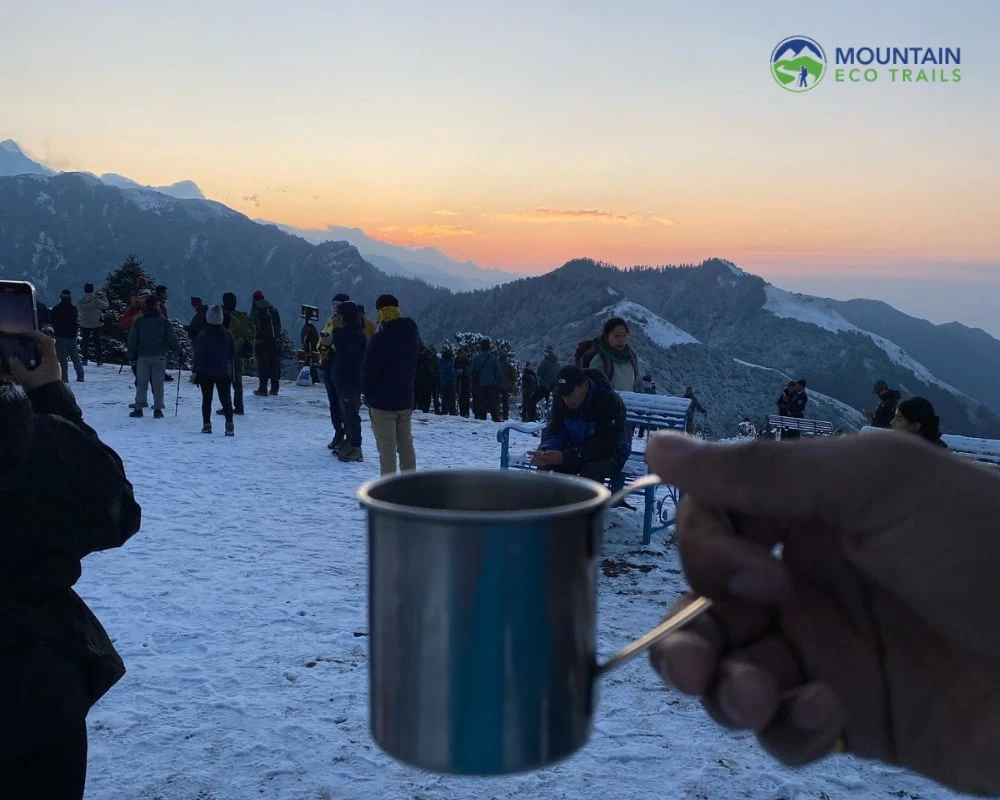
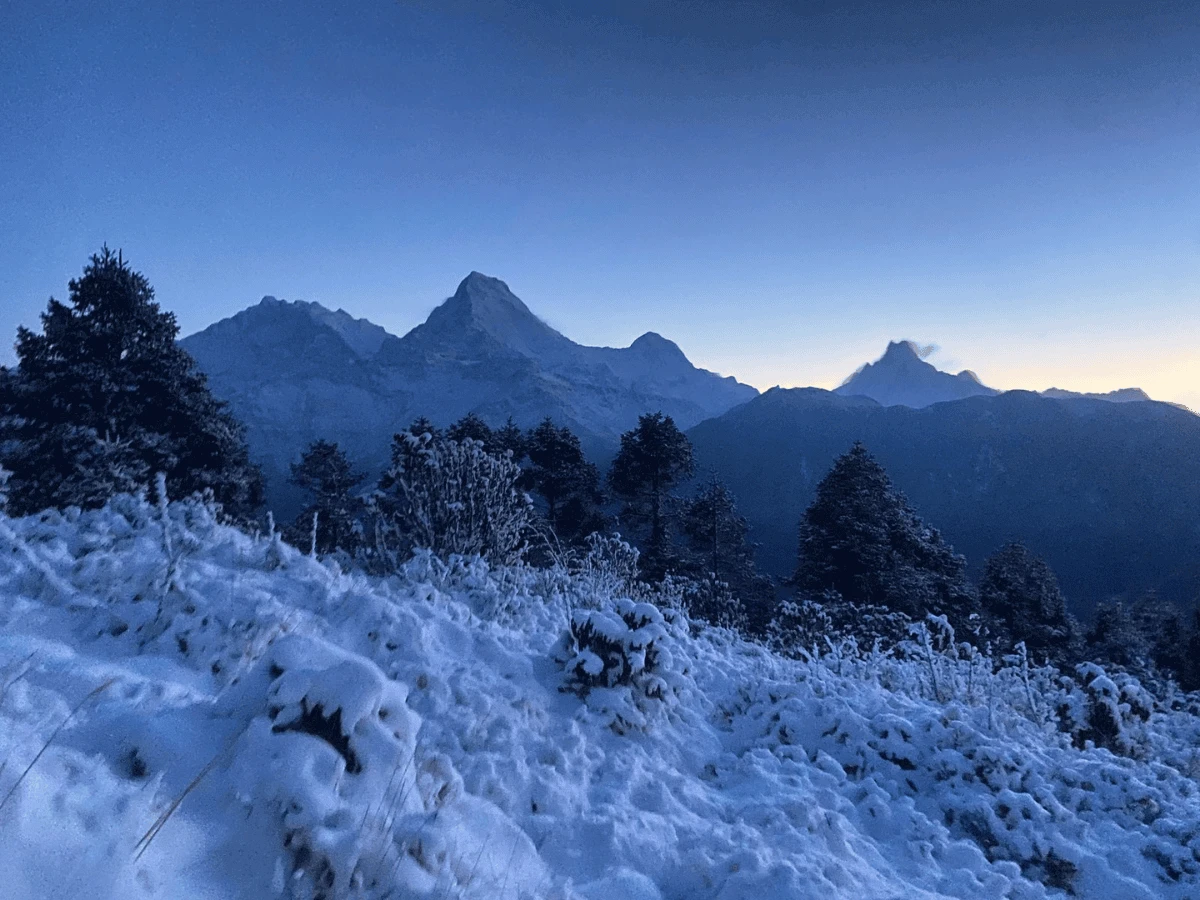
  • Early sunrise view striking over the mountains from Poon Hill.
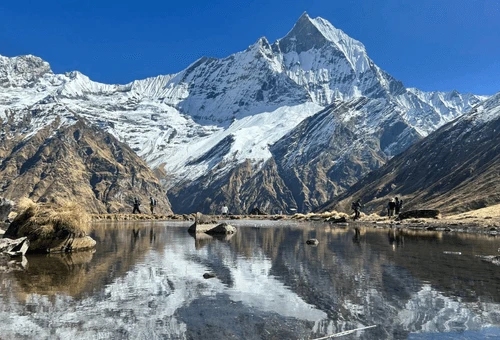
  • Spectacular views of panoramic mountains like Annapurna, Dhaulagiri, Mt. Fishtail, Hiuchuli, etc.
  • Amazing hospitality of the Gurung community.
  • Hike through the green lush forests, store stairs, and suspension bridges.

Nestled in Nepal’s Annapurna region, the Ghorepani Poon Hill Trek is one of the country’s most popular short treks. This adventure combines natural beauty, cultural encounters, and a manageable challenge, making it perfect for trekkers from all around the world. It lies to the West of another popular trek in Nepal, the Annapurna Base Camp Trek, which can even be combined with the Poon Hill Trek for a more adventurous and thrilling journey.

Over just 5–6 days on the trail, you’ll traverse terraced hillsides, lush rhododendron forests, and charming mountain villages before reaching Poon Hill – a renowned sunrise viewpoint over the Himalayas. The highest point of the Poon Hill Hike is 3200 meters above the Ghorepani Village. Despite its relatively short length, the trek rewards you with panoramic views of the Annapurna and Dhaulagiri ranges and an immersive taste of Nepali hill culture.

If you’re looking for an adventurous yet accessible trekking experience in Nepal, the Ghorepani Poon Hill trek deserves a top spot on your bucket list. Whether you're a novice hiker, a photographer hunting the perfect sunrise, or a culture enthusiast looking to immerse yourself in Nepalese village life, this trail delivers everything you are looking for in the Himalayas.

Why Choose Ghorepani Poon Hill Trek Nepal?

The Ghorepani Poon Hill Trek in Nepal is more than just a hike. It's an opportunity to stand at 3,210 meters above sea level and watch the Himalayan giants glow in golden hues. Moreover, the trek is not just a walk through the lush green forest, but provides an opportunity to witness Himalayan wildlife along with the mountains. Here's why it's a must-do:

  • Beginner-friendly and short-duration trek
  • Panoramic views of Annapurna South, Machhapuchhre (Fishtail), Hiunchuli, and Dhaulagiri
  • Rhododendron forests that blaze with colour in spring
  • Authentic cultural experience in Ghorepani, Tadapani, and Ghandruk
  • No high-altitude sickness risk
  • Flexible itinerary: from 2-day quick hikes to 6-day immersive journeys

Highlights of the Poon Hill Trek in Nepal

The Ghorepani Poon Hill trek may be shorter than Nepal’s grand expeditions, but it certainly doesn’t lack for incredible sights and experiences. Here are some of the top highlights and unique features that make this trek so popular:

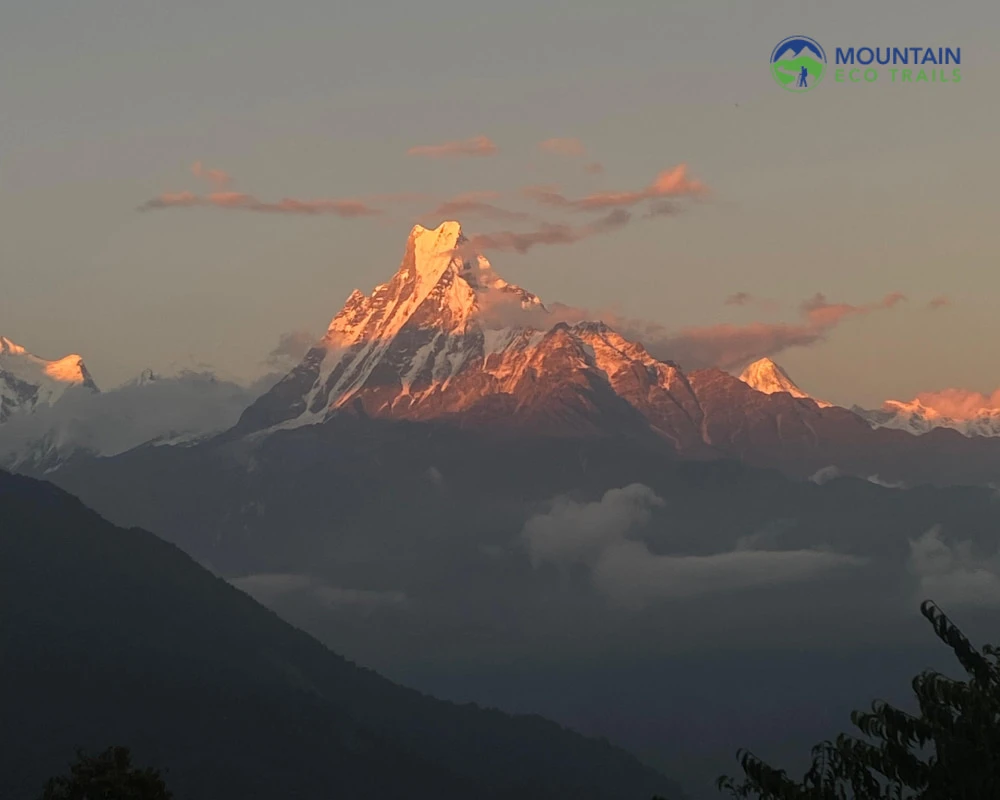
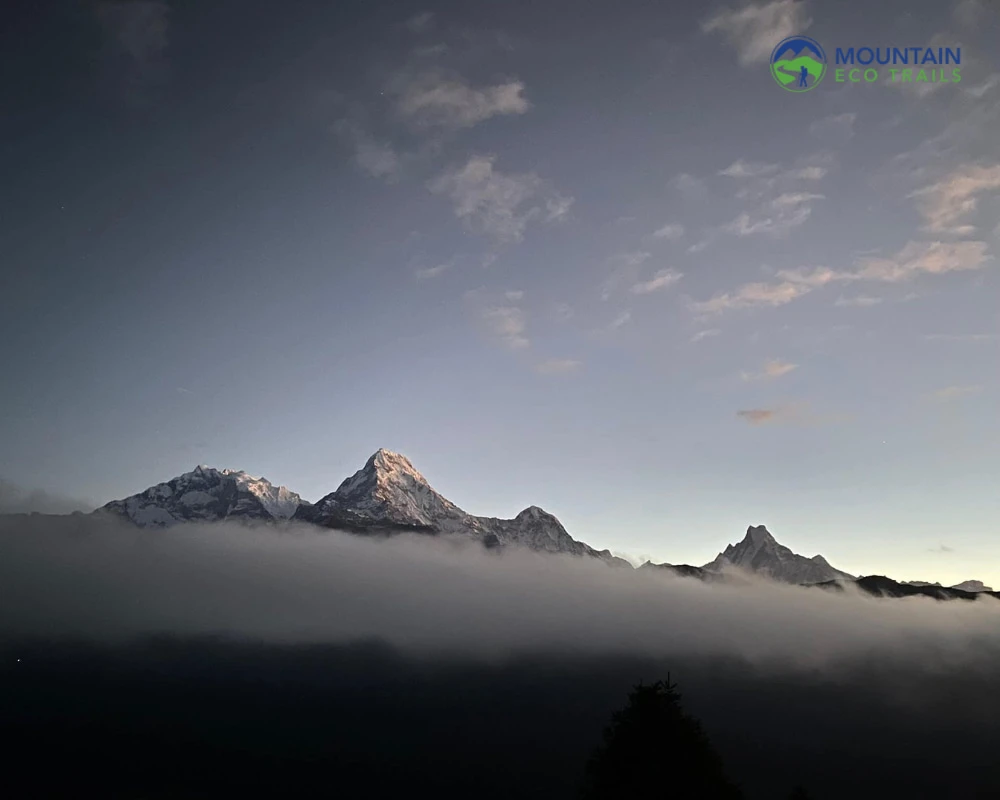
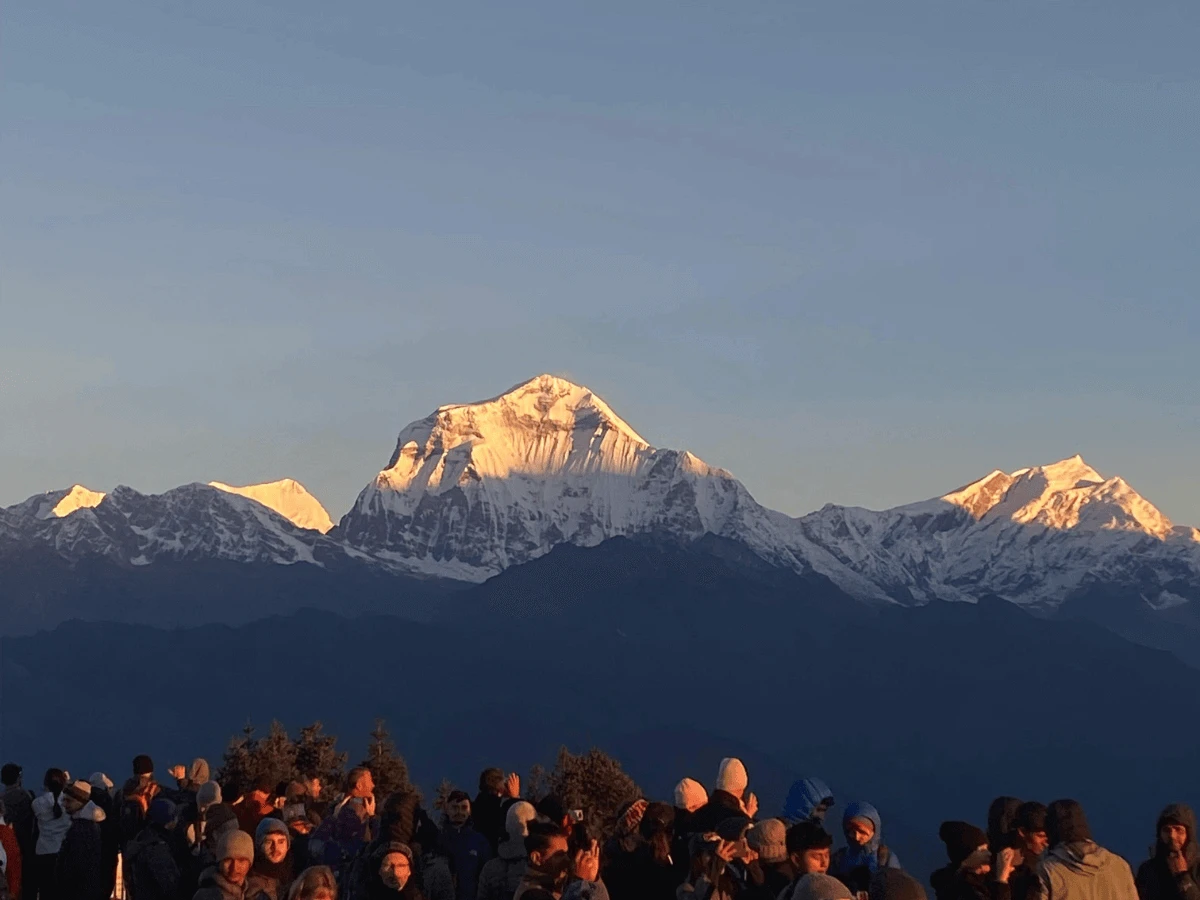
Spectacular Himalayan Sunrises: The pre-dawn climb to Poon Hill is rewarded by an unforgettable sunrise over the Himalayas. As the sun peaks above the horizon, it bathes Mount Dhaulagiri, Annapurna I, Annapurna South,Machhapuchhre (Fishtail), Hiunchuli, and a panorama of other peaks in golden light.

Lush Rhododendron Forests: Trekking through the Annapurna Conservation Area, you’ll traverse hills blanketed in dense rhododendron forests. If you hike in spring (March-April), these woodlands erupt in colour as Nepal’s national flower – the rhododendron – blooms in brilliant reds, pinks, and purples.

Tranquil Mountain Villages & Culture: The route connects traditional Gurung and Magar villages, allowing you to experience the rich culture of Nepal’s hill communities. You’ll stay in teahouse lodges run by local families in villages like Tikhedhunga, Ghorepani, Tadapani, and Ghandruk. Along the way, interact with friendly villagers, shepherds, and curious schoolchildren.

Continuous Mountain Views: Unlike some treks that save all the views for the end, the Poon Hill trek offers mountain scenery throughout. From Day 2 onward, you’ll catch stunning glimpses of peaks whenever the terrain opens up. The trail from Ghorepani to Tadapani goes over ridges that unveil both the Annapurna and Dhaulagiri ranges.  And in Ghandruk, you wake up to massive Annapurna South (7,219 m) and Machhapuchhre (6,993 m).

Short, Flexible & Accessible: One of the great appeals of Poon Hill is that it’s a relatively short trek in Nepal. In under a week, you get a Himalayan summit view, cultural insight, and ecological diversity. The trek can be done in as few as 3-4 days or extended to a week, depending on your schedule. It’s also easily accessible, starting just an hour’s drive from Pokhara (which itself is a 6-7 hour tourist bus or a 25-minute flight from Kathmandu).

These are just a few of the many highlights awaiting you on the Ghorepani Poon Hill trek. Every trekker comes away with their favourite memories.

How Hard Is the Ghorepani Poon Hill Trek?

Many travellers often ask, “How hard is the Poon Hill trek?” The good news is that Ghorepani Poon Hill is considered an easy-to-moderate trek. Unlike high-altitude expeditions, like the Annapurna Circuit Trek, this trek stays at fairly lower elevations (max. 3,210 m at Poon Hill). Trekkers with a reasonable level of fitness – able to walk 5-6 hours a day can do this trek.

The most difficult part is typically the steep stone staircase from Tikhedhunga up to Ulleri.  After Ulleri, the paths gradually ascend through forests with plenty of rest stops. Take it slow on the stairs, use trekking poles if you have them.

Overall, the Poon Hill trek difficulty is rated easy to moderate. You don’t need prior trekking experience. Daily walking distances range from 5 to 12 km with 4–7 hours on the trail. Altitude gain is fairly gradual, allowing your body to adjust. At 3,210 m, altitude sickness is rarely a major concern on this trek – it’s low enough that serious Acute Mountain Sickness is unlikely for most people.

6-Day Ghorepani Poon Hill Trek Itinerary Map & Distance

Where is the trek, and how far will you walk? The Ghorepani Poon Hill circuit is located in central Nepal, within the Annapurna Conservation Area. The trek begins at Nayapul (approx. 1,070 m), a small roadside town about 42 km from Pokhara.

From Nayapul, the route forms a loop through Gurung and Magar villages, ascending one way and returning via a different path. Trekkers usually ascend via Ulleri to Ghorepani, then hike to Poon Hill for the sunrise, and descend via Tadapani and Ghandruk. In total, the trekking distance of Ghorepani Poon Hill is about 50–55 km (30–34 miles).

It’s helpful to review a Ghorepani Poon Hill trek map before you go, to visualise the route and key checkpoints. Many trekking agencies provide a route map highlighting the trail from Nayapul – Tikhedhunga – Ghorepani – Poon Hill – Tadapani – Ghandruk – Nayapul.

How much does the Ghorepani Poon Hill trek cost?

The cost can vary depending on whether you go with a trekking agency package or independently, and your spending. If you book a Ghorepani Poon Hill trek package, expect roughly USD 500–$700 per person for a 5-6 day trip from Kathmandu/Pokhara, all-inclusive. Mountain Eco Trails offers the 6-day trek for around $580 per person (with group discounts), which includes permits, guide, transportation, accommodations, and meals. That is a good value considering it covers almost everything once you’re in Nepal.

Ready to Trek? Book with Mountain Eco Trails

Embarking on the Ghorepani Poon Hill trek is easier and more rewarding when you have the right team supporting you. Mountain Eco Trails is here to turn your trekking dreams into reality. With our expert local guides, eco-friendly approach, and attention to every detail, we ensure your Poon Hill experience is safe, seamless, and unforgettable. Contact us for more details or WhatsApp at +9779849790153.  

Itinerary

Your adventure begins with a scenic journey from Nepal’s capital, Kathmandu, to the lakeside city of Pokhara. Most travelers opt for the tourist bus that departs early (around 7:00 am) from Kathmandu. It’s a drive of roughly 200 km, taking about 7 hours with a lunch stop. The drive is an experience in itself – you’ll follow the Trishuli and Marshyangdi Rivers, passing green hills, terraced fields, and glimpses of rural Nepali life. If the weather is clear, keep an eye out in the distance for snow-clad peaks teasing the horizon as you approach Pokhara. Optional: If you prefer a quicker trip, flights are available from Kathmandu to Pokhara that take only about half an hour, offering aerial views of the Himalayas.

  • Max Altitude:800 meters
  • Accommodation:Hotel
  • Time:7-8 hours
  • Meals:Breakfast


Fuel up with an early breakfast in Pokhara. The guide will come to your hotel with a driver, then short drive to the trailhead. You’ll travel by private Vehicle to Nayapul (approx. 1,070 m), which takes about 1 to 1.5 hours from Pokhara. The road winds through scenic countryside and small towns before descending to Nayapul by the Modi Khola River. At Nayapul, you’ll likely stop at the ACAP checkpoint to show your permits (more on permits later), and then it’s time to start walking!

The trek kicks off with an easy walk along a dirt road following the Modi Khola. You’ll pass through Birethanti, a riverside village with a bustling checkpoint where trekkers’ permits are registered. Crossing a suspension bridge over the Burundi Khola, the trail officially splits off the road and begins to gently ascend through terraced farmlands. You’ll hike through scattered villages like Hile or Tikhedhunga, where you can stop for lunch. Enjoy your first meal on the trail – perhaps dal bhat (the classic lentil curry with rice) to power you up the hill!

After lunch, the trail gets steeper as you approach Ulleri. You’ll cross a long steel suspension bridge over a stream just before Tikhedhunga. After crossing the Suspension bridge, steep staircases await you, which can be challenging on the 1st day. Climb around 3200 staircases to arrive at Ulleri for an overnight stay.

  • Max Altitude:1480 meters
  • Accommodation:Tea House
  • Time:4-5 hours
  • Meals:Breakfast, Lunch, Dinner

After breakfast around 7 in the morning, the trek begins right after following the lush green forests. You’ll trek through Banthanti (2,250 m) and Nangethanti (2,460 m) – small settlements often used as rest/lunch stops. The landscape transitions into a lovely rhododendron and oak forest. In spring, these forests are ablaze with rhododendron blooms, carpeting the trail in petals. Keep an eye out for wildlife; you might see monkeys swinging in the trees or colorful birds flitting about. As you gain altitude, the air gets crisper and cooler.

After lunch (depending on your pace, you might eat at Banthanti or press on to Nangethanti for a late lunch), you’ll tackle the last segment to Ghorepani. The trail once again climbs a bit steeply through dense woods. You’ll know you’re getting close when you start seeing hints of snow peaks through the trees. Finally, the forest opens up to a wide saddle – welcome to Ghorepani!

Ghorepani (2,874 m) is a charming village spread across a ridgeline, divided into Lower and Upper Ghorepani. The name “Ghorepani” means “horse water” – it was a stopping point for mule and horse caravans. These days, it’s a major trekking crossroads with numerous blue-roofed lodges catering to trekkers. If you arrive in mid-afternoon and the weather is clear, you might already catch a glimpse of the mountains, especially Annapurna South and Nilgiri, from the upper part of the village. Many lodges have open yards or balconies positioned to view the sunset on the peaks. It’s a magical sight to see the 7,000+ m giants turning pink and orange in the evening light.

  • Max Altitude:2860 meters
  • Accommodation:Tea House
  • Time:6-7 Hours
  • Meals:Breakfast, Lunch, Dinner

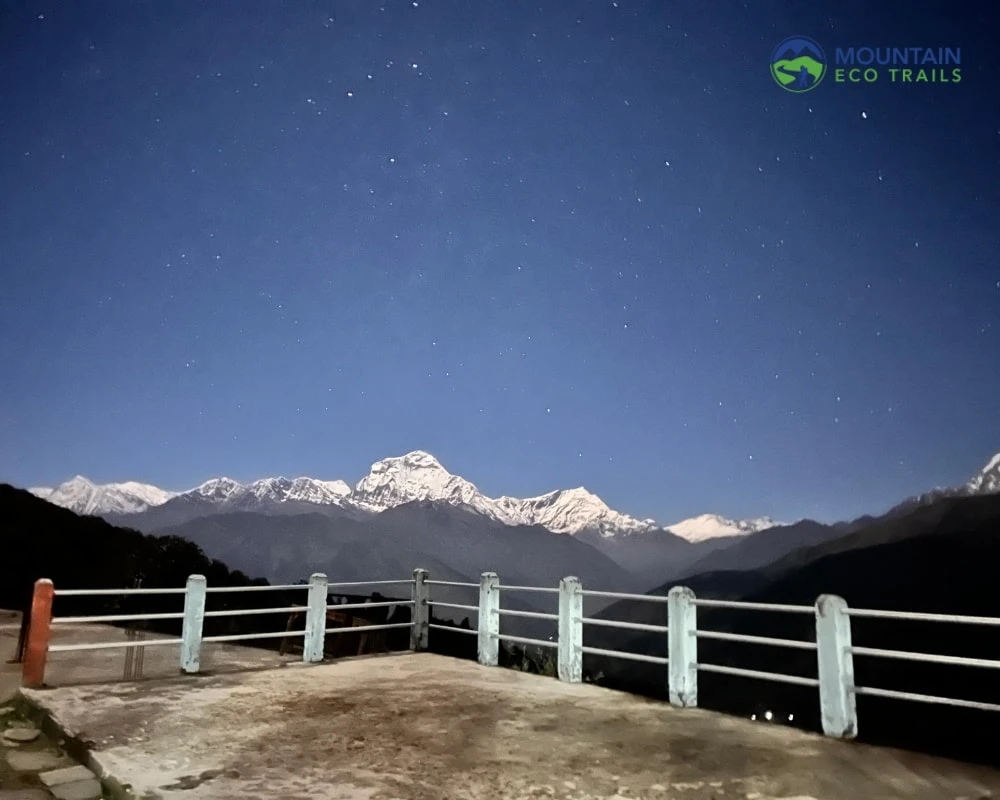
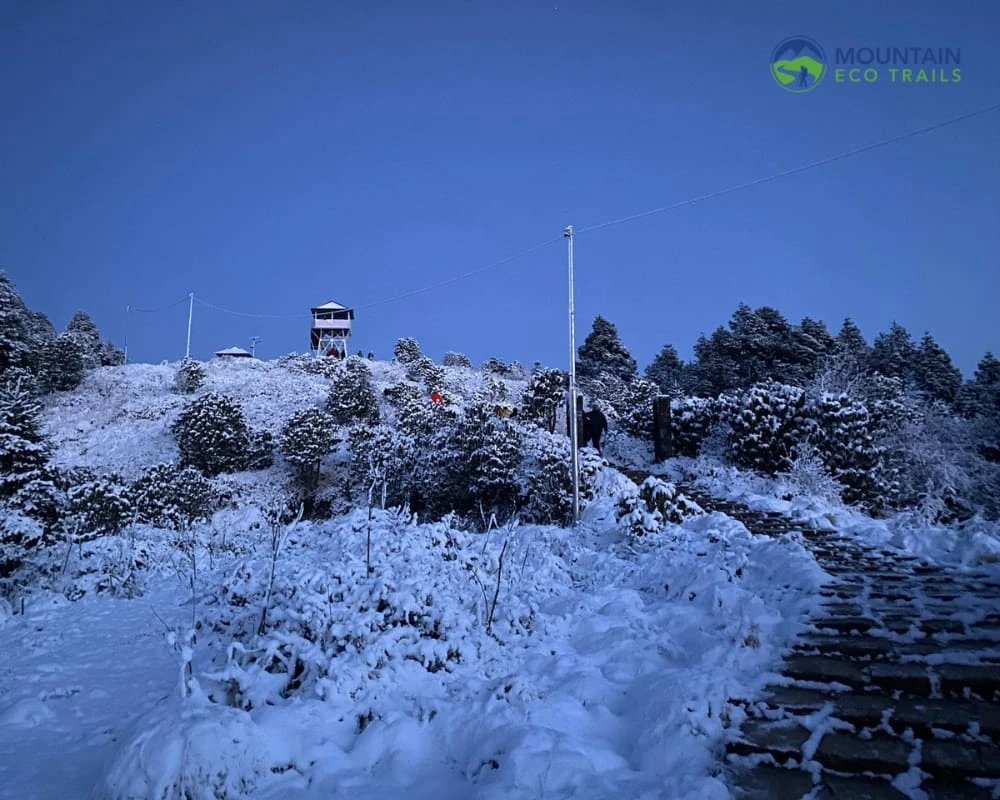
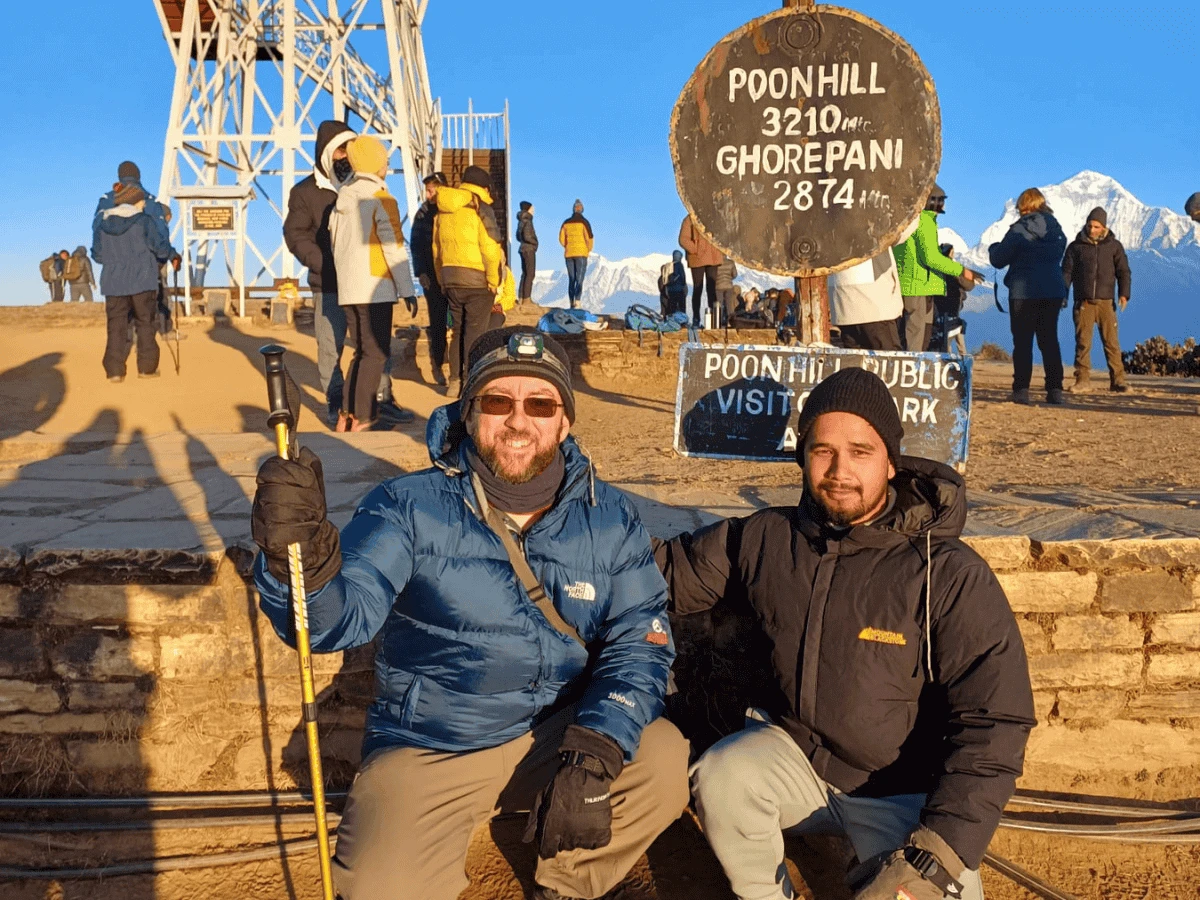
This day starts on a literal high note! Before dawn, in the cold darkness, you’ll join throngs of fellow trekkers for the hike up to Poon Hill. At around 5:15–5:30 am, you’ll Hike to Poon Hill (3,210 m). Despite the early hour, you won’t be alone – this viewpoint is famous for good reason. There’s a viewing tower and plenty of space along the ridge to find your perfect vantage. As dawn breaks, prepare for one of the most breathtaking panoramas in Nepal. One by one, the peaks come into view: directly west, the massive bulk of Dhaulagiri (8,167 m) and its neighboring peaks Tukuche and Dhampus; to the north, the entire Annapurna Range including Annapurna I (8,091 m), Annapurna South, Hiunchuli, and the iconic fishtail of Machhapuchhre (6,993 m); further east, if clear, you might even spot Manaslu and Ganesh Himal on the distant horizon.

After roughly an hour on Poon Hill, you’ll head back down to Ghorepani for breakfast. By 7:30–8:00 am, you’ll be on the trail again, continuing your trek towards Tadapani. The route today starts with another ascent (in case your legs hadn’t had enough!). From Ghorepani, you climb about 200 m to Deurali Pass (3,200 m), which is along a wooded ridge. This is almost as high as Poon Hill, so you’ll get bonus mountain views during the climb if the trees part. After reaching this high point, the trail begins a long descent on the other side.

A few hours in, you’ll reach Banthanti (another one – common name!), where many stop for lunch. Enjoy your meal with perhaps a view of Machhapuchhre peeking between the valley if you’re lucky. Post-lunch, the trail undulates – one more short climb to gain a ridge, and then you’re finally descending into Tadapani (2,630 m). After descind for an hour, another uphill climb will arrive at Tadhapani for an overnight stay.

  • Max Altitude:3210 meters
  • Accommodation:Tea House
  • Time:6-7 Hours
  • Meals:Breakfast, Lunch, Dinner

Today is a relatively short and relaxing trekking day, which is welcome after the previous two challenging days. After breakfast in Tadapani, you’ll begin the trek downhill to Ghandruk. The trail drops steeply at first through dense forests – almost primeval in feel, with moss-covered trunks and the sounds of birds echoing. On a clear morning, you might catch occasional glimpses of Annapurna South or Machhapuchhre through gaps in the trees, reminding you of the giants looming above.

Arrive in Ghandruk (1,940 m) by late morning or midday. Ghandruk is a traditional Gurung village with slate-roofed houses and tidy stone lanes. It’s a contrast to the tiny trail stop of Tadapani – here you’ll find a relative bustle of village life, a small museum, a Buddhist monastery, schools, and more substantial guesthouses. The backdrop of the village is jaw-dropping: Annapurna South and Hiunchuli stand directly to the north, seemingly just a stone’s throw away, and Machhapuchhre’s triangular peak peeks over a ridge.

A private jeep can be arranged easily (your guide will typically sort this out) and takes around 3 hours to reach Pokhara. The road is rough and bumpy until Nayapul, then paved. While not the most comfortable ride, it saves you a lot of time and impact on the knees. You’ll descend those 1,000 m in a vehicle rather than on foot! If you take a jeep around mid-morning, you can be in Pokhara by lunchtime. Overnight stay in Pokhara.

  • Max Altitude:850 Meters
  • Accommodation:3-Star Hotel
  • Time:4-5 Hours
  • Meals:Breakfast, & Lunch

After a memorable short and easy trek in Nepal to Ghorepani, now time to get back to Kathmandu. As per the schedule of the tourist bus, the trekking guide will help you to reach at the Bus station. Follow the same highway you came from the capital of Nepal, Kathmandu, enjoying the riverside views and the traditional villages. Upon reaching the last station of station, you will be transferred to your hotel in a taxi by our guide.

Later in the evening, we will have a farewell dinner to listen after your story about the Ghorepani Poon Hill Trek in the Annapurna Region.

  • Max Altitude:1350 meters
  • Accommodation:Hotel
  • Time:7-8 Hours
  • Meals:Breakfast

The outlined itinerary has been carefully designed to provide a well-balanced trekking experience, incorporating key highlights, acclimatization considerations, and a comfortable pace for most trekkers. However, we understand that each individual or group may have unique interests, time constraints, fitness levels, and travel goals.

To accommodate these varying needs, we offer full flexibility in customizing the itinerary. Modifications can be made in the following areas:

Duration: The number of trekking days can be extended or shortened depending on your available timeframe.

Pace & Difficulty: We can adjust daily walking distances and rest days to better suit your fitness level or acclimatization needs.

Route Alteration: Alternative trails or side trips (such as cultural villages, scenic viewpoints, or lesser-known paths) can be added or replaced based on your preferences.

Accommodation Style: We offer options ranging from basic tea houses to more comfortable lodges where available.

Interests & Focus: Whether you’re more inclined toward photography, nature, cultural experiences, or spiritual exploration, the itinerary can be fine-tuned accordingly.

If you have any special requests or would like to discuss a personalized trekking plan, please feel free to contact us. Our team will be happy to assist in designing a journey that best aligns with your expectations.

Cost Includes
  • Kathmandu-Pokhara-Kathmandu Tourist Bus Fare 
  • Annapurna Conservation Area Project Permit Card. 
  • Pokhara 2-night accommodation in a 3-star Hotel before and after the trek with BB plan. 
  • English-speaking government-licensed Trekking Guide. 
  • Expenses of the guide, including his salary, meals, accommodation, and insurance. 
  • Pokhara to Nayapul in a private car.
  • Ghandruk to Pokhara in a private Jeep. 
  • Meals during the trek (3 breakfasts, 4 lunches, 3 Dinners)
  • Accommodation during the trek on a sharing basis. 
  • Seasonal fruits every day after dinner. 
  • Trekking Poles ( As a complimentary) 
  • Government & Local Taxes
Cost Excludes
  • Drinks and personal expenses during the trek 
  • Rescue evacuation if needed
  • Travel Insurance 
  • Lunch and Dinner in Pokhara 
  • Porter costs (If needed, USD 20 per day)
  • Tips for Guide and Porter
  • Extra days in the mountains due to bad weather or extension of the trip to another destination. 
Availability

At Mountain Eco Trails, we understand that every traveller has unique schedules and preferences. That’s why we offer flexible departure dates for all our trekking and tour packages. Whether you’re a solo traveller, a couple, or a group, we can customise your trekking departure date to best fit your itinerary.

  • Customised Departures for Your Convenience
  • Tailor-made departure dates: You are not limited to fixed schedules; we arrange treks based on your preferred dates.
  • Private & group treks available: Join an existing group or plan a private trek at your convenience.
  • Seasonal recommendations: We can suggest the best departure dates based on weather, trekking conditions, and your availability.
  • Short-notice departures: Need a last-minute trek? We’ll do our best to accommodate your request.

Feel free to contact us with your preferred dates, and we’ll craft the perfect trekking experience for you!

Select a Departure Month
Start DateEnd DatePriceStatus 
Start DateStarts: SundayDec 21, 2025End DateEnds: FridayDec 26, 2025PricePriceUS$580StatusStatusAvailable
Start DateStarts: SundayDec 28, 2025End DateEnds: FridayJan 02, 2026PricePriceUS$580StatusStatusAvailable
Good to Know

Eco-Tourism and Responsible Trekking

The Annapurna region is not just a trekking paradise – it’s also an ecologically and culturally sensitive area. Practising eco-tourism is crucial to preserving this beautiful environment. Trekkers are encouraged to “take nothing but photos, leave nothing but footprints.” This means pack out all your trash (or dispose in proper bins in villages), and avoid single-use plastics. Instead of buying many plastic water bottles, carry a reusable bottle and use water purification tablets or a filter; many teahouses also offer boiled or filtered water for a small fee. Stick to the main trails to avoid damaging flora. During the spring bloom, resist the urge to pluck rhododendron flowers – let everyone enjoy them in nature.

Travel Insurance and Safety

Travel insurance is a must for treks in Nepal, including Poon Hill. While this trek is considered safe and at a lower altitude, unforeseen incidents can happen – from injuries to illness or even flight cancellations. Good travel insurance will cover you for trekking up to 3,500 m (ensure Poon Hill’s altitude is within your coverage), and include emergency evacuation by helicopter if needed. Helicopter rescues in the Annapurna region can cost $5,000 or more, so you want that covered!

The Kind of Permit Card You Need for the Ghorepani Poon Hill Trek

Trekking in the Annapurna region requires a couple of permits, which you must have in hand before you start the trek. For Ghorepani Poon Hill, the necessary permits are:

Annapurna Conservation Area Permit (ACAP): Since the trek is inside the Annapurna Conservation Area, all trekkers must obtain this permit. The ACAP is issued by the Nepal Tourism Board or the ACAP office in Pokhara or Kathmandu. The cost is NPR 3,000 per person (approximately USD 25) for foreigners and NPR 1,000 for SAARC nationals. 

To summarise: Yes, you need permits for the Poon Hill trek – specifically ACAP. Ensure you have them before hitting the trail. Mountain Eco Trails will take care of the permit cards before the trek, and the guide will handle it during the trek.

Gear and Packing Checklist for 6-Day Ghorepani Poon Hill Trek

Packing smart is essential for a comfortable trek. The key is to bring enough to be safe and warm, but not overpack since either you or a porter has to carry it. Here’s a checklist and tips for what to pack for the Ghorepani Poon Hill trek:

Clothing:

  • Trekking Shirts: 2–3 moisture-wicking t-shirts
  • Trekking Pants: 1–2 pairs of lightweight, quick-dry pants. 
  • Base Layer (Thermals)
  • Insulating Layer: A fleece jacket or down jacket. 
  • Shell Layer: A waterproof/windproof jacket (rain jacket) is a must. 
  • Sports Bra (for women)
  • Underwear: Enough for the trek (you can rinse and repeat).

Footwear:

  • Trekking Boots/Shoes: Sturdy, broken-in hiking boots with ankle support are recommended due to the uneven terrain and steps. 
  • Socks: 3-4 pairs of good trekking socks 
  • Camp Shoes/Sandals

Head and Hands:

  • Hat/Cap: A sun hat or baseball cap for daytime to protect from the intense sun.
  • Gloves: Lightweight fleece gloves for cool mornings
  • Sunglasses
  • Buff/Scarf

Equipment and Gear:

  • Backpack/Daypack
  • Rain Cover: A waterproof rain cover for your backpack
  • Trekking Poles: Highly recommended, especially for downhill sections to save your knees and improve balance. 
  • Headlamp: A headtorch is essential for the pre-dawn Poon Hill climb
  • Water Bottles/Bladder: Carry capacity for at least 2 litres. 
  • Water Purification
  • Sleeping Bag: Teahouses do provide basic bedding, but a good 3-season sleeping bag (rated to around -5°C/23°F) adds warmth and cleanliness. 
  • Personal First Aid Kit
  • Toiletries

Finally, don’t forget essentials like your passport, permits, enough cash, and a copy of your travel insurance details (and maybe a photocopy of your passport/visa stored separately in case). On the trek, ATMs won’t be available, so bring sufficient Nepali rupees from Pokhara for snacks, drinks, showers, tips, etc.

Accommodations on the Trek to Ghorepani Poon Hill 

One of the pleasures of the Poon Hill trek is the teahouse experience. Unlike camping treks, here you stay in local lodges (teahouses) that provide both a bed and meals. Here’s what to expect:

Accommodation: Teahouses are simple. Rooms are typically twin-share with two single beds (with a foam mattress and pillow). Bedding is provided, but it’s wise to use your sleeping bag for warmth and cleanliness. Some lodges have attached bathrooms in a few rooms, but don’t count on hot showers everywhere. You may have a squat or western toilet, depending on the place, and a bucket of hot water shower available for a few-dollar fee. 

Food Items in Ghorepani Poon Hill

You’ll be pleasantly surprised by the variety of food available on the trek. Each teahouse has an extensive menu (many dishes adapted to Western tastes). Standard items include: dal bhat (rice with lentil soup, curry, pickle) – highly recommended for its energy and endless refills! – plus noodle dishes, fried rice, momos (Nepali dumplings), pasta, soups, porridge, pancakes, eggs, etc. 

Breakfasts usually feature eggs (omelette, boiled, scrambled), Tibetan bread or chapati, pancakes, muesli, porridge, etc.

Lunch and dinner menus overlap – lots of carb-rich options to refuel you. Don’t expect red meat (aside from occasional chicken) due to the difficulty of transporting fresh meat; most trekkers eat vegetarian on the trail, which is safer and fresher. Try local specialities if offered, like Gurung bread or nettle soup.

Hydration and drinks: Safe drinking water is critical. As mentioned, it’s best to use treated water. You can buy bottled water in lower areas, but as you go up, it gets expensive and creates waste. Instead, ask your lodge to fill your bottle with boiled water in the evening – some charge a small fee per litre. Water purification tablets or a Steripen UV purifier are very handy; you can fill from taps or streams.

Typical Day’s Eating: Breakfast around 7 am, lunch en route around 11:30 am–12:30 pm, and dinner by 6:30 pm or 7 pm. You’ll likely snack in between (bring some trail mix, energy bars, or buy a Snickers at a village stall). On the Poon Hill hike morning, you might have just tea and a biscuit before the sunrise hike, then a full breakfast after returning to Ghorepani.

Trekking Crew Member from Mountain Eco Trail: Guide

As of recent regulations, hiring a guide is now mandatory for treks like Poon Hill for foreign trekkers. But even without a mandate, having a guide is highly recommended for enhancing your experience and safety. Here’s what to know:

Guides: A professional trekking guide is typically an English-speaking (often other languages too) local expert who knows the route inside out. They will lead the way, manage logistics, handle permit checkpoints, and communicate with locals for you when needed. A good guide also enriches your journey with information about the mountains, culture, and nature – essentially turning the trek into an interactive tour, not just a walk. 

Mountain Eco Trails provides licensed, experienced guides who prioritise safety and client experience. They often have years of trekking experience and first aid training. Having that support means you can trek with peace of mind, focus on the scenery, and not worry about missing a turn or a teahouse booking. The guide will usually walk with you (sometimes staying a bit ahead to secure rooms in the next village during peak season).

Altitude Sickness and Health Considerations in Ghorepani

One reason the Poon Hill trek is considered relatively safe is its moderate altitude. The highest sleeping point is Ghorepani at 2,874 m (9,429 ft), and the highest point reached is Poon Hill at 3,210 m (10,531 ft). These altitudes are below the usual threshold (around 3,500 m) where serious Acute Mountain Sickness (AMS) becomes common. However, altitude affects everyone differently, and even at these elevations, some mild symptoms can occur.

Symptoms to watch: At Ghorepani, you might feel a mild headache, slight nausea, or dizziness – common mild AMS signs. Poor sleep at altitude is also normal. Usually, these symptoms are alleviated by rest and hydration. 

To be safe, ascend gradually, which this itinerary does by spending a night at 1,480 m (Tikhedhunga), then 2,874 m (Ghorepani). Avoid any plan that pushes you from low altitude straight to Ghorepani in one day – that could be risky. Drink plenty of water (3-4 litres spread throughout the day). Also, avoid alcohol and smoking, especially at higher altitudes, as they can exacerbate dehydration and AMS.

Therefore, take altitude seriously, but don’t be overly afraid – this trek’s profile is one of the safer ones. Focus on common-sense health practices: good hygiene, proper hydration, gradual ascent, and attentive listening to your body. That way, you’ll stay healthy and strong to enjoy every moment on the trail.

Booking Your Trek with Mountain Eco Trails

When it comes to organising the Ghorepani Poon Hill trek, choosing the right trekking company can enhance your experience enormously. Mountain Eco Trails is a local Nepali trekking company that specialises in guided treks exactly like Poon Hill. Booking with a reputable outfitter like Mountain Eco Trails offers several advantages:

To book with Mountain Eco Trails, you can contact them through our website or email or WhatsApp us at +9779849790153.

Also, for the trip confirmation, we kindly request our clients to make an advance payment of 20% of the total cost, and the remaining balance can be paid after arrival. It’s recommended to book at least a few weeks or months in advance, especially for peak season (Oct-Nov, Mar-Apr), to ensure availability of guides and any internal flights/hotels if needed. 

FAQs
  • The Poon Hill trek is considered moderate and very achievable for most people. Hiking up to Poon Hill from Ghorepani is easy but contains a lot of staircases. However, you don’t need any technical skill to Climb up to Poon Hill.

  • For most people, altitude sickness (AMS) is not a major concern on the Ghorepani Poon Hill trek. The highest point you sleep is 2,874 m at Ghorepani, and you go up to 3,210 m on Poon Hill briefly. These altitudes are relatively moderate. Serious altitude sickness is uncommon below 3,500 m.

  • The distance from Ghorepani to Poon Hill is quite short – about 1.2 km (0.75 miles) each way, so roughly 2.4 km round-trip. Don’t be fooled by the short distance, though; it’s a steep uphill hike of around 400 meters (1,300 feet) vertical gain. Most people take 45 minutes to 1 hour to climb up in the pre-dawn darkness and about 30–40 minutes to descend back to Ghorepani.

  • It’s possible but not typical. A “2-day Poon Hill trek itinerary” usually involves driving as far as possible and a very tight schedule. For example, some trekkers take a jeep from Pokhara very early in the morning to Ulleri (this rough drive can take ~3 hours), then trek the remainder to Ghorepani that same day. On Day 2, they hike up Poon Hill for sunrise and then descend and take a jeep back from say Ulleri or Hille to Pokhara.

  • As of the latest regulations (2023 onward), yes, international trekkers must hire a guide to enter the conservation areas, national parks, and restricted regions of Nepal.

  • You need two permits: the TIMS card and the ACAP entry permit. TIMS stands for Trekkers’ Information Management System – it’s a trekker registration card.

  • Accommodation on the Poon Hill trek is in teahouses (mountain lodges) in each village. These are simple guesthouses run by local families. Expect basic but cozy rooms, usually twin-sharing with two beds and a blanket. Most teahouses have shared bathrooms (squat or Western toilets; hot showers are available for an extra fee in many places).

  • The best time of the year for the 6-day Ghorepani Poon Hill Trek are generally spring (March to early May) and autumn (late September to November). During these months, the weather in the Annapurna region is most stable, with clear skies and mild temperatures – perfect for mountain views and comfortable trekking.

  • Yes, absolutely – the Ghorepano Poon Hill trek in 6 days is very popular among families (even those with kids) and older adventurers. Its moderate difficulty and shorter length make it one of the most family-friendly treks in Nepal.

Clients Reviews
  • Mountain Eco Trails are utterly amazing

    Mountain Eco Trails are utterly amazing. They are quick, efficient, and have great prices. They really should have more reviews they are that good. They will get to know you and tailor anything to your trekking needs as a small team. Wow

    T
    TomUnited Kingdom,August 2023
    Google
SimilarTrips
You may also like
Did not find what you are looking for? No worries!

Let us help you plan your perfect holiday.