

Responsible and Eco-Friendly Tourism
As Mountain Eco Trail Pvt. Ltd., we are fully attentive to the environment and the consequences of our actions during the trip. Our approach is to minimize the environmental effects of tourism activities like trekking and tours while promoting the local community. It brings positive energy and impact on both the environment and locals.
Best Time to do the 8-Day Short Annapurna Circuit Trek
Choosing the best time for your Annapurna Circuit trek is crucial for a safe and enjoyable experience. The Annapurna region can technically be trekked year-round, but spring and autumn are by far the most popular seasons due to their favourable weather. Here’s a breakdown of how each season looks:
Autumn (Sept – Nov): This is generally considered the prime trekking season in Nepal, with October and November being the absolute best months for the Annapurna Circuit. Post-monsoon autumn brings stable weather, crystal-clear skies, and mild temperatures – perfect for mountain views. Daytime temperatures are comfortable (10-20°C in lower altitudes), though nights at high elevations drop below freezing
Spring (Mar–May): Spring is the second most popular season. April and early May offer lovely trekking conditions – stable weather, slightly warmer temperatures than autumn, and the bonus of blooming rhododendron forests along the trail. In the lower sections, hillsides come alive with red and pink rhododendron blossoms. Higher up, snow from winter starts melting on the pass (making crossing safer by late spring).
Trekking Guide (and Porter) for the Short Annapurna Circuit
Nepal has banned solo trekking in its national parks and conservation areas, effective April 1, 2023, making a licensed guide compulsory on treks like the Short Annapurna Circuit. This rule was implemented by the Nepal Tourism Board for safety reasons, as there had been numerous incidents of trekkers getting lost.
Likewise, Good guides are a wealth of information about the mountains, cultures, and nature. They’ll tell you the names of peaks you see, explain local customs in villages, and perhaps teach you a bit of Nepali. Trekking independently might mean haggling for jeep prices, figuring out bus schedules in Nepali, or calling teahouses ahead for room availability in peak season. A guide will handle all these logistics for you, from arranging transport connections to securing accommodation each night.
When doing a short Annapurna Circuit Trek 8 Days, it’s easy to push too hard or misjudge the pace, risking altitude sickness. A guide will help plan a safe itinerary, enforce acclimatisation stops when needed, and set a suitable walking pace each day. Moreover, when you hire a guide, you are already supporting the local community as well.
Given these advantages and the new rules, we strongly recommend hiring a guide for the Short Annapurna Circuit trek. Solo trekking in this region is no longer possible, and even if it were, the cost savings are not significant compared to the value and safety a guide provides. The Annapurna Circuit Trek in 8 Days is challenging, and having an expert by your side can make the difference between a successful adventure and a risky ordeal.
So, how much does a trekking guide cost for the Annapurna Circuit Trek 8 Days?
The typical cost for a licensed, English-speaking trekking guide in Nepal is around $25-50 USD per day. This daily wage often includes their meals and accommodation on the trek, but you should clarify this with your trekking agency or the guide directly. For a 10-day trek, you’re looking at roughly $250-$400 in guide fees. Their experience and expertise may vary the price of trekking guides in Nepal.
Likewise, if you’re on a tight budget, you might plan to carry your backpack. However, consider hiring a porter if you feel unsure about carrying a heavy load over high passes. Porters typically charge $20 or so per day and can carry up to 20-25 kg of gear.
(Looking for a guide or group trek? Contact us at Mountain Eco Trail – we offer expert local guides and affordable trek packages for the Short Annapurna Circuit. We’ll ensure you have a safe, memorable journey!)
Required Permits and Fees for the Annapurna Circuit Short Trek
Trekking in the Annapurna region requires a couple of official permits. Make sure you have these before you start your hike. The permits are checked along the route, and trekking without them can land you in legal trouble and fines. For the Short Annapurna Circuit Trek, here are the permits you need:
Annapurna Conservation Area Permit (ACAP): This is an entry permit for the Annapurna Conservation Area, which covers the entire Annapurna Circuit trail. The ACAP permit costs NRs 3,000 per person for foreign nationals (approximately USD 25) and NRs 1,000 for SAARC country citizens.
8-Day Annapurna Circuit Trek Altitude Sickness Prevention
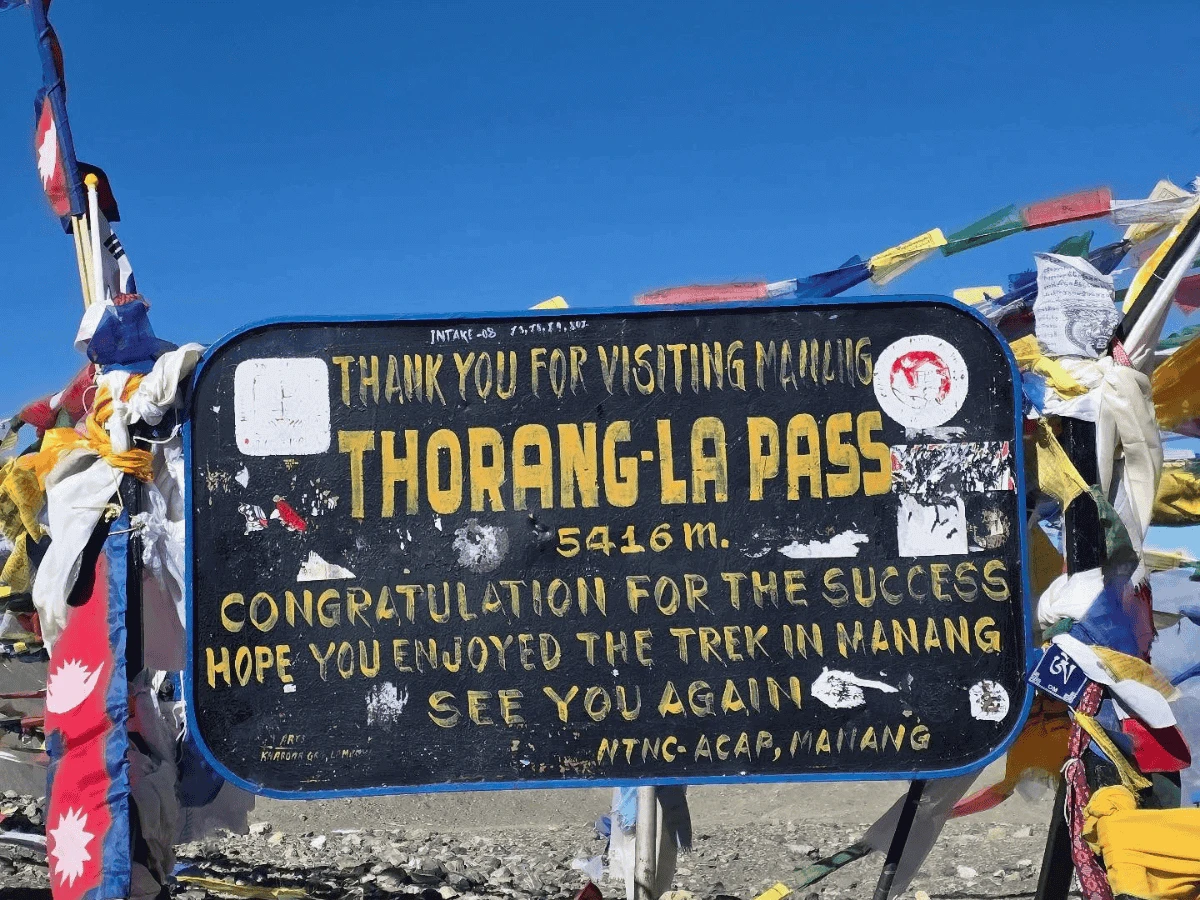
One of the biggest challenges of the Short Annapurna Circuit – even the shortened version- is the high altitude. On this trek, you will be going from near sea-level elevations in the beginning to over 5,400 m (17,700 ft) at Thorong La Pass, all within a matter of days. That means your body has to adjust to the thinner air, and if it doesn’t acclimatise well, you risk Altitude Sickness, also known as Acute Mountain Sickness (AMS).
Altitude sickness can affect anyone (even strong, experienced hikers) when ascending too quickly. It’s caused by the reduced oxygen pressure at high elevations. Symptoms often start mild and can include headache, loss of appetite, nausea, dizziness, fatigue, and disturbed sleep. Here are essential altitude sickness prevention tips for the Annapurna Circuit, especially critical since you’re doing it on a tight schedule:
- Acclimatize properly – don’t rush the ascent
- Stay hydrated and eat well: Drink plenty of fluids – about 4-5 litres per day at high altitude is recommended.
- Avoid alcohol and smoking: It’s best to skip alcoholic drinks entirely at altitude.
- Recognise symptoms early and don’t push through: Mild AMS symptoms (headache, slight nausea) can be managed by resting, hydrating, and not ascending further until they resolve.
- Consider preventive medication: Acetazolamide (Diamox) is a medication that can help prevent AMS.
- Proper rest and pacing: Overexertion can trigger AMS or make it worse. Avoid strenuous activity for the first day or two at high altitude– that’s why we chill in Manang.
To sum up, Altitude sickness is preventable with proper measures. Follow the itinerary’s acclimatisation schedule, listen to your body, and be willing to adjust plans if needed.
Packing List for an 8-Day Short Annapurna Circuit Trek
Packing wisely is key to enjoying your trek, especially when you aim to travel light on an 8-day itinerary. You want to be prepared for a wide range of conditions, from warm, humid lowlands to freezing high passes – all in one backpack. Below is a comprehensive packing list for the Short Annapurna Circuit Trek, focusing on what a budget, space-conscious traveller should bring:
Trekking Gear for Annapurna Trek: Trekking Poles, Sleeping Bag, Backpack, and water bottle
Upper Body: Woollen Hat, Layers, Quick-dry T-shirts, Thermals, Feelce Jackets, Down Jacket,
Lower Body: Trekking Pants, Thermal leggings, Hiking Shorts, Woollen Socks, and sturdy boots.
Extra Equipment: First Aid Kit, Toiletries, Camera, Chargers, Extra Battery, Passport, Nepalese currency, etc.
Get more details regarding the common trekking gear and equipment list for Nepal.
Accommodation during the 8-day Annapurna Circuit short Trek
Each night on the trek, you’ll stop in a village or settlement that has several teahouses. The rooms in teahouses are usually simple twin-share rooms with two single beds with a mattress, a pillow, and a blanket. The rooms typically have plywood walls, a window, and maybe a small table or hooks. That’s why your sleeping bag and warm clothing are vital.
Beds have a foam mattress; comfort level varies, but after a long day trekking, most find them adequate. The provided blankets/duvets can add warmth, but as mentioned, bring a sleeping bag for hygiene and warmth.
Many places now have electric lights in the rooms (power permitting), but some might rely on solar or have limited hours of electricity.
Teahouse bathrooms: In lower villages, you might find attached bathrooms or en-suite rooms in some newer lodges (for an extra cost). However, for most of the trek, bathrooms are shared. Expect Asian-style squat toilets in most places, though the busier villages (Manang, Muktinath, Jomsom) may have some Western-style flush toilets.
At higher stops (Yak Kharka, Thorong Phedi, High Camp), toilets are very basic – often an outhouse or a simple pit toilet. Carry your own toilet paper and hand sanitiser. Hot shower availability decreases as you go higher; some places have a shower room where they’ll provide a bucket of hot water for a fee.
Annapurna Circuit Trek 8 Days Meal Availability
Teahouses offer surprisingly extensive menus, a mix of Nepali, Tibetan, Indian, and some Western dishes. Here are the typical foods and what you should know:
Meal items for breakfast: Porridge, Muesli, Boiled Egg, Omelette, Hash browns, Tibetan Bread, Pancake, and Hot drinks.
Meal items for lunch and dinner: Nepali Daal Bhat, Plain Rice, Vegetable Curry, Fried Rice, Pizza, Burger, Potato dishes, Momo, Chow Mein, Noodles, Thukpa, etc.
Electricity, Wi-Fi, and Drinking Water on the Trek
Living off the grid for a while is refreshing, but completely losing connectivity can be inconvenient for some. Here’s what to expect in terms of power, internet, and water on the Annapurna Circuit:
Electricity and Charging
Electricity is available in most villages, but the reliability and source vary. In lower areas like Besi Sahar, Chame, and Pisang, there is often hydroelectric or mains power (especially up to Chame and Manang, where the ACAP project and government have installed micro-hydro plants). As you go higher, many teahouses rely on solar power for electricity. Solar panels charge batteries during the day, giving a bit of light at night. In places like Thorong Phedi or High Camp, electricity can be very limited or from a small generator for a couple of hours in the evening.
Therefore, they charge a fee per hour or device. Typical rates: NPR 200-500 (about $2-5) per device charge higher as you go up. Sometimes, it might be a flat fee to plug in for a couple of hours.
Wi-Fi and Mobile Network
Wi-Fi: Many lodges advertise Wi-Fi, especially in the lower parts and popular villages. However, reliability is hit-or-miss. Wi-Fi might be via a slow satellite link or a mobile data router. It’s often not free. Teahouses may sell you a Wi-Fi voucher or password for NPR 200-500 ($2-5) per device or hour. For example, in Manang, they might have “Everest Link” or “Annapurna Wi-Fi” cards to scratch and use.
Our recommendation: Inform family beforehand that you will be largely offline while trekking, except maybe an occasional check-in. No news is good news; don’t make them worry if they don’t hear from you for a couple of days while you’re in the mountains.
Transportation: Getting to the Trail and Back in 8 Days of Short Annapurna Circuit
The Short Annapurna Circuit involves some long overland travel to maximise your trekking time. Here’s a detailed look at how to get to the starting point and how to return at the end, with options depending on budget and time:
Getting to the Annapurna Circuit from Kathmandu typically starts with a bus (6-7 hours) to Besisahar, followed by a jeep to Chame (5-6 hrs, rough road), the preferred starting point for most trekkers. For a faster and more comfortable ride, you can hire a private jeep ($120-150 per jeep, 4-6 pax) straight to Chame. At Mountain Eco Trails, we arrange all transfers seamlessly so you can focus on the adventure, not the logistics!
Difficulty Level and Fitness Requirements for Short Annapurna Circuit
The Annapurna Circuit, even in its shortened form, is often rated as a moderate to challenging trek. There is no technical climbing involved – it’s a long, high-altitude hike on established trails – but the combination of altitude, long daily distances, and steep ascents/descents can make it tough on the body.
On the short itinerary, you will be trekking for about 6-8 days. Expect to walk on average 5-7 hours per day, covering 10-15 km with significant elevation changes. A couple of days are shorter (like acclimatisation day with optional side hikes), and one day – the Thorong La crossing – is very long (potentially 8-10 hours of hiking, including breaks). The trail itself is a mix of gradual sections and steep bits, with some parts of the path being rocky or uneven.
In short, the Short Annapurna Circuit Trek is moderately difficult, doable for a determined trekker with some prior hiking experience and good fitness, even if you’re not a mountaineer. With the help of your guide, the support of the teahouse network, and sensible pacing, you’ll find the challenge very rewarding. Most trekkers rate it as one of the greatest adventures they’ve done, precisely because it tested their limits a bit and they succeeded.
Tips to Know Before Doing the 8-Day Short Annapurna Circuit Trek
- Start your journey slowly; do not rush right from the beginning.
- Walk slowly and let your body acclimate properly.
- Eat nutritious meals focusing on vegetarian items.
- Always follow the guidance of your trekking guide, and feel free to ask him about the things you want to know about the trek.
- If you feel the symptoms of altitude sickness, then inform your trekking fellow or the guide ASAP.
- The symptoms of sickness can be headache, dizziness, fatigue, and vomiting.
- Do not panic when you get altitude sickness. If the situation gets bad, start to descend to a lower altitude.
Ready to Trek? Book with Mountain Eco Trail!
You’ve read the guide – now leap and experience the Short Annapurna Circuit Trek for yourself! This 8-day adventure is calling your name, and Mountain Eco Trail is here to make it happen smoothly and affordably.
Imagine standing at Thorong La Pass, prayer flags fluttering in the crisp mountain wind, a panorama of snow-capped giants all around. Picture yourself sipping hot tea by a cosy teahouse fire after a rewarding day’s hike. These moments are within reach – and we’ll help you get there.
Contact us today to start planning your Short Annapurna Circuit Trek. Send us an email or reach out via WhatsApp/Viber at +9779849790153 for a quick response. Our experts will answer any queries and help you every step of the way, from packing to touchdown in Kathmandu.
Trip Extension after the completion of the Trek
There are different options in Nepal to explore and encounter several adventurous activities. After completing the trek, if you have enough time, you can do a Chitwan Safari, Rafting, Paragliding, Day tours, etc. You can kindly inform us so that we can arrange these kinds of trips at a reasonable price.