Kanchenjunga Circuit Trekking - 20 Days

tripadvisor rating1 Reviews
google rating20 Reviews

The Kanchenjunga Circuit Trek is a challenging 20-day journey through Nepal's remote eastern Himalayas. Visit Kanchenjunga North Base Camp (5,143 m) and the South Base Camp viewpoint (4,730 m), cross high mountain passes, and explore traditional villages within the Kanchenjunga Conservation Area. Designed for experienced trekkers, the route combines dramatic Himalayan scenery, basic teahouse accommodation, and a rewarding wilderness experience. Discover the detailed Kanchenjunga Circuit Trek itinerary, difficulty, best trekking seasons, required permits, and 2027 cost information with Mountain Eco Trails.

  • DestinationNepal
  • Duration20 Days
  • Difficulty Level Challenging
  • Max. Altitude5143 Meters
  • Starts/EndsBhadrapur/Bhadrapur
  • Trip Distance225 KM
  • Trip StyleTrekking
  • Group SizeMin. 1 Pax.
  • Best SeasonSpring and Autumn

Kanchenjunga Circuit Trekking is a challenging Himalayan adventure in eastern Nepal that visits both the North Base Camp (Pangpema, 5,143 m) and the South Base Camp viewpoint (Oktang, approximately 4,730 m) of Mount Kanchenjunga (8,586 m), the world's third-highest mountain.

The trek follows remote valleys, traditional mountain settlements, glacial landscapes, and high passes connecting the two sides of the mountain. Designed for experienced trekkers, it combines basic teahouse accommodation, demanding hiking days, restricted-area permits, and guided travel through the Kanchenjunga Conservation Area.

Most trekkers reach this region after flying from Kathmandu to Bhadrapur and continuing by jeep toward Taplejung. Our 20-day itinerary includes an acclimatisation day at Khangpachen, visits to both base camp areas, and a return through Yamphudin.

The 20-day Kanchenjunga Trek showcases the pristine beauty of the Kanchenjunga Conservation Area while circling both the Kanchenjunga North Base Camp (5143m) and the Kanchenjunga South Base Camp (4730m).

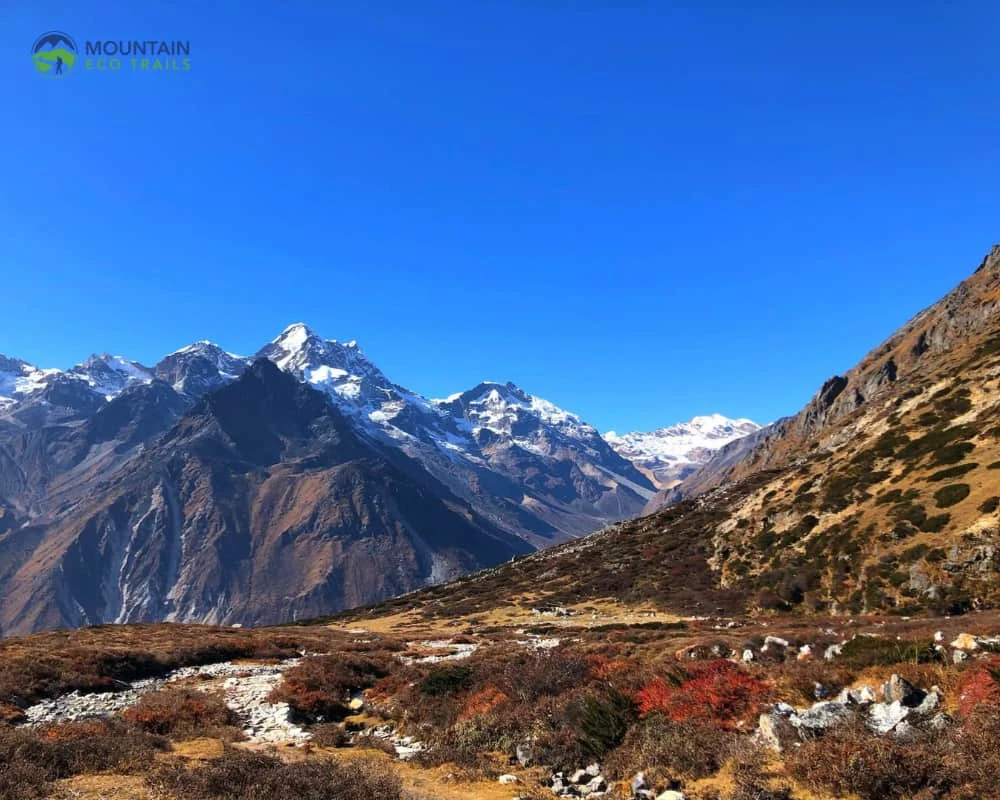
The trek crosses high mountain passes such as Sele La Pass (4290m) and Mirgin La Pass (4645m), offering spectacular views of mountain peaks like Mt Kanchenjunga (8586m), Yalung Kang (8505m), Kumbakarna (7710m), Kambachen (7903m), Jongsong (7483m), and Kabru (7353m).

On clear days, you can also see Mount Everest (8848.86m), the world's tallest peak, along with Lhotse (8516m) and Makalu (8485m). The Yalung Glacier and Kanchenjunga Glacier add further natural beauty to the journey.

Kanchenjunga Trekking is best for experienced trekkers seeking off-the-beaten-path adventures. With its rugged landscapes, high-altitude trekking, and serene remoteness, this trek lets you immerse yourself in the raw beauty, cultural richness, and wilderness of the eastern Himalayas.

Highlights of the Kanchenjunga Circuit Trek

  • Mt. Kanchenjunga, the world's third-highest peak, which is elevated at 8586m
  • Trekking experience through the remote and untouched trails of eastern Nepal
  • Scenic High Mountain Passes such as Sele La Pass(4290m) and Mirgin La Pass(4645m), offering panoramic views of peaks including Mt Kanchenjunga(8586m), Yalung Kang (8505m), Kumbakarna(7710m), Kambachen(7903m), Jongsong(7483m), and Kabru(7353m)
  • Explore both Kanchenjunga North Base Camp(5143m) and Kanchenjunga South Base Camp(4730m)
  • Witness the rich biodiversity of the Kanchenjunga Conservation Area
  • Cultural immersion in the Rai, Limbu, Sherpa, and Tibetan communities along the trail

Why Trek Around Kanchenjunga Instead of Visiting Only One Base Camp?

Some mountains impress you from a single viewpoint. Kanchenjunga deserves more time.

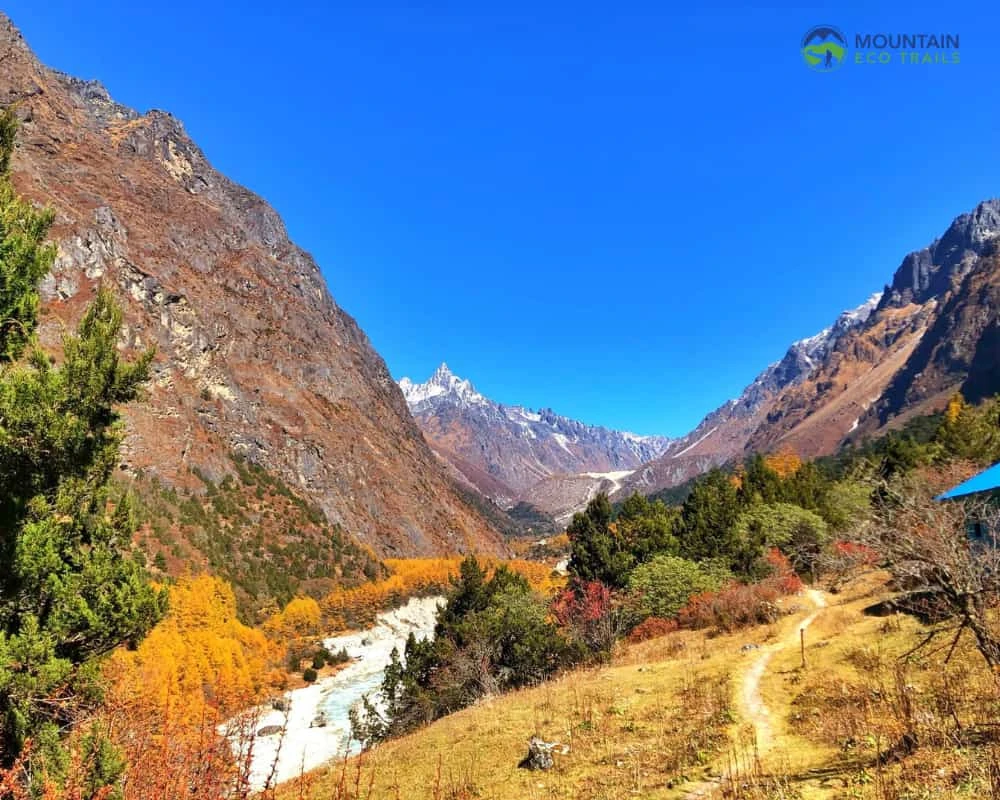
The North Base Camp route follows the Ghunsa Valley into an increasingly rugged landscape beneath Kanchenjunga's northern slopes. The South Base Camp approach enters a different mountain environment, with the Yalung Glacier and the southern Himalayan wall dominating the scenery.

Between these two sides lies the challenging high-pass crossing above Ghunsa and Tseram. This is why the full Kanchenjunga Circuit Trek offers something substantially different from an ordinary out-and-back base camp hike.

You are not simply walking to one destination and retracing your steps. You experience separate valleys, changing vegetation, different villages, and two contrasting perspectives of the same mountain.

The trail begins among cultivated hills, river valleys, bamboo, and forest. Gradually, settlements become smaller, accommodation becomes simpler, and the landscape changes to yak pastures, rocky slopes, glaciers, and snow-covered ridges.

But remoteness has consequences.

You cannot assume there will be a comfortable lodge at every stop, dependable phone reception, or easy vehicle access when plans change. On some sections, the next suitable overnight location is several hours away.

That is precisely why Kanchenjunga appeals to experienced trekkers who understand that a meaningful Himalayan journey sometimes requires patience, flexibility, and basic living conditions.

What makes the 20-day Kanchenjunga trek worth considering?

  • Two different base camp experiences: Visit Pangpema on the northern side and Oktang on the southern side.
  • A demanding high-pass connection: Cross the ridgelines between Ghunsa and Tseram, subject to weather and trail conditions.
  • Remote trekking: Follow less-commercialised mountain trails with limited accommodation and infrastructure.
  • Cultural diversity: Travel through settlements associated with Limbu, Rai, Sherpa, and Tibetan Buddhist traditions.
  • Changing landscapes: Walk from low river valleys into alpine terrain and glacier viewpoints.
  • A longer physical challenge: Build endurance over consecutive hiking days rather than relying on one difficult summit day.
  • Flexible private planning: Adjust pacing, support, and additional days to suit your fitness and priorities.

This is not the ideal trip for someone seeking luxury at altitude. It is for travellers who value the trail, the villages, the mountain environment, and the experience of reaching a place far beyond Nepal's busiest trekking corridors.

Kanchenjunga Circuit Trek Difficulty: How Hard Is the Full Circuit?

The Kanchenjunga Circuit Trek is a strenuous high-altitude trek because of its long duration, remote location, basic accommodation, uneven trails, and multiple days above 4,000 meters. The route reaches 5,143 meters at Pangpema and includes a demanding high-pass crossing. Previous multi-day mountain trekking experience, good endurance, and a flexible acclimatisation plan are strongly recommended.

Kanchenjunga is challenging for reasons that do not always appear in an elevation profile.

On popular trekking routes, you may be able to shorten a day, choose between several lodges, or access a nearby settlement when you become tired.

Here are the factors that make the Kanchenjunga Circuit Trek difficult: 

  • Walking for consecutive days and long hours can make the journey difficult. 
  • Several nights above 4000 meters and visits above 5000 meters can bring altitude-related issues. 
  • Expect rocky paths, steep slopes, river crossings, forest tracks, and sections that may be affected by landslides or erosion.
  • The connection between the northern and southern valleys can be affected by snow, ice, wind, and reduced visibility.
  • Very limited facilities and emergency access due to the remoteness. 

20-Day Kanchenjunga Circuit Trek Itinerary Overview

Our Kanchenjunga Circuit Trek itinerary combines two days of arrival and preparation in Kathmandu, flights and road transfers to eastern Nepal, trekking through both valleys, and an acclimatisation day before reaching the highest section.

Day

Destination / Activity

Overnight elevation

Approx. duration

1

Arrival in Kathmandu

1,350 m

Airport transfer

2

Permit preparation and trek briefing

1,350 m

Preparation day

3

Fly to Bhadrapur, drive to Taplejung

1,840 m

Full travel day

4

Drive from Taplejung to Sekathum

1,650 m

5–6 hr drive

5

Trek to Amjilosa

2,500 m

5–6 hr

6

Trek to Gyabla

2,725 m

4–5 hr

7

Trek to Ghunsa

3,415 m

5–6 hr

8

Trek to Khangpachen

4,145 m

4–5 hr

9

Acclimatisation at Khangpachen

4,145 m

Optional short hike

10

Trek to Lhonak

4,792 m

4–5 hr

11

Hike to Pangpema and return to Lhonak

4,792 m

6–8 hr

12

Trek from Lhonak to Ghunsa

3,415 m

7–8 hr

13

Trek to Sele Le

4,240 m

5–6 hr

14

Cross high passes to Tseram

3,868 m

7–9 hr

15

Hike to Oktang and return to Tseram

3,868 m

6–9 hr

16

Trek to Tortong

2,980 m

5–7 hr

17

Trek to Yamphudin

1,692 m

6–8 hr

18

Drive to Kanyam, Ilam

1,210 m

7–8 hr

19

Drive to Bhadrapur, fly to Kathmandu

1,350 m

Full travel day

20

International departure

—

Airport transfer

Kanchenjunga Circuit Trek Cost 2027,2028

The Kanchenjunga Circuit Trek package for 20 days costs $2599 per person for a single trekker, which includes ground transportation, a 2-way Kathmandu to Bhadrapur flight, accommodations, three meals a day during the trek, all required permits, guide and porter fees, and all government taxes.

However, our 20-day Kanchenjunga Trekking Package doesn’t include personal expenses, such as drinks, hot water, showers, Wi-Fi, and device charging.

Here are the major cost factors for the Kanchenjunga Circuit Trek

Cost FactorsEstimated Cost
Trekking Guide for the Kanchenjunga Circuit Trek USD 35-40 per day
Flight fare from Kathmandu to Bhadrapur & BackUSD 340-370
Required Transportation USD 250-300
Meals during the Trek (Breakfast, Lunch, Dinner)USD 40-45 per day
Permits for Kanchenjunga TrekUSD 50-70
Accommodation during the Trek USD 10-15 per night
Administrative and Government TaxIncludes 13% VAT
Kanchenjunga Circuit Trek Package CostUSD 2599 Per person

Is the Kanchenjunga Circuit Trek Right for You?

The Kanchenjunga Circuit Trek is best for experienced hikers who can manage 5–8 hours of walking on consecutive days, basic teahouse accommodation, elevations above 5,000 meters, and remote mountain conditions. A good fitness level, appropriate acclimatization, a licensed trekking guide, and flexibility for weather or route changes are important for completing the journey.

You are likely a good match if you have previously trekked in the Everest, Annapurna,Manaslu, Langtang, or another high-altitude mountain region and want a longer, quieter challenge.

You should reconsider the standard 20-day itinerary if you have never completed a multi-day trek, need regular access to medical facilities, or cannot accommodate changes caused by weather or altitude symptoms.

Planning for spring or autumn 2027? 

Mountain Eco Trails can discuss your previous trekking experience and recommend whether our 20-day circuit or a more gradual itinerary is appropriate.

Itinerary

Upon arrival at the Tribhuvan International Airport, one of our company’s representatives will be in the waiting area with a name on a pamphlet. After warm greetings, you will be transferred to the hotel in a private vehicle.

  • Max Altitude:1350 meters
  • Accommodation:Hotel

Today, we’ll arrange your Kanchenjunga Conservation Area permit and restricted Area permit. You will have the whole day to learn briefly about the Kanchenjunga Circuit Trek and also will be introduced to the guide. You can buy needed trekking gear and do a sightseeing tour of Kathmandu Durbar Square, Swyambhunath, Pashupatinath, and Boudhanath.

  • Max Altitude:1350 meters
  • Accommodation:Hotel
  • Meals:Breakfast

After breakfast, transfer to Kathmandu's domestic airport for the flight to Bhadrapur in southeastern Nepal.

The flight normally takes approximately 45–50 minutes, depending on the operating service. From Bhadrapur, continue by jeep toward Taplejung, passing through the hills and tea-growing landscapes of eastern Nepal.

The scenery changes noticeably as the road climbs from the lowlands toward the mountain districts. Road conditions can affect the journey significantly, especially after rain or maintenance work.

Taplejung, also called Phungling, is the district headquarters and an important supply point before entering the more remote trekking area.

  • Max Altitude:1840 meters
  • Accommodation:Hotel
  • Time:8-9 hours
  • Meals:Breakfast, Lunch, Dinner

The journey continues by jeep toward Sekathum, the starting point of the walking section in our itinerary.

The mountain road passes settlements, terraced fields, river valleys, and forested slopes. Some sections are rough, narrow, and vulnerable to weather-related disruption.

This part of the journey is an introduction to the logistical reality of trekking in remote eastern Nepal.

Once you reach Sekathum, you can prepare your daypack, organise your luggage, and get ready for the first full trekking day.

The sound of vehicles gradually gives way to rivers, forest, and footpaths.

  • Max Altitude:1650 meters
  • Accommodation:Hotel
  • Time:5-6 hours
  • Meals:Breakfast, Lunch, Dinner

Your first main walking day follows the Ghunsa Khola through a narrow river valley.

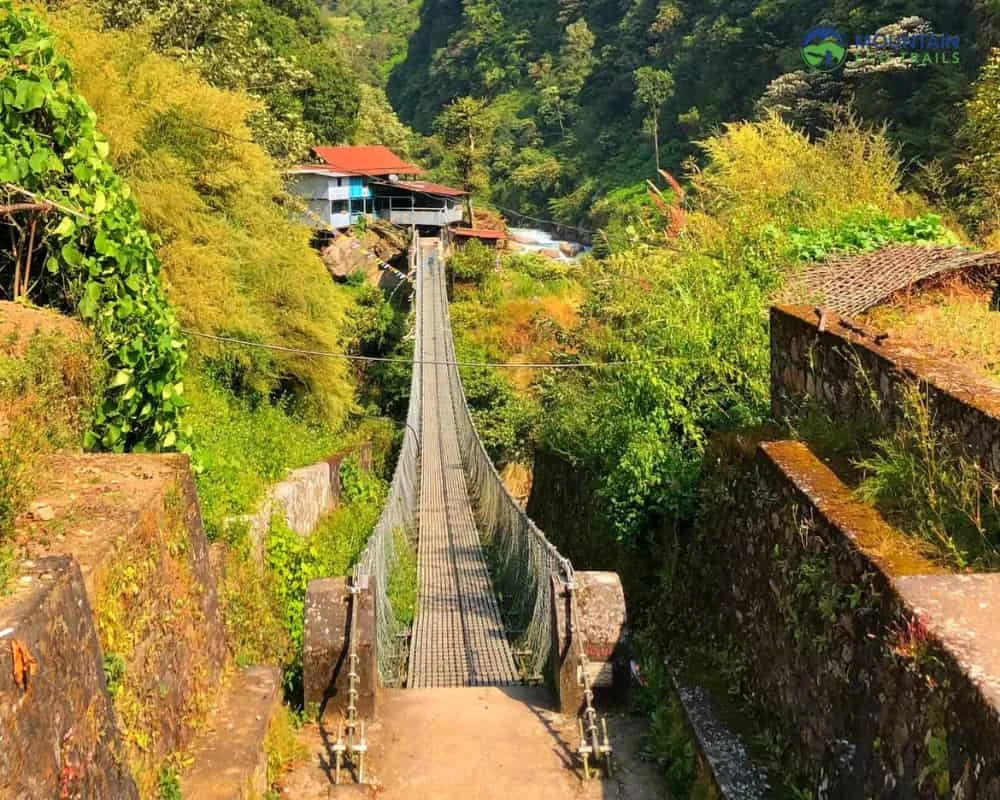
The trail includes suspension bridges, forest sections, steep climbs, and descents. Despite the relatively low elevation, the changing terrain makes this an active first day.

Bamboo, oak, and rhododendron vegetation appear along the route.

You may pass small settlements and cultivated areas before the trail becomes more isolated.

Amjilosa offers basic local accommodation and an opportunity to rest after your first demanding day on foot.

  • Max Altitude:2500 meters
  • Accommodation:Tea House
  • Time:5-6 hours
  • Meals:Breakfast, Lunch, Dinner

The trail continues through forest, with occasional clearings and views into the surrounding valley. Compared with the previous day, the altitude gain is smaller, but the route still involves uneven ground and repeated climbing.

As you approach Gyabla, the landscape begins to feel more alpine. The village sits among forested mountains with a quieter atmosphere than the lower settlements.

Accommodation remains simple, and the evening provides time to recover before moving farther into the Ghunsa Valley.

  • Max Altitude:2725 meters
  • Accommodation:Tea House
  • Time:4-5 hours
  • Meals:Breakfast, Lunch, Dinner

Today's route passes through forest and the settlement of Phale before reaching Ghunsa. The valley becomes broader, and the cultural surroundings gradually change.

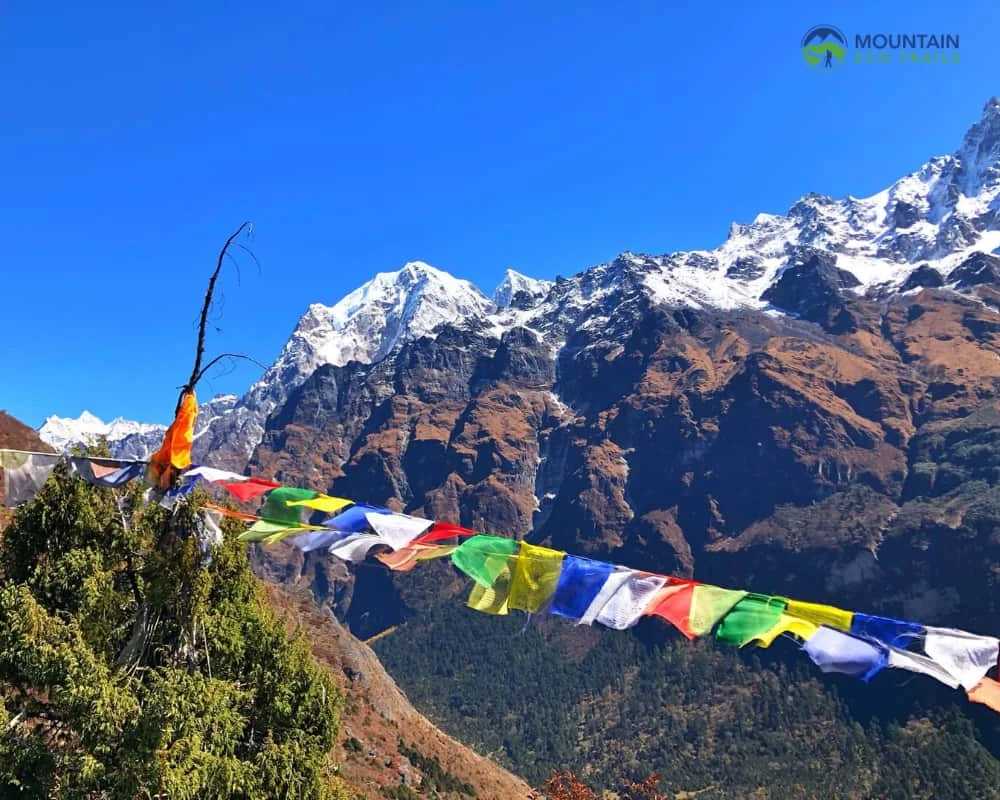
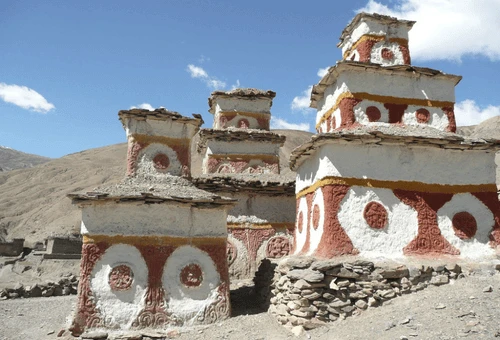
Ghunsa is one of the most important settlements on the northern Kanchenjunga trekking route. Its houses, prayer flags, monasteries, and mountain setting reflect strong Himalayan Buddhist traditions.

It is also an important logistical stop, with limited services and local facilities. From this point onward, altitude becomes a more significant consideration.

Overnight stay at Ghunsa.

  • Max Altitude:3415 meters
  • Accommodation:Tea House
  • Time:5-6 hours
  • Meals:Breakfast, Lunch, Dinner

Leaving Ghunsa, the trail climbs through increasingly open mountain terrain. Forested slopes gradually give way to rocky ground, pastures, and views of the surrounding peaks.

One of the most striking mountains in this part of the valley is Jannu, also known as Kumbhakarna, rising to approximately 7,710 meters.

Khangpachen, aka Khambachen or Kambachen in trekking itineraries, is a small high-altitude settlement surrounded by impressive mountain scenery.

The change in sleeping elevation from Ghunsa is substantial, making careful altitude assessment essential. An additional acclimatization night at Ghunsa may be advisable for some trekkers.

Overnight stay at Khangpachen.

  • Max Altitude:4145 meters
  • Accommodation:Tea House
  • Time:4-5 hours
  • Meals:Breakfast, Lunch, Dinner

Today is a rest day to acclimate your body to higher altitudes. So, wake up late at around 9 AM and enjoy your breakfast with the breathtaking view of Mt Jannu. Afterwards, hike towards the viewpoint above the village, which helps you to acclimate your body. Spend the remaining time strolling around the village and interacting with the locals and fellow travelers.

Overnight stay at Khangpachen

  • Max Altitude:4145 meters
  • Accommodation:Tea House
  • Time:3-4 Hours
  • Meals:Breakfast, Lunch, Dinner

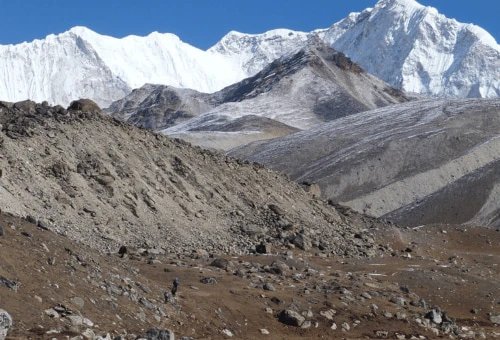
The trail moves into a more exposed mountain environment. Vegetation becomes sparse, and the route crosses rocky ground and areas near glacial moraines. Loose stones and unstable slopes require attention.

Lhonak is one of the highest overnight stops on the circuit. Accommodation is basic, nights are cold, and the reduced oxygen level makes physical activity more demanding.

This is another substantial sleeping-altitude gain, so the itinerary should be reviewed carefully against your acclimatisation progress. Some trekkers benefit from an additional night before proceeding.

The following day is the northern base camp excursion.

Overnight stay at Lhonak.

  • Max Altitude:4792 meters
  • Accommodation:Tea House
  • Time:4-5 hours
  • Meals:Breakfast, Lunch, Dinner

Today, the trail leads toward Kanchenjunga North Base Camp.

Starting early, you follow rocky ground and moraine sections alongside the glacier landscape. Conditions may include loose stones, wind, cold temperatures, and sections requiring careful footing.

As you approach Pangpema, the northern side of Mount Kanchenjunga becomes the central feature of the landscape.

The views can be remarkable in clear weather, but the mountain is not guaranteed to be visible. This is the highest point of the trek, so time spent here should be guided by the group's physical condition, weather, and return schedule.

After visiting Pangpema, return to Lhonak for the night.

Overnight stay at Lhonak.

  • Max Altitude:5143 meters
  • Accommodation:Tea House
  • Time:6-7 Hours
  • Meals:Breakfast, Lunch, Dinner

After your memorable trip to the Kanchenjunga North Base Camp, your returning journey begins from Lhonak to Ghunsa. Start your trek at 8 AM after breakfast, following the same trail along the Ghunsa Khola. The trail up to Kangpachen passes through the lateral moraine and the yak herder’s camp. From here, the trek follows the trail inside the peaceful forest of rhododendrons and oaks.

As the trek heads towards Ghunsa, you can find the change in vegetation, while descending from high-altitude terrain to lush valleys.

Ghunsa is the most significant settlement in the Kanchenjunga region, inhabited mainly by the Sherpa community.

  • Max Altitude:3415 meters
  • Accommodation:Tea House
  • Time:7-8 Hours
  • Meals:Breakfast, Lunch, Dinner

Leaving Ghunsa, the route climbs away from the main valley toward the high ridgelines connecting the northern and southern trekking routes.

The ascent is steady and can feel demanding after several days in the mountains. Depending on visibility, you may see distant Himalayan peaks and valleys from the higher sections.

Sele Le is a basic overnight stop. Facilities are limited, and accommodation may only be available during suitable trekking seasons. Your guide will assess weather and pass conditions before deciding whether the following day's crossing is appropriate.

Overnight stay at Sele Le Base Camp.

  • Max Altitude:4240 meters
  • Accommodation:Tea House
  • Time:5-6 Hours
  • Meals:Breakfast, Lunch, Dinner

Compared to other days, today is as challenging as crossing several high passes. So, wake up early around 4:00 AM and get ready to start the trek at 5:00 AM. The trail ascends toward the Sele La Pass(4290m), followed by the Sinion La Pass (4440m) and Mirgin La Pass (4480m). Enjoy spectacular views of natural scenery and mountain peaks, including the world’s highest Mt. Everest (8848.86m), Makalu (8485m), Kanchenjunga (8586m), and Mt. Jannu (7710m). Take a moment to capture the view from the top.

Afterwards, cross the Sinelapche La Pass(4840m) before following the descending trail towards Tseram.

Tseram is a nighcamp before the south base camp of Kanchenjunga, offering a few teahouses with limited services.

Overnight stay at Tseram.

  • Max Altitude:3868 meters
  • Accommodation:Tea House
  • Time:6-7 Hours
  • Meals:Breakfast, Lunch, Dinner

Like, yesterday, wake up early at around 5 AM and got ready with breakfast to start a trek at 6 AM. The early morning hike towards Oktang or Kanchchenjunga South Base Camp follows the trail along the Yalung Glacier. After hiking for 3-4 hours of gradual ascents, reach the Oktang, a viewpoint of Kanchenjunga South. Enjoy the spectacular views of the south face of Kanchenjunga, the Yalung Glacier, and other surrounding peaks, including Kokthang (6,148 m), Rathong (6,678 m), and the Kabru range, from this viewpoint.

Take your time to explore the South Base Camp before returning the same way to Tseram via Ramche (4480m). Ramche is a lunch station, offering a few teahouses which are only open during peak season.

After returning to Tseram, take time to recall all your memories and rest before continuing your journey.

Overnight stay at Tseram

  • Max Altitude:3868 meters
  • Accommodation:Tea House
  • Time:6-7 Hours
  • Meals:Breakfast, Lunch, Dinner

The returning journey continues after breakfast at 8 AM from Tseram. The trek leads through the gradual ascents that pass along the Simbuwa Khola. Today, the trail traverses through the alpine landscapes to the lush green forest. Leaving the snow-capped mountain behind, the trekking trail through the forest of rhododendrons leads to Tortong.

Tortong is a popular night camp on the Kanchenjunga Base Camp Trekking route, which offers a few teahouses for tourists.

Overnight stay at Tortong

  • Max Altitude:2980 meters
  • Accommodation:Tea House
  • Time:6-7 hours
  • Meals:Breakfast, Lunch, Dinner

Today’s trekking trail takes you from the remote valleys to the more populated mid-hills of Nepal. Leave the Tortong after breakfast at 8 AM, following the forest trail. After descending for an hour, the trek ascends the trail towards Lasiya Bhanjyang (3,310m), offering magnificent views of the surrounding mountain ranges and natural landscapes.

Afterwards, trek heads through the descending trail that passes through the dense forest of the rhododendrons and oak before reaching Yamphudin.

Yamphudin is one of the largest human settlements in the Kanchenjunga Circuit, offering well-equipped teahouses and accommodations. Explore this village, primarily inhabited by Sherpas and Limbus, which provides a chance to experience its unique culture and way of life.

Overnight stay at Yamphudin.

  • Max Altitude:1692 meters
  • Accommodation:Tea House
  • Time:6-7 hours
  • Meals:Breakfast, Lunch, Dinner

Today is the last day on the Kanchenjunga Circuit, which starts early before catching the jeep from Kabeli Khola. The adventurous drive takes you through the mountain roads that descend into the subtropical hills of eastern Nepal.

The initial part of the road is rough and bumpy, but it becomes smooth afterwards, offering stunning views of scenic landscapes, terraced farms, rivers, and hills. The 7-to 8-hour ride takes you to Kanyam, a popular tourist destination in eastern Nepal. In the evening, explore the heart of tea cultivation and capture some moments.

Overnight stay at Kanyam

  • Max Altitude:1210 meters
  • Accommodation:Tea House
  • Time:7-8 hours
  • Meals:Breakfast, Lunch, Dinner

On the final day of your Kanchenjunga Trek, wake up early with breakfast and take a jeep drive from Kanyam to Bhadrapur. The 3-4-hour jeep drive takes you from the hills to the plains of the Terai, offering scenic natural landscapes.

Upon reaching Bhadrapur, catch the domestic flight towards Kathmandu. The 45-minute scenic flight offers stunning views of Mt. Kanchenjunga (8586m), Mt. Everest (8848m), and Makalu (8485m), along with aerial views of valleys and natural landscapes.

Once you land in Kathmandu, one of our company representatives will greet you and escort you to the hotel in a private vehicle. In the evening, a farewell dinner is hosted by Mountain Eco Trails, and a certificate is provided as acknowledgment of completing the Kanchenjunga Trek.

Overnight stay in Kathmandu.

  • Max Altitude:1350 meters
  • Accommodation:Hotel
  • Time:8-9 hours
  • Meals:Breakfast, Lunch

Your 20-day Kanchenjunga Circuit Trek officially comes to an end today. Depending on your flight schedule, if you have free time, consider strolling around Thamel and purchasing some souvenirs for your loved ones. One of our representatives will escort you to the Tribhuvan International Airport in a private vehicle. Say goodbye to Nepal, with a heavy heart full of experiences and memories.

    Got a question about this tour?

    Or looking for customize trip, reach out to our travel experts.

    Cost Includes
    • International airport pick-up and drop-off service in a private car or Jeep.
    • Domestic airport pick-up and drop-off service in a private car or Jeep.
    • Restricted Area permit card
    • Kanchenjunga Conservation Area Project Permit Card.
    • 2-night accommodation in Kathmandu with breakfast.
    • Accommodation during the trek in a tea house
    • Meals during the trek include Breakfast, Lunch, and Dinner
    • Flight from Kathmandu-Bhadrapur-Kathmandu
    • Transportation (Bhadrapur-Illam-Sekathum, and Yamphudin-Kanyam-Bhadrapur)
    • Government-licensed and well-qualified trekking guide
    • Expenses of the guide, including his salary, transportation, meals, accommodation, and insurance.
    • Duffel Bag (if hiring a porter), rented sleeping bag, Trekking poles and SIM Card
    • An hour trekkers Massage after end of the trek. 
    • Government and local taxes.
    • Farewell dinner after the trek.
    Cost Excludes
    • Travel insurance, rescue bill, and visa cost.
    • Extra night accommodation, meals, and other expenses in case of weather delays or flight cancellation in the mountains or Kathmandu.
    • Lunch & Dinner in Kathmandu (except farewell dinner)
    • All kinds of drinks during the trek such as hard and soft drinks.
    • Personal expenses like battery charge, Wi-Fi, hot shower, laundry, etc.
    Availability
    Select a Departure Month
    Start DateEnd DatePriceStatus 
    Start DateStarts: SundayNov 08, 2026End DateEnds: FridayNov 27, 2026PricePriceUS$2599StatusStatusAvailable
    Start DateStarts: SundayNov 15, 2026End DateEnds: FridayDec 04, 2026PricePriceUS$2599StatusStatusAvailable
    Start DateStarts: SundayNov 22, 2026End DateEnds: FridayDec 11, 2026PricePriceUS$2599StatusStatusAvailable
    Start DateStarts: SundayNov 29, 2026End DateEnds: FridayDec 18, 2026PricePriceUS$2599StatusStatusAvailable
    Good to Know

    Kanchenjunga North Base Camp vs South Base Camp: Which Is More Impressive?

    Both base camp areas are worth visiting, but they offer different experiences.

    Pangpema brings you closer to the northern face of Kanchenjunga and the dramatic glacial landscape above Lhonak. Oktang provides views across the Yalung Glacier toward the mountain's southern side.

    For experienced trekkers with sufficient time, the complete circuit is the strongest option because it combines both.

    Feature

    North Base Camp – Pangpema

    South Base Camp – Oktang

    Approximate elevation

    5,143 m

    4,730 m

    Main approach

    Ghunsa, Khangpachen, Lhonak

    Tseram, Ramche

    Mountain perspective

    Northern face

    Southern face

    Landscape

    Rocky moraine and glacier valley

    Yalung Glacier and mountain views

    Typical excursion

    From Lhonak

    From Tseram or Ramche

    Main challenge

    High altitude and unstable moraine terrain

    Long approach and changing mountain conditions

    Best for

    Close northern mountain scenery

    Broad glacier and southern mountain panorama

    Included in our 20-day circuit

    Yes

    Yes

    Kanchenjunga Circuit Trek Best Time: When Should You Go in 2027, 2028?

    The best time for Kanchenjunga Circuit Trekking is generally spring (March to May) and autumn (October to November). These periods tend to offer more suitable trekking conditions than the summer monsoon and deep winter.

    However, the Kanchenjunga region covers a wide elevation range. Warm conditions in the lower valleys do not mean the passes and base camp approaches will be free of snow or severe weather.

    Spring: March to May

    Spring is one of the most attractive times to visit Kanchenjunga. Rhododendron forests can be colourful, especially in the lower and middle elevations. As the season progresses, temperatures generally become milder.

    March may still bring significant snow on the high passes. April and May can provide good trekking opportunities, but fresh snowfall, afternoon clouds, and weather changes remain possible.

    Spring is a good choice for trekkers who appreciate forest scenery as much as high mountains.

    Autumn: September to November

    Autumn is another major trekking season in eastern Nepal. After the monsoon, mountain visibility can improve considerably, particularly through October and November.

    September can still experience lingering rain and unsettled trail conditions, making later autumn a more dependable planning window in many years.

    November often brings colder nights and shorter daylight hours, especially around Lhonak and Sele Le. For many experienced trekkers, October and early November offer a good balance between mountain visibility and trekking conditions.

    Is Kanchenjunga trekking possible in December or January?

    Winter trekking is possible in some lower sections, but the complete circuit becomes substantially more difficult.

    Snow may block or complicate the high-pass route. Seasonal teahouses can close, and cold weather increases the amount of equipment and support required.

    A standard teahouse-based circuit should not be advertised as routinely available through winter without a specific operational assessment.

    Can beginners complete Kanchenjunga Circuit Trekking?

    No, a complete beginner can't do the whole Kanchenjunga Circuit Trekking. A beginner with exceptional fitness might be capable of some individual walking days, but that does not automatically make the complete circuit a suitable first Himalayan trek.

    For a first trek in Nepal, shorter and better-supported routes generally provide a more manageable introduction to altitude and teahouse trekking.

    If this is your first trek above 3,500 meters, then it is better to do this after completing some other treks such as Langtang Valley Trek or Annapurna Base Camp Trek. 

    What to pack for the Kanchenjunga Circuit Trek?

    Packing the appropriate gear and equipment is vital for demanding treks such as the Kanchenjunga Base Camp Trek. It is key to having a safe and enjoyable trekking experience in Nepal. You can check the trekking gear list for Nepal to get further details throughout our travel guide. 

    Some of the packing essentials for the Kanchenjunga Trek are:

    • Head items: UV-protected sunglasses, round sun hat, fleece hat
    • Upper Body Items: 6/7 T-shirts, a pair of thermal wear, a waterproof & windproof jacket, a down jacket, and gloves
    • Lower Body Items: Trekking pants, shorts, thermal pants, 6/7 pair of socks, sturdy trekking boots, and undergarments
    • Other essential items Include Hiking poles, toiletries, electronic devices, a raincoat, water bottles, a sleeping bag, sunscreen, and purification tablets.

    How to Prepare Physically for the Kanchenjunga Trek

    Physical preparation should begin well before your arrival in Nepal. The goal is not simply to walk quickly. It is to maintain a comfortable pace over many days while carrying a daypack and managing steep terrain.

    8–12 weeks before departure: Establish regular walking and cardiovascular exercise. If you already hike frequently, begin increasing distance and elevation gain.

    6–8 weeks before departure: Add longer hill walks, stair training, or trails with sustained ascents and descents. Practice carrying a loaded daypack.

    3–5 weeks before departure: Include occasional back-to-back hiking days so you become familiar with walking while mildly fatigued.

    Final week: Reduce training intensity, recover properly, check equipment, and avoid beginning the trek with an injury.

    Strength training for legs, hips, and core muscles can support stability on rocky ground. Training improves endurance, but it does not provide immunity from altitude sickness. Acclimatisation remains necessary regardless of fitness

    Essential permits for trekking in the Kanchenjunga region

    Trekking in the Kanchenjunga region requires multiple permits. As the trekking trail lies within the Kanchenjunga Conservation Area, it requires a Kanchenjunga Conservation Area Permit (KCAP). Likewise, Kanchenjunga is restricted, requiring a Restricted Area Permit (RAP) for trekking.

    Permit cost for Kanchenjunga region trekking:

    Kanchenjunga Conservation Area Permit (KCAP): $20 per person

    Kanchenjunga Restricted Area Permit (RAP) cost:

    • $20 per person/week for the first four weeks
    • $25 per person/week for each additional week

    Kanchenjunga Trek Accommodation, Food and Communication

    One of the most important decisions before booking Kanchenjunga is whether you are comfortable with basic mountain accommodation.

    Unlike the major Everest and Annapurna trekking routes, accommodation choices in Kanchenjunga are considerably more limited.

    Some villages have a small number of teahouses, while higher settlements may depend on seasonal openings and available supplies.

    What are the accommodations like in the Kanchenjunga Circuit Trek?

    In the lower valleys, you may find simple lodges with basic rooms and communal dining spaces. At higher elevations, accommodation generally becomes more basic.

    Expect:

    • Simple twin-sharing bedrooms where available
    • Unheated sleeping rooms
    • Shared toilets in many lodges
    • Communal dining areas
    • Limited hot water
    • Additional charges for some facilities
    • Limited electricity or charging availability

    A warm sleeping bag is essential because a teahouse bed does not necessarily mean a warm room.

    Private bathrooms, reliable hot showers, and uninterrupted electricity should not be expected throughout the trek.

    What food is available on the Kanchenjunga Circuit Trek?

    Typical teahouse meals may include dal bhat, rice, noodles, soup, potatoes, eggs, porridge, and other simple dishes depending on supplies. Dal bhat is often a practical choice because it provides rice, lentils, and vegetables in one meal.

    At higher settlements, menus may be shorter and ingredients less varied. If you have dietary restrictions, allergies, or specific nutritional requirements, inform the company before booking.

    Is drinking water available on the Kanchenjunga Circuit?

    Water sources and lodge services vary along the route. You should not assume that naturally flowing water is safe to drink.

    Bring a reliable purification or filtration method suitable for the region, and confirm available boiled or treated water arrangements with your guide. A reusable bottle and suitable water-treatment system can reduce dependence on single-use plastic bottles.

    Book Kanchenjunga Circuit Trek 

    Easily book your Kanchenjunga Circuit Trek through Mountain Eco Trail’s website by filling out the Contact Us form. Alternatively, you can customise your trip by contacting us on WhatsApp at +977 9849790153. 

    Reserve your seat with a 20% advance payment, and the remaining balance will be due upon arrival in Nepal. Payments can be made through multiple gateways available on our website.

    Other useful info:

    FAQs
    • The Kanchenjunga region is located in the eastern part of Nepal, on the border between Nepal and India.

    • Yes. The complete Kanchenjunga Circuit itinerary is designed to visit Pangpema on the northern side and Oktang on the southern side. The two trekking destinations are connected through a high-pass route.

    • April, October, and early November are generally attractive months for the Kanchenjunga Circuit Trek. Spring offers rhododendron forests and warming temperatures, while autumn often provides clearer mountain views. Conditions at the high passes vary each year, so the final departure should account for snowfall and weather forecasts

    • Kanchenjunga Circuit Trekking is strenuous and best suited to experienced trekkers. The route includes consecutive long walking days, elevations above 5,000 meters, basic accommodation, and remote high passes

    • Taplejung is the last stop for ATMs. After that, you won’t find any ATMs to get the money. Hence,  we suggest to get the cash in Kathmandu or Taplejung.

    • It is not possible to do Kanchenjunga Trekking alone. The government of Nepal has declared Kanchenjunga as a restricted region. Hence, you must have a trekking guide with a minimum 2 number of trekking fellows.

    • No, you can't trek to Kanchenjunga as an absolute beginner. You must do some multi day trekking and experience high altitude before doing this Kanchenjunga Circuit Trek.

    • On average, the trek costs USD 1900–2500 per person, depending on group size, services, and itinerary customization.

    • The complete Kanchenjunga Circuit Trek typically takes around 20–24 days, depending on transport, acclimatisation, and route arrangements. Mountain Eco Trails offers a 20-day Kathmandu-to-Kathmandu itinerary covering both base camp areas. 

    • Kanchenjunga Circuit Trek Preparation can be done with cardio, strength, and endurance exercises. Likewise, hiking twice a week at high altitudes can be useful. Besides that, choose the best time to trek and carry proper gear.

    • Yes, you must carry Nepalese currency with you for this trip. Although the accommodation and meals are included in the price, other personal expenses are not covered. You have to pay for a hot shower, Wi-Fi, battery charging, etc. by yourself.

    • No, you cannot trek to Kanchenjunga Region without a guide. Hire a government-licensed trekking guide and have at least 2 members on your team

    • Sekathum is the starting point of our 20-day Kanchenjunga circuit Trek, which is just a 5-6-hour drive from Taplejung Bazaar.

    SimilarTrips
    You may also like
    Did not find what you are looking for? No worries!

    Let us help you plan your perfect holiday.