

Mera Peak Climbing - 12 Days

Mera Peak Climbing is one of the best trekking peaks in Nepal at 6476 meters. It offers a non-technical but physically demanding summit ideal for fit beginners. Mera Peak climbing takes around 12-14 days to complete. The Mera Peak is moderately difficult. The best time to climb Mera Peak is during Spring & Autumn Seasons. The Mera Peak cost starts from USD 2299 per person, depending on the service. Book Today.

  • DestinationNepal
  • Duration12 Days
  • Difficulty Level Moderate
  • Max. Altitude6476 meters
  • Starts/EndsLukla/Lukla
  • Trip StylePeak Climbing
  • Group SizeMin. 1 Pax
  • Best SeasonSpring & Autumn
Highlights
  • Summit the Highest Trekking Peak of Nepal above 6000 meters. 
  • Trek to the popular Everest Region. 
  • Stunning views of the top five highest peaks in the world from the top of Mera Peak.
  • Discover Unique Sherpa Villages and experience their culture.  
  • Perfect Peak climbing for those who want to begin mountaineering in the Himalayas. 

Mera Peak Climbing is one of the best beginner-friendly Himalayan climbs in Nepal. At 6,476 meters, it is the highest trekking peak in Nepal and is ideal for fit trekkers who want their first real climbing experience. The climb is not highly technical, but the altitude, cold weather, and long summit day make it physically demanding.

Mera Peak Climbing (6,476 meters) is renowned as the highest trekking peak in Nepal. Mera Peak is located in the remote Hinku Valley of the Mahalangur Himalayas. Trekking through lush rhododendron forests, traditional Sherpa villages, and high alpine terrain, it takes you to the summit of Mera within 12-14 Days. Reaching the top is a genuine mountaineering adventure in Nepal, rewarding climbers with panoramic views of Everest,Lhotse, Ama Dablam, Pumori, and many other peaks.

Mountain Eco Trails, a leading & best local trekking company in Nepal with over 10 years of experience in the trekking and climbing field, organises the Mera Peak expedition with an emphasis on safety, sustainability, and personal achievement.

Mera Peak Climbing Facts at a Glance

Factor

Details

Elevation

6,476 meters

Difficulty

Moderate (Altitude challenge)

Duration

12–18 days

Best Season

Spring & Autumn

Climbing Type

Glacier walk + basic mountaineering

Ideal For

First-time climbers

Success Rate

High with proper acclimatisation

Mera Peak cost

USD2000 to 2800 per person

What is Mera Peak Climbing?

Mera Peak Climbing is a guided Himalayan climbing trip to the summit of Mera Peak at 6,476 meters in Nepal. It combines trekking through the Hinku Valley with a glacier climb and is often chosen by first-time climbers. Mera Peak is less technical than many other 6,000-meter peaks.

Can a beginner climb Mera Peak?

Yes, a beginner can climb Mera Peak with strong fitness, basic preparation, and a proper guided itinerary. The climb is considered non-technical compared to other peaks in Nepal. However, the altitude and summit day still make it a serious challenge.

How difficult is Mera Peak Climbing?

Mera Peak Climbing is moderately difficult. The main challenge is altitude, not technical climbing. Most climbers find the long walking days, freezing temperatures, and thin air above 5,000 meters harder than the glacier section itself.

How much does Mera Peak Climbing cost?

Mera Peak Climbing usually costs between USD 2299 and USD 2,800 per person, depending on group size, guide support, permits, flights, accommodation, and gear inclusions. Private climbs and premium service levels cost more than basic group packages.

Mera Peak is the right choice for trekkers who want to take the next step from trekking into real Himalayan climbing. It offers a big summit, stunning mountain views, and a non-technical route that suits first-time climbers better than many other peaks in Nepal. With the right guide team, proper acclimatisation, and realistic preparation, Mera Peak can be a safe and unforgettable first 6,000-meter experience.

Is Mera Peak Climbing Right for You?

✔ This Mera Peak climb is ideal if:

  • You are physically fit with excellent stamina & strength
  • You can trek for around 6–7 hours daily
  • You want your first 6000m peak
  • You are comfortable with cold conditions above 4000 meters

❌ This climb may not be ideal if:

  • You want luxury trekking
  • You have zero hiking experience
  • You are not prepared for altitude

How Difficult Is Mera Peak Climbing?

Mera Peak climbing difficulty is graded PD (moderately difficult). Although the altitude is the main difficult factor, the climbing is not that technical. It does not require special mountaineering skills.

The challenge is not technical climbing. The real difficulty comes from:

  • High altitude
  • Cold temperatures
  • Long summit day

Many beginners successfully climb Mera Peak with proper preparation and guidance. We suggest doing a high altitude trek like Everest Base Camp or Everest Three High Passes, before climbing the Mera Peak. 

Not sure whether Mera Peak is right for you?

Tell us your trekking experience, fitness level, and travel dates. We will suggest whether this 12-day itinerary fits you or whether a longer acclimatisation plan would be safer. Contact our climbing expert via email or WhatsApp us at +9779849790153 for more information.
Mera Peak Climbing Cost for 2026 and 2027

The cost of Mera Peak Climbing depends on the itinerary length, group size, guide support, domestic flights, and whether you choose a private or group package. A short 12-day itinerary can be more efficient for fit trekkers, but the final cost changes based on inclusions and logistics.

Cost Component

Estimated Cost (USD)

Climbing permit and local permits

250–500

Kathmandu–Lukla flight

450-500

Guide and climbing support staff

500–900

Accommodation and meals

400–700

Climbing gear support and logistics

150–400

Transfers and admin support

100–250

Estimated total cost

2299–2,800

Your final Mera Peak cost depends on group size, season, flight availability, service level, and whether you need private departure or extra acclimatisation days.

Book your Mera Peak Climbing adventure with Mountain Eco Trails

Climb with experienced local guides, transparent pricing, and a safety-first approach built for first-time Himalayan climbers. Contact us via email or WhatsApp us at +9779849790153 to book the Mera Peak or customise the itinerary.

12-Day Mera Peak Climbing Route Map Itinerary

Day 1: Fly to Lukla – Trek to Chutanga

Day 2: Cross Zatrwa La Pass – Trek to Thuli Kharka

Day 3: Trek to Kothe

Day 4: Trek to Thaknak

Day 5: Trek to Khare

Day 6: Acclimatisation Day

Day 7: Trek to High Camp

Day 8: Summit Mera Peak – Return to Khare

Day 9–12: Descent and return

Why choose Mountain Eco Trails for the Mera Peak Climb in Nepal

The team of Mountain Eco Trails has expertise with over 10 years of experience in trekking and peak climbing. Our Sherpa Guide ensures that you will complete the summit, focusing on the safety of our valuable climbers. Moreover, we offer a competitive price that matches the quality of service we provide to our clients, with no hidden prices at all. Here are the reasons why you should choose us for the Mera Peak Climbing:

  • Skilful, experienced, and strong crew members, including a climbing guide 
  • Climbing Equipment from Khare, like Ice-Axe, Harness, Crampons, Ascender, Descender Lock, etc.
  • Peak Climbing Achievement Certificate
  • First Aid Kid is carried by a climbing guide.
  • Free Mera Peak Climbing Route Map
  • Flexible Mera Peak Climbing Itinerary
  • Constant communication with climbers and staff members.
  • Free luggage storage at Mountain Eco Trails during the trip. 
  • Complimentary services like Duffel Bag, SIM Card, an hour of massage, and many more. 

If you have any confusion regarding this trip to Mera, feel free to contact us via WhatsApp for better communication at +9779849790153.

Itinerary

The adventure begins with an exhilarating flight from Kathmandu to Lukla, one of the world’s most scenic mountain airstrips. This 35-minute flight offers breathtaking aerial views of the Himalayas, lush hills, and traditional villages below.

Upon landing in Lukla (2,860m), we begin our trek heading east into the less-travelled wilderness towards Chutanga. The trail gently ascends through rhododendron and pine forests, following stone-paved paths and passing a few yak herder settlements.  After 4 to 5 hours of steady trekking, we reach Chutanga (3,020m) for an overnight stay.

  • Max Altitude:3020 meters
  • Accommodation:Tea House
  • Time:4-5 Hours
  • Meals:Lunch and Dinner

Today’s trek is one of the more challenging but rewarding days. We begin a steep ascent to the Zatrwa La Pass, which stands at 4,610 meters. The climb is demanding, involving rugged switchbacks, stone steps, and often snow-covered paths.

Reaching the top of the pass is a triumph, and multicoloured prayer flags flutter in the breeze to welcome us. From the pass, we descend through rocky trails and juniper bushes to reach Thuli Kharka (3,900m), for an overnight stay.

  • Max Altitude:3900 meters
  • Accommodation:Teahouse
  • Time:6-7 Hours
  • Meals:Breakfast, Lunch, dinner

Leaving Thuli Kharka behind, we begin a scenic descent into the Hinku Valley. The trail undulates across ridges and valleys, offering occasional glimpses of Mera Peak in the distance.

As we approach the Hinku Khola river, the sound of rushing water becomes constant. Crossing small wooden bridges and climbing over rocky patches, we reach Kothe (3,600m), a riverside settlement nestled in the valley. 

  • Max Altitude:3600 meters
  • Accommodation:Teahouse
  • Time:6-7 Hours
  • Meals:Breakfast, Lunch, Dinner

Today, we follow the Hinku Khola upstream through a rugged, glacial valley. The trail becomes rockier and climbs gradually, with stunning views of the towering cliffs and snowy ridges above. Along the way, we pass beautiful pasturelands and small mani walls built by locals.

After several hours, the terrain opens up to reveal Sabai Tsho, a glacial lake with turquoise water that reflects the surrounding peaks. Continuing along the moraine, we trek for about 6 to 7 hours in total to reach Thangnak (4,358m), for an overnight stay.

  • Max Altitude:4358 meters
  • Accommodation:Teahouse
  • Time:6-7 Hours
  • Meals:Breakfast, Lunch, Dinner

Our journey today takes us deeper into the high alpine environment as we climb toward Khare, the base camp for Mera Peak. The trail gradually gains altitude, winding through moraines, glacial debris, and boulder-strewn paths. The views become increasingly majestic, with Mera Peak appearing much closer and more formidable.

As we gain height, we take regular breaks to ensure proper acclimatisation. After trekking for 5 to 6 hours, we reach Khare (5,045m), a rugged outpost consisting of a few teahouses and campsites. 


  • Max Altitude:5045 meters
  • Accommodation:Teahouse
  • Time:5-6 Hours
  • Meals:Breakfast, Lunch, Dinner

Today is dedicated to acclimatization, which is vital for a successful summit. We remain in Khare, allowing our bodies to adjust to the thin air at 5,000 meters. In the morning, we take a short hike to a nearby viewpoint or glacier ridge to “climb high, sleep low,” a proven strategy to aid acclimatisation. This light excursion also offers fantastic photo opportunities of the Mera Glacier and surrounding peaks.

  • Max Altitude:5045 meters
  • Accommodation:Teahouse
  • Meals:Breakfast, Lunch, Dinner

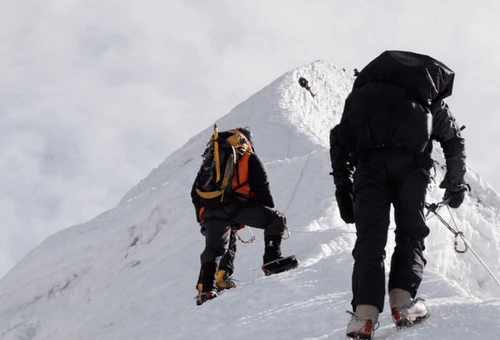
We begin the day with excitement and a sense of purpose as we start the ascent to Mera High Camp. The trail climbs steeply from Khare over rocky ridges and eventually transitions onto the Mera Glacier. We put on crampons and harnesses, and depending on conditions, use ropes to traverse the icy terrain.

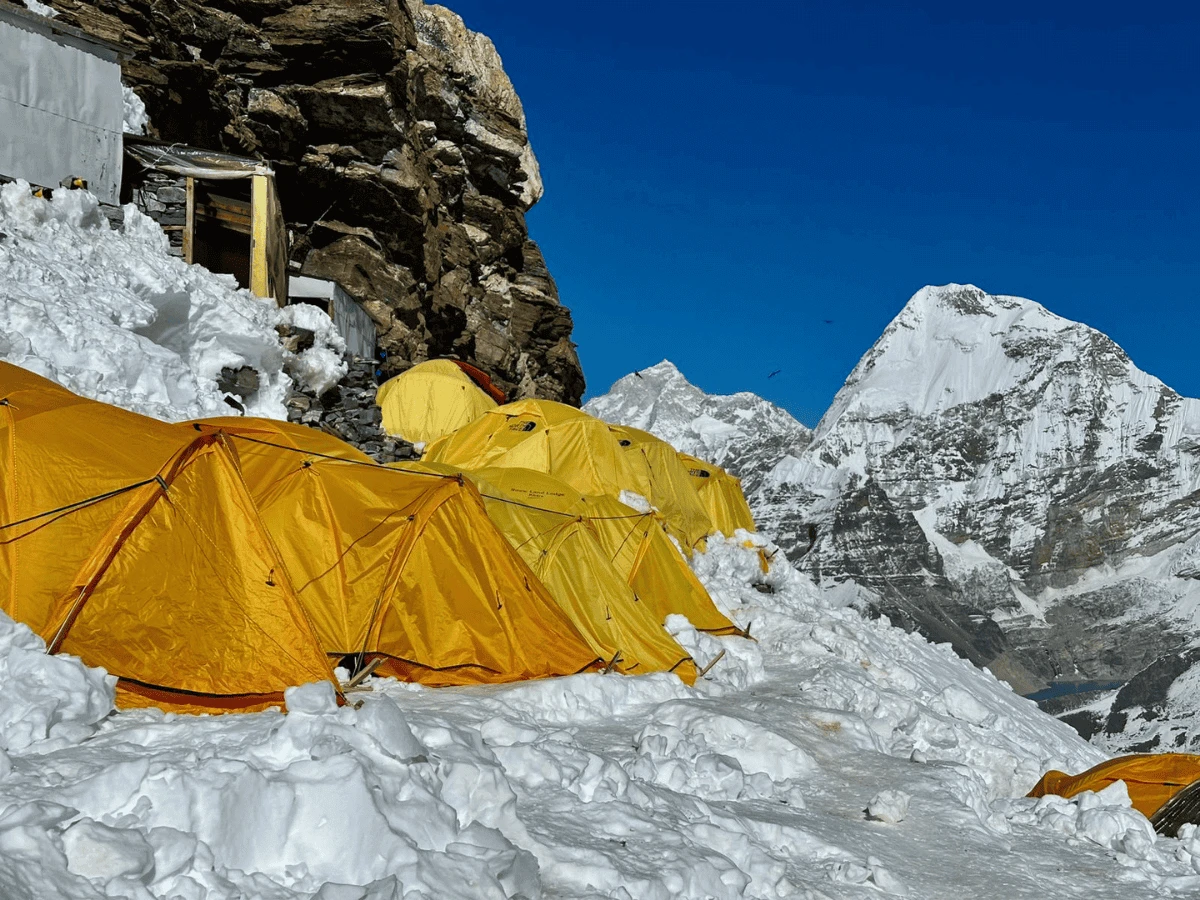
The views open up spectacularly, revealing distant peaks like Everest, Makalu, and Baruntse. After about 4 to 5 hours of climbing, we reach Mera High Camp (5,780m), a narrow rocky shelf with stunning views and enough space for tents. Our crew sets up camp and prepares hot meals as the temperature drops. We have an early dinner and try to rest as much as possible – tomorrow is the big day.

  • Max Altitude:5780 meters
  • Accommodation:Tent Camping
  • Time:5-6 hours
  • Meals:Breakfast, Lunch, Dinner

Summit day begins around 2 AM under the cover of darkness. Equipped with headlamps and roped together for safety, we begin a slow, steady climb up the Mera Glacier. The route is a long snow slope with gradual inclines, but the high altitude makes every step a challenge. After 4 to 6 hours of effort, we reach the summit ridge.

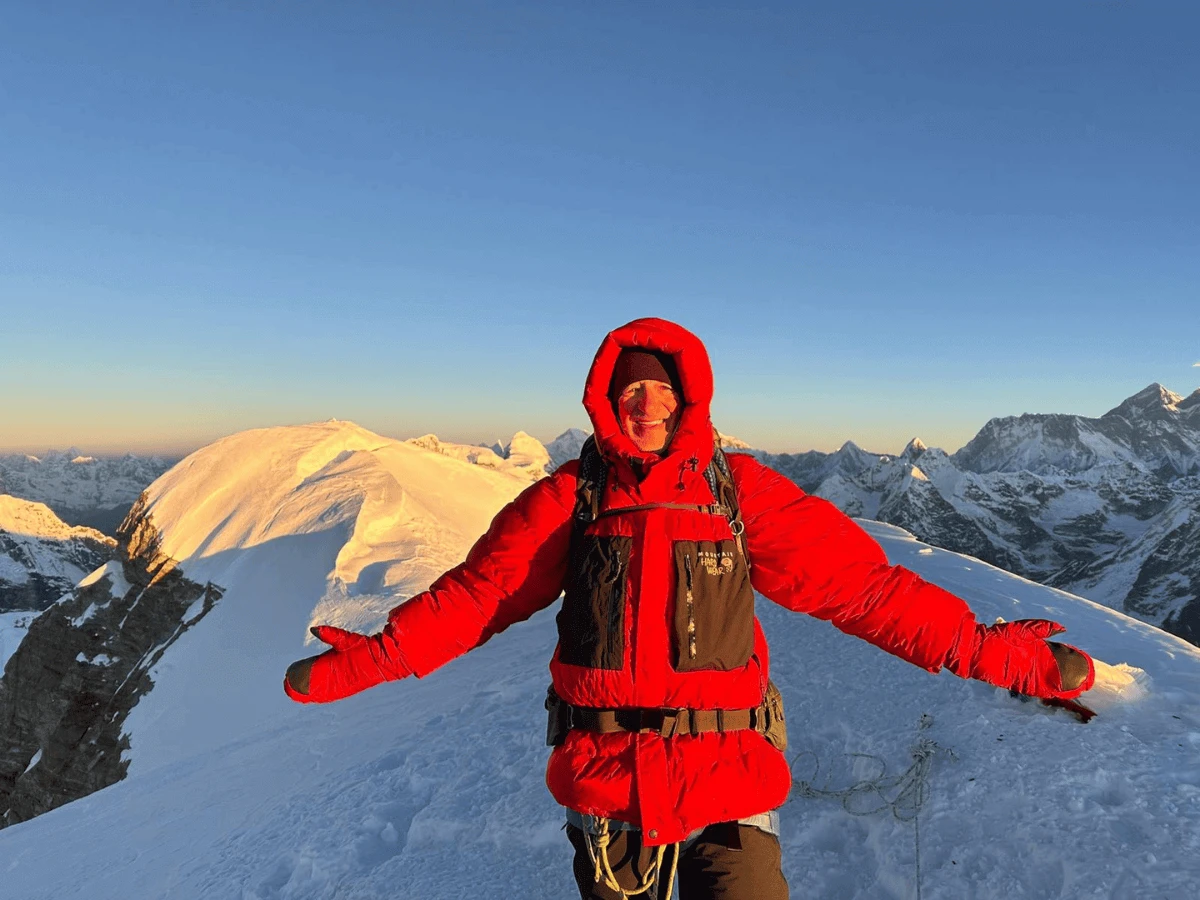
The final section may have a short steep headwall where a fixed rope is used. As dawn breaks, we reach the summit of Mera Peak (6,476m), the highest trekking peak in Nepal. The views are absolutely breathtaking: Everest, Lhotse, Cho Oyu, Makalu, and Kangchenjunga all appear like a sea of white giants. After celebrating and taking photos, we descend carefully back to High Camp, pack our gear, and continue down to Khare. It’s a long but unforgettable day, covering 9 to 10 hours in total.

  • Max Altitude:6476 meters
  • Accommodation:Teahouse
  • Time:9-10 Hours
  • Meals:Breakfast, Lunch, Dinner

With the summit behind us, we retrace our steps down the Hinku Valley. The descent is easier on the lungs, though we still walk steadily to protect our knees and ankles. The scenery, once again, feels grand – especially now that we can appreciate it with the satisfaction of having completed our goal. We pass through Thangnak and return to the greener forests of Kothe (3,600m) in 5 to 6 hours. This feels like a celebration day, and many trekkers enjoy the lower altitude and thicker air. Overnight at Kothe, where warm meals and cheerful conversations close the day.

  • Max Altitude:3600 meters
  • Accommodation:Teahouse
  • Time:5-6 Hours
  • Meals:Breakfast, Lunch, Dinner

Today we climb back out of the Hinku Valley, returning toward Thuli Kharka. The trail is mostly uphill, winding through dense forest and past scenic ridges. It’s a moderately challenging day as we gain 300 meters in elevation over 5 to 6 hours of walking. Along the way, we’ll enjoy occasional glimpses of distant peaks and spot wildlife like Himalayan monals (Danphe), Nepal’s national bird. Thuli Kharka welcomes us once again with familiar teahouses and alpine charm. A relaxed evening allows time to reflect on the incredible journey.

  • Max Altitude:3900 meters
  • Accommodation:Teahouse
  • Time:5-6 Hours
  • Meals:Breakfast, Lunch, Dinner

Our final day on the trail begins with a climb back over Zatrwa La Pass (4,610m), followed by a long descent to Lukla. The trail retraces the same route we took earlier, but this time feels easier, and the sense of accomplishment carries us forward. We descend through yak pastures, rhododendron forests, and stone paths before arriving back in Lukla (2,680m) after 6 to 7 hours. Here we enjoy a well-earned hot meal, reconnect with Wi-Fi, and celebrate the successful expedition with our team. Overnight in a cozy guesthouse.

  • Max Altitude:2600 meters
  • Accommodation:Teahouse
  • Time:6-7 hour
  • Meals:Breakfast, Lunch, Dinner

Early in the morning, we board a scenic flight back to Kathmandu. As we rise over the Himalayan foothills one last time, the memories of Mera Peak come rushing back: the trails, the glaciers, the summit, the people. Upon arrival, we transfer to your hotel where you can enjoy a warm shower, delicious food, and a comfortable bed. Later, you may explore Thamel or enjoy a farewell dinner. The expedition is complete, but the stories and memories of this adventure will last forever.

  • Meals:Breakfast
  • Well-balanced itinerary designed for proper acclimatisation, scenic highlights, and a comfortable trekking pace
  • Fully flexible and customisable to suit your fitness level, interests, and schedule
  • Option to extend or shorten the trek based on available time
  • Adjustable daily walking hours, rest days, and difficulty level
  • Freedom to add side trips, cultural experiences, or scenic viewpoints
  • Can be tailored for photography, nature, culture, or spiritual focus
  • Contact us anytime to create a personalised trekking itinerary that fits your goals
Cost Includes
  • Domestic Airport Pick up and Drop off in a private Vehicle 
  • Kathmandu-Lukla-Kathmandu two-way flight fare. 
  • Climbing Permit Card issued by the Nepal Mountaineering Association. 
  • Sagarmatha National Park Permit Card.
  • Khumbu Region Municipality Permit Card.
  • Barun National Park Entry Permit. 
  • A Professional Climbing Guide who speaks English and has been to Mera Peak Several Times. 
  • Expenses of the climbing guide, including his salary, meals, accommodation, insurance, etc. 
  • Cook and Kitchen staff for the Tent Camping 
  • All expenses of the Cook and Kitchen Staff, including their salary, meals, accommodation, and insurance. 
  • Meals during the Trek and Climb. 
  • Accommodation during the trek on a sharing basis and Tent Accommodation in High Camp. 
  • Camp equipment including, mattress, dining equipment, etc. 
  • Rescue Arrangement if needed. 
  • Certification of achievement after completing the climb. 
  • Farewell Dinner after arriving in Kathmandu 
  • First Aid Kit carried by the guide. 
  • Government and Local Taxes 
Cost Excludes
  • Personal climbing gear and expenses like hot shower, Wi-Fi, extra meals, drinks, etc. 
  • Travel Insurance, Rescue Evacuation cost, medical bills, etc. 
  • Extra days in the Mountain in case of bad weather or any other situation which are not in our control. 
  • Meals & Accommodation in Kathmandu. 
  • Tips for Guide and Porter. 
  • Things not mentioned in the cost inclusion.
Availability
  • Flexible departure dates for all trekking and tour packages
  • Customized schedules to match your travel plan
  • Private and group departures available
  • Seasonal advice for the best trekking conditions
  • Short-notice and last-minute departures possible
  • Share your preferred dates, and we’ll handle the rest
Select a Departure Month
Start DateEnd DatePriceStatus 
Start DateStarts: SundayApr 26, 2026End DateEnds: ThursdayMay 07, 2026PricePriceUS$2299StatusStatusAvailable
Good to Know

Mountain Views from the Summit of Mera Peak

One of the major highlights of the Mera Peak expedition is the spectacular panorama from its peak. On a clear morning, climbers are rewarded with a 360° view of the Himalayas, including five of the world’s highest mountains. From Mera’s summit, you can see Mount Everest (8,848.86m) towering to the north, as well as Lhotse (8,516m), Cho Oyu (8,201m), Makalu (8,485m), and even distant Kangchenjunga (8,586m) on the eastern horizon. Standing at 6,476m, you have the Himalayas at your feet—an awe-inspiring sight that few trekking peaks can rival.

This expansive vista is a major reason Mera Peak Climbing is so popular, as it offers arguably one of the best viewpoints in Nepal.

Peak Climbing Permit Cards for Mera Peak

Several permits are required to climb Mera Peak, all of which we obtain for you before the trek. You will need:

  • Mera Peak Climbing Permit (NMA) – a special permit from the Nepal Mountaineering Association (cost varies by season, around USD 150 to $250).
  • Local Area Permit – issued in Lukla by the local rural municipality (about NPR 3,000 per person).
  • National Park Entry Permit – for Makalu Barun National Park (around NPR 3,000 for foreign visitors).

These permit fees are typically included in your trip cost. They contribute to park conservation and local communities. Our team handles all the paperwork, so you can focus on the climb.

Best time to do the Mera Peak Climbing 

The best seasons for Mera Peak Climbing in Nepal are the Spring and Autumn seasons.

Spring (March–May) brings gradually warmer temperatures, blooming rhododendrons, and generally stable weather – a great time for climbing.

Autumn (September–November) offers clear post-monsoon skies, excellent visibility, and steady conditions; October is especially popular for its crisp weather. These periods have the most reliable conditions for high-altitude trekking.

The summer monsoon (June–August) is not ideal due to heavy rain and cloudy skies, which make trails slippery and views obscured. Winter (December–February) is possible for experienced climbers, but expect very cold temperatures and some additional challenges (deep snow or weather delays). Most climbers choose spring or autumn for a safer and more enjoyable experience.

Accommodation during the 12-Day Mera Peak Climbing

You will experience a range of accommodations, from city hotels to high mountain camps. In Kathmandu, we include a comfortable hotel stay with modern amenities (hot shower, Wi-Fi). On the trek, you’ll stay in traditional teahouses in the villages.

Teahouses are simple lodges run by local families; they provide basic private or twin-share rooms (usually with two beds and a blanket) and home-cooked meals in a communal dining area.

Facilities are basic. As we near the base of Mera Peak, lodges become sparser and more rustic. At Mera High Camp, we switch to camping—our team sets up tents on the snow for one night. We provide quality tents, sleeping mats, and all kitchen gear for the camp. While accommodations are basic in remote areas, they are clean and cosy enough to offer you rest and nourishment for the climb—and they provide an authentic experience of Himalayan life.

Altitude Sickness in Mera Peak and Its Remedies

Climbing to 6,476m means we must be vigilant about altitude sickness (AMS). Symptoms of AMS can include headache, nausea, loss of appetite, and fatigue. Our itinerary is designed for proper acclimatisation; we ascend slowly and include a rest day at 5,000m to help your body adjust.

Check out more details regarding the High Altitude Sickness & Prevention

Climbing Gear for Mera Peak

For Mera Peak Climbing, you will need some specialised gear. We provide group climbing equipment (ropes, ice screws, etc.), but you should have personal gear appropriate for 6,000m conditions. Key items include:

  • Mountaineering Boots: Insulated double boots for climbing in cold conditions (plastic or high-altitude leather boots).
  • Crampons: 12-point crampons that fit your boots.
  • Ice Axe & Harness: A general mountaineering ice axe and a climbing harness (our guides will assist with rope setup).
  • Helmet: For protection on the glacier.
  • Clothing: Warm layers (thermal base layers, fleece jacket), a heavy down jacket, good trekking pants, plus a waterproof jacket and pants for wind/snow.
  • Gloves and Hat: Insulated climbing gloves, lightweight inner gloves, and a warm hat that covers your ears.
  • Sleeping Bag: Rated around -20°C (can be rented in Kathmandu if needed).
  • Backpack: A 30–40L daypack for daily essentials, plus a larger duffel (carried by porters) for your other gear.

We will provide a detailed packing list and help you arrange rentals in Kathmandu for any gear you don’t have. Having the right equipment is crucial for comfort and safety at high altitude.

Booking Procedure

This 12-Day Mera Peak Climbing is waiting for you, and Mountain Eco Trail is here to make it happen smoothly and affordably.

Contact us today to start planning your 12-Day Mera Peak Climb. Send us an email or reach out via WhatsApp/Viber at +9779849790153 for a quick response. Our experts will answer any queries and help you every step of the way, from packing to touchdown in Kathmandu.

Once you contact us, we will customise the trip according to your requirements and provide you with the details. Also, to book the trek, you have to pay at least 20% of the total cost in advance to reserve a seat for the climb. The rest of the payment you can do after you arrive in Nepal

FAQs
  • Mera Peak is considered a non-technical or low-technical climb compared to many other peaks in Nepal. However, climbers still use basic mountaineering gear such as crampons, harnesses, and ice axes.

  • Mera Peak Climbing is moderately difficult. The route is less technical than many other Himalayan peaks, but the altitude above 6,000 meters makes the climb challenging for many first-time climbers.

  • The best seasons for Mera Peak Climbing are spring from March to May and autumn from September to November, when the weather is usually more stable and mountain views are clearer.

  • Most Mera Peak itineraries take between 12 and 18 days. A 12-day itinerary suits fit trekkers with limited time, while longer itineraries allow more gradual acclimatization.

  • A 12-day itinerary can work for fit trekkers who are short on time, but it is best suited to those with strong stamina and some prior high-altitude trekking experience. Some climbers may prefer a longer itinerary for better acclimatization.

  • Yes, Mera Peak is one of the best beginner-friendly climbing peaks in Nepal. It is not highly technical, but it is still physically demanding because of the altitude, cold weather, and long summit day.

  • The food is hearty and carb-rich to fuel your trekking. At high camp, our crew cooks simple hot meals (soup, instant noodles or rice, hot tea) since we carry limited supplies up there. We can easily accommodate vegetarians.  Likewise, (rice with lentils and vegetables, noodles, soups, rice and curry, momos (dumplings), and porridge for breakfast. If you have special dietary needs, inform us beforehand, and we’ll do our best to meet them.

  • For most climbers, the hardest part is not technical climbing but handling the altitude, freezing temperatures, and the long summit push.

  • Weather disruptions in Lukla are common. We built an extra buffer day into our itinerary to help with potential delays. If flights are canceled, you’ll wait for the next available flight; our team will manage re-bookings. In a prolonged delay, options like helicopter charter (at additional cost) can be considered. Having travel insurance that covers trip delays is highly recommended. Rest assured, we have experience dealing with Lukla’s unpredictability and will handle the logistics so you stay safe and comfortable.

  • Both are popular trekking peaks in Nepal, but they have differences. Mera Peak (6,476m) is higher and known for its incredible views, and is slightly less technical, a long trek on snow. Island Peak (6,189m) is a bit lower but has more technical sections (a steep ice headwall and crevasses requiring ladders).

  • Mera Peak Climbing usually costs around USD 2399 to USD 2,800 per person, depending on itinerary length, permits, guide support, flights, and included services.

  • You will need three permits: (1) a Mera Peak climbing permit from the Nepal Mountaineering Association, (2) a local area entry permit for the Khumbu region (often obtained in Lukla), and (3) a National Park permit (Makalu Barun National Park for the Hinku Valley route). If you climb with Mountain Eco Trails, we handle all permit arrangements for you in advance.

  • Previous climbing experience is helpful but not always necessary. Many fit trekkers complete Mera Peak as their first Himalayan climb with proper guidance and preparation.

  • Climbers should train on building their endurance and leg strength. Cardiovascular training (like hiking, running, cycling, and swimming) for several months before the climb will help you handle long days of trekking. Do stair climbing or uphill hiking with a backpack to simulate the effort. Strengthen your legs and core with exercises like squats, lunges, and planks. If possible, do some high-altitude treks or climbs in advance to see how your body reacts.

  • You can see Everest, Lhotse, Makalu, Cho Oyu, and Kangchenjunga from the summit of Mera Peak.

  • Mera Peak stands at 6,476 meters (21,247 ft) tall. It’s referred to as the highest trekking peak in Nepal because it’s the tallest mountain that can be climbed with a trekking permit (through NMA) rather than a more expensive expedition permit. In short, among climbing peaks in Nepal open to non-expedition climbers, Mera is the highest.

SimilarTrips
You may also like
Did not find what you are looking for? No worries!

Let us help you plan your perfect holiday.