Jiri to Everest Base Camp Trek

tripadvisor rating1 Reviews
google rating20 Reviews

The Everest Base Camp Trek via Jiri is the original and most authentic route to Everest, used before Lukla flights became common. This trek begins with a drive from Kathmandu to Jiri or Phaplu and follows a longer, quieter trail through traditional Sherpa villages. It typically takes 18–22 days and offers better acclimatization due to gradual altitude gain. Compared to the Lukla route, the Jiri trek is less crowded and more culturally immersive, making it ideal for trekkers who want a deeper Himalayan experience rather than a quick itinerary.With a moderate difficulty Level, the Jiri to EBC Trek is ideal for beginners and experienced trekkers.

  • DestinationNepal
  • Duration20 Days
  • Difficulty Level Moderate
  • Max. Altitude5555 meters
  • Starts/EndsJiri/Lukla
  • Trip Distance185 KM
  • Trip StyleTrekking
  • Group SizeMin. 1 Pax
  • Best SeasonSpring and Autumn

The Everest Base Camp Trek via Jiri is a 20-day Himalayan adventure that follows the traditional route to Everest through the villages and valleys of lower Solukhumbu.

Unlike the standard Lukla flight route, this trek begins with a road journey through Jiri to Bhandar. Then, next crossing Lamjura La, visits Junbesi, and joins the main Everest trail near Phakding.

The journey reaches Everest Base Camp (5,364 m) and Kala Patthar (approximately 5,545 m). EBC Trek via Jiri is suitable for those who want quieter lower trails, cultural experiences, and a longer approach to Everest rather than the shortest itinerary.

Less crowded Trails to reach Everest Base Camp

Most Everest Base Camp trekkers begin their journey with a flight to Lukla. The Classic Everest Base Camp Trek via Jiri offers villages, forests, and mountain valleys.

You spend the first part of the journey walking through the lower Everest region, where terraced hillsides, traditional villages, Buddhist monasteries, and steep forest trails reveal a different side of Nepal.

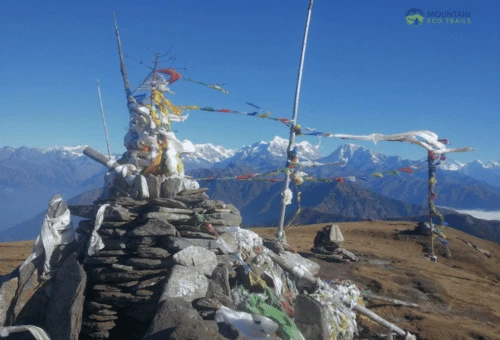
The route eventually meets the popular Everest Base Camp trail, taking you through Namche Bazaar, Tengboche, Dingboche, and the Khumbu Glacier.

Mountain Eco Trails offers this 20-day journey for trekkers who value the route as much as the destination. This isn't the quickest way to reach Everest Base Camp. That's precisely why some trekkers choose it.

Highlights of the Jiri to Everest Base Camp Trek:

  • Scenic drive from Kathmandu to Jiri, admiring views of green hills, forests, and rivers.
  • Trek along the Historical route of the Everest Base Camp Trekking Trail.
  • Discover the vibrant villages of the lower Everest Region.
  • Reach the highest point of the trek-Kala Patthar at 5545 meters to witness magical views of the mountains.
  • Achieve the feat of reaching Everest Base Camp by walking through different beautiful villages.
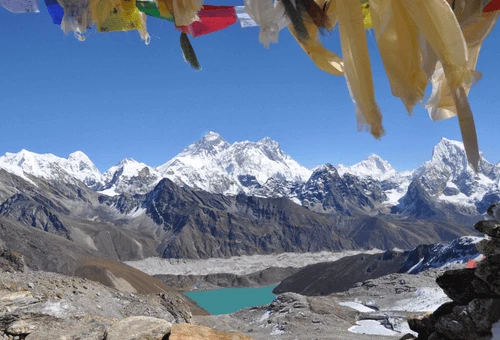
  • Superb views of Khumbu Glacier, Khumbu Icefall, Mt. Everest, Lhotse, Nuptse, Ama Dablam, and many more.

Is the Jiri to Everest Base Camp Trek Worth It?

Yes, the Jiri to Everest Base Camp Trek is worth considering if you have approximately three weeks and want to experience the Khumbu Region in depth. The route offers quieter villages, traditional mountain communities, challenging hill walking, and a gradual approach before joining the standard Everest Base Camp trek.

Why Choose the Classic Everest Base Camp Trek via Jiri?

The strongest reason to choose Jiri isn't that it takes longer. It's what you experience during those extra days.

On the standard Everest Base Camp Trek, you arrive by air at Lukla and quickly enter the well-established trekking corridor.

On the Jiri approach, the first several walking days feel very different. You cross ridges, descend into river valleys, climb through forests, and spend evenings in villages that receive fewer international trekkers.

1. Discover the lower Everest region

The villages of Bhandar, Sete, Junbesi, Nunthala, Bupsa, and Surke introduce you to the landscape of lower Solukhumbu.

This is a region of mountain farming, local footpaths, Buddhist culture, and communities whose livelihoods extend beyond trekking tourism.

The scenery changes almost daily, from terraced fields and forested slopes to alpine valleys.

2. Walk a route linked to Everest's trekking history

Before Lukla became the main gateway, approaches to Everest involved long journeys through Nepal's eastern hills.

The Jiri trekking corridor became a celebrated overland approach and is associated with the historical tradition of walking into the Everest region.

There is one important historical distinction: the 1953 Everest expedition of Tenzing Norgay and Edmund Hillary travelled overland before the modern road to Jiri existed. Today's trek follows the spirit of that earlier approach, not an identical road-and-foot itinerary.

3. Enjoy quieter trails before Phakding

The lower sections generally see fewer international trekkers than the Lukla–Namche corridor.

You may spend long stretches walking between small settlements without encountering large trekking groups. However, once the route joins the main trail near Phakding, expect the usual Everest-region traffic, especially in spring and autumn.

4. Build trekking rhythm before reaching higher elevations

Walking through the lower hills allows several days of physical adjustment before reaching Namche Bazaar.

It also provides additional time at intermediate elevations. However, earlier walking days do not eliminate altitude sickness risk. The itinerary still includes acclimatisation stops at Namche and Dingboche.

5. Experience the contrast between two Everest regions

One of the most rewarding parts of this trek is watching the landscape change.

The journey begins among warm lower valleys, cultivated hillsides, and green forests. It finishes among high-altitude settlements, glacial moraine, and the immense mountain walls surrounding Everest.

Few standard EBC itineraries show that transition over such an extended journey.

20 Days Jiri to Everest Base Camp Route Itinerary Facts

The trek starts with a scenic drive to Jiri (1,905m), followed by a gradual ascent through lush hills, terraced farms, and remote villages. The Jiri approach is especially appealing to travellers who want cultural depth, quieter walking, and a stronger sense of progression toward the Himalayas. 

Day

Route

Altitude

1

Arrive in Kathmandu

1350 m

2

Drive via Jiri and Shivalaya to Bhandar

1905m

3

Bhandar to Sete

2575m

4

Sete to Junbesi via Lamjura La

2675m

5

Junbesi to Nunthala

2854m

6

Nunthala to Bupsa

2350m

7

Bupsa to Surke

2335m

8

Surke to Phakding

2610m

9

Phakding to Namche Bazaar

3440m

10

Namche acclimatization

3440m

11

Namche to Tengboche

3860m

12

Tengboche to Dingboche

4400m

13

Dingboche acclimatization

4400m

14

Dingboche to Lobuche

4950m

15

Lobuche to Gorak Shep and Everest Base Camp

5364m

16

Kala Patthar and descend to Pheriche

4280m

17

Pheriche to Namche Bazaar

3440m

18

Namche Bazaar to Lukla

2850m

19

Fly from Lukla to Kathmandu or Ramechhap, then transfer

1350m

20

International departure

—

Key Route Highlights:

  • Jiri → Bhandar → Sete → Junbesi
  • Junbesi → Nunthala → Kharikhola → Phakding
  • Join the classic Everest trail at Phakding
  • Continue to Namche Bazaar → Tengboche → Dingboche
  • Everest Base Camp (5,364m) + Kala Patthar (5,545m)

This classic Everest route offers a complete Himalayan journey from the lowlands to Everest.

Jiri to Everest Base Camp Trek cost details for 2027,2028

The 20-day Everest Base Camp Trek via Jiri price starts at USD 1,999 per person for a solo booking. The package includes the main trekking arrangements, including a guide, accommodation, trek meals, required listed permits, and the scheduled transportation.

The final 2027 price will depend on your group size, departure date, transportation arrangements, and any customised services.

Cost Component

Estimated Price (USD)

Trekking Guide for Jiri to EBC

$30-35/day

Accommodation during the  Trek

$5–15/night

Meals (Breakfast/Lunch/Dinner)

$30-35/day

Transport Public (Drive)

$40-60

Required Permits

$50–60

Lukla to Kathmandu Flight

$250

Government Taxes

Included

Our Everest Base Camp package starts at USD 1,999 per solo trekker, with lower advertised per-person rates for larger groups. Porter service, insurance, and personal expenses are separate. Trekkers planning for 2027 should request a current quotation that confirms the route, flight arrangements, inclusions, and conditions.

Request Your Everest Base Camp Trek via Jiri Quote

Planning to do the Jiri to Everest Base Camp trek in spring or autumn 2027?

Send Mountain Eco Trails your travel month, number of trekkers, and preferred departure date. We can prepare a quote covering the 20-day itinerary, guide arrangements, optional porter service, transportation, and possible customisation.

Alternative Treks in Everest:

Itinerary

Welcome to Nepal! Once you land at the Tribhuwan International Airport, our staff from Mountain Eco Trails will be there to pick you up. Next, he will transfer you to your hotel in a private car. Once you settle in, you can take a short walk around Thamel — the bustling tourist hub filled with colourful shops, cosy cafés, and trekking gear stores. In the evening, we’ll meet for a short trip briefing and introduce you to your trekking guide. You’ll get to know about the route, safety tips, and what to expect during the trek. Overnight stay in Kathmandu with a traditional Nepali dinner and the excitement of the Everest Base Camp trek via Jiri waiting ahead.

  • Max Altitude:1350 meters
  • Accommodation:3-Star Hotel

The first travel day leaves Kathmandu's urban surroundings and heads into Nepal's eastern hill country.

The road passes rural settlements, forested hillsides, cultivated terraces, and valleys before continuing toward Jiri and Shivalaya.

Jiri is historically associated with the traditional overland Everest approach. However, the planned journey continues to Bhandar rather than beginning the walking section in Jiri.

Sections of the road can be rough, and travel time is not fixed. Heavy rain, road maintenance, traffic, and seasonal damage can cause delays.

After reaching Bhandar, settle into a local teahouse and prepare for the first day on foot

  • Max Altitude:1905 Meters
  • Accommodation:Tea House
  • Time:7-8 hours
  • Meals:Breakfast, Lunch, Dinner

Your first trekking day introduces one of the most important characteristics of the lower Everest route: descending into a valley often means climbing again on the opposite hillside.

The trail descends toward the Kenja area, passing small settlements, cultivated fields, streams, and forested slopes. After reaching the lower valley, the route climbs toward Sete.

This ascent can feel demanding, especially after the long road journey. Taking short, steady steps and avoiding an unnecessarily fast pace helps you manage the effort.

Unlike high-altitude trekking, the difficulty here comes primarily from trail steepness, elevation change, and hours spent walking.

Sete is a quiet mountain settlement where you spend your first full night after trekking.

  • Max Altitude:2575 meters
  • Accommodation:Tea House
  • Time:7-8 hours
  • Meals:Breakfast, Lunch, Dinner

Today's route crosses Lamjura La, a forested pass at approximately 3,530 meters.

The climb passes through woodland that can be especially attractive during spring, when rhododendrons may be flowering.

The air becomes cooler as you approach the pass, and cloud or mist can change visibility quickly. After reaching Lamjura La, the trail descends toward Junbesi, a traditional Sherpa village surrounded by hills and forest.

Junbesi offers a different atmosphere from the larger trekking towns farther north. Monasteries, local homes, and agricultural land are part of the village landscape.

This is one of the defining days of the classic approach because it combines challenging walking with the cultural character of lower Solukhumbu.

  • Max Altitude:2675 meters
  • Accommodation:Tea House
  • Time:6-7 hours
  • Meals:Breakfast, Lunch, Dinner

Leaving Junbesi, you continue along the lower Solu trekking corridor. The route climbs toward the Taksindu area before descending through settlements and hillsides toward Nunthala.

Weather permitting, sections of the trail offer broad views across the surrounding valleys and distant mountain ridges.

The walking involves repeated changes in elevation rather than one continuous ascent.

The wider Junbesi area is also associated with important Buddhist institutions, including Thupten Chholing Monastery. A visit can be considered on a customised itinerary if the route timing allows.

Nunthala provides a quieter overnight stop before the journey continues toward the Dudh Koshi valley.

  • Max Altitude:2440 meters
  • Accommodation:Tea House
  • Time:6-7 hours
  • Meals:Breakfast, Lunch, Dinner

Today begins with a descent through the lower hills toward the Dudh Koshi valley.

The trail passes agricultural settlements and follows footpaths used by residents as well as trekkers. After crossing the river area, the route climbs again toward Bupsa.

This stage offers a close look at daily life away from the major Everest tourism centers. Fields, stone pathways, livestock, and small houses are part of the experience.

Although Bupsa is at a relatively modest altitude, the climbing and descending can still be tiring.

By now, trekkers usually have a clearer sense of their walking rhythm, footwear comfort, and daily energy needs.

  • Max Altitude:2350 meters
  • Accommodation:Tea House
  • Time:5-6 hours
  • Meals:Breakfast, Lunch, Dinner

The trail continues through forested hills, with sections passing near Paiya, also known as Puiyan.

You follow a combination of narrow paths, stone steps, climbs, and descents.

This is an excellent day to appreciate the difference between the historical approach and the busier main Everest trail.

The terrain can be physically demanding even though the sleeping altitude remains relatively low.

Eventually, the route reaches Surke, a settlement below Lukla.

Although Lukla is geographically close, this itinerary does not follow the airport approach used by most trekkers. Instead, you continue toward the route that joins the main trail farther ahead

  • Max Altitude:2335 meters
  • Accommodation:Tea House
  • Time:5-6 hours
  • Meals:Breakfast, Lunch, Dinner

Leaving Surke, the route passes through settlements around Chaurikharka and continues toward the main Dudh Koshi trekking corridor.

As you approach Phakding, the number of trekkers, lodges, and pack animals generally increases.

After several days on quieter lower Solu trails, this change is noticeable.

You begin sharing the route with trekkers who arrived at Lukla by air.

Phakding sits alongside the river and offers a broader selection of teahouses than many earlier villages.

This is also an important transition point. The lower approach is complete, and the familiar Everest Base Camp route begins.

  • Max Altitude:2610 meters
  • Accommodation:Tea House
  • Time:5-6 hours
  • Meals:Breakfast, Lunch, Dinner

Today's trail follows the Dudh Koshi valley through villages, pine forest, and suspension bridges. After passing Monjo, you enter Sagarmatha National Park.

The final climb toward Namche Bazaar is long and steep. This is one of the first major altitude-related transitions of the journey, as your sleeping elevation rises substantially.

Namche Bazaar is the main commercial and cultural hub of the Khumbu, with bakeries, shops, lodges, and mountain views.

Although you have already spent several days walking from Bhandar, the climb above 3,000 meters requires careful pacing.

The afternoon is best used for recovery, hydration, and checking how you feel at the new altitude.

  • Max Altitude:3440 meters
  • Accommodation:Tea House
  • Time:5-6 Hours
  • Meals:Breakfast, Lunch, Dinner

Today is reserved for acclimatization rather than progressing to the next overnight village.

Depending on weather and your condition, the guide may organize a hike toward the Everest View area, Syangboche, or Khumjung.

These higher viewpoints can offer views of Everest, Ama Dablam, Lhotse, and neighboring peaks when the sky is clear.

You then return to Namche Bazaar to sleep at the same altitude.

The day also provides an opportunity to explore local culture, rest, and prepare for the more exposed mountain landscape ahead.

An acclimatization day does not guarantee protection from altitude sickness. Tell your guide about headaches, nausea, dizziness, unusual fatigue, or other symptoms.

  • Max Altitude:3440 meters
  • Accommodation:Tea House
  • Meals:Breakfast, Lunch, Dinner

From Namche, the trail traverses the hillside with views across the Dudh Koshi valley.

On clear days, Everest, Ama Dablam, and other peaks appear along the route. The path descends toward Phunki Tenga before climbing through forest to Tengboche.

This final ascent is demanding, particularly after the steep descent earlier in the day. Tengboche is known for its monastery and dramatic setting among the surrounding mountains.

Visitors may be able to observe parts of the monastery's cultural life when access and local schedules permit.

The mountains feel noticeably closer here, and the evenings are often colder than in Namche.

  • Max Altitude:3867 meters
  • Accommodation:Tea House
  • Time:5-6 Hours
  • Meals:Breakfast, Lunch, Dinner

The route descends through the Deboche area before crossing the Imja Khola valley and continuing toward Pangboche.

As you climb farther, vegetation becomes thinner and the scenery changes from forest to open alpine terrain.

Ama Dablam dominates sections of the route.

Dingboche lies in a broad mountain valley surrounded by high peaks and rocky slopes.

At this elevation, many trekkers notice that walking requires more effort, particularly on climbs.

A slow pace and careful attention to symptoms are important. The planned sleeping-altitude gain is close to the upper end of common acclimatization guidance, so the guide must assess conditions and individual responses.

  • Max Altitude:4400 meters
  • Accommodation:Tea House
  • Time:5-6 hours
  • Meals:Breakfast, Lunch, Dinner

Rest and recovery are vital at this stage of your journey. Today, you’ll enjoy an acclimatization hike to Nangkartshang Peak (5,083m) or explore the upper ridge above Dingboche. The short hike rewards you with awe-inspiring views of Makalu, Ama Dablam, and the entire Imja Valley.
In the afternoon, return to the village and relax with a warm cup of tea at a teahouse. You can also chat with other trekkers who have shared similar trails or simply admire the clouds rolling over the mountains. This rest day helps you adjust comfortably before reaching higher elevations near the Everest Base Camp

  • Max Altitude:4400 meters
  • Accommodation:Tea House
  • Time:3-4 hours
  • Meals:Breakfast, Lunch, Dinner

The trail gradually ascends through open valleys and glacial moraines. You’ll pass through Dughla, where trekkers often stop for a quick rest before tackling the steep climb up to Thukla Pass. Along this section stands a series of memorials built in honour of climbers who lost their lives on Everest — a humbling reminder of the mountain’s power and beauty.

From here, the path levels out, offering incredible views of Pumori and Nuptse as you approach Lobuche. The air feels thinner, and every step brings you closer to your dream — reaching Everest Base Camp. Overnight at Lobuche, where the starlit sky glows brilliantly above the icy peaks.

  • Max Altitude:4950 meters
  • Accommodation:Tea House
  • Time:6-7 hours
  • Meals:Breakfast, Lunch, Dinner

This is the most awaited day of the entire trek — the journey to Everest Base Camp! You’ll start early, following a rocky trail alongside the Khumbu Glacier. After a few hours of steady walking, you’ll arrive at Gorakshep, the last settlement before base camp.

After a short break, you’ll continue toward the legendary Everest Base Camp. The trail winds through glacial ridges and moraine fields, with colourful prayer flags marking the route. Reaching the base of the world’s highest mountain is an emotional and unforgettable moment. Take time to soak it all in, capture photos, and celebrate this incredible achievement. You’ll then return to Gorakshep for the night.

  • Max Altitude:5364 meters
  • Accommodation:Tea House
  • Time:7-8 hours
  • Meals:Breakfast, Lunch, Dinner

Your guide will provide you with the details about the sunrise on the previous day. According to the sunrise time, wake up early in the morning and be ready to hike to Kala Patthar. Rise before dawn for the iconic sunrise hike to Kala Patthar, the best vantage point for panoramic views of Mount Everest, Lhotse, and Nuptse.

As the first golden light touches the snowy peaks, the sight is breathtaking — one of the most inspiring experiences of trekking in Nepal.

After soaking in the view, descend back to Gorakshep for breakfast and then continue your descent to Pheriche. The walk feels easier as you breathe richer air and retrace your path through alpine valleys. Overnight at a teahouse in Pheriche, surrounded by mountains that seem to whisper stories of adventure.

  • Max Altitude:4280 meters
  • Accommodation:Tea House
  • Time:7-8 Hours
  • Meals:Breakfast, Lunch, Dinner

You’ll follow the familiar trail through Pangboche and Tengboche, gradually descending toward Namche. The journey feels lighter, both physically and emotionally, as the air thickens and the temperature grows warmer. Along the way, take one last look at the distant peaks that have accompanied you for days.

By late afternoon, you’ll arrive in Namche Bazaar — the lively mountain hub you visited before. Enjoy a hot shower, celebrate with a fresh bakery treat, and share stories with fellow trekkers. This is your final night in the high Himalayas before heading back toward Lukla.

  • Max Altitude:3440 meters
  • Accommodation:Tea House
  • Time:6-7 hours
  • Meals:Breakfast, Lunch, Dinner

Your final trekking day begins with a long descent through forest trails, crossing suspension bridges draped with prayer flags.

You’ll pass small Sherpa villages, mani walls, and chortens that remind you of the spiritual rhythm of the Khumbu region. Arriving in Lukla feels both emotional and fulfilling — you’ve completed one of the world’s most iconic treks! In the evening, you can celebrate with your trekking team over a warm meal, sharing laughter and memories of the trail. Overnight at a cosy lodge in Lukla, where you’ll rest before flying back to Kathmandu.

  • Max Altitude:2860 meters
  • Accommodation:Tea House
  • Time:7-8 hours
  • Meals:Breakfast, Lunch, Dinner

After breakfast, take a short and thrilling flight from Lukla to Kathmandu. From the air, you can see the mighty Himalayas stretching endlessly toward the horizon — a final reminder of your adventure. Upon arrival, you’ll be transferred to your hotel, where a comfortable bed and a hot shower await.
Spend your afternoon exploring Kathmandu’s UNESCO World Heritage sites such as Swayambhunath, Pashupatinath, or Boudhanath. In the evening, enjoy a farewell dinner with your guide and crew, celebrating the success of your Everest Base Camp trek via Jiri.

Note: In the peak trekking season, the flight from Lukla will depart to Ramechhap first, then drive to Kathmandu for 4 hours from Ramechhap. However, in off off-season, the flight directly departs to Kathmandu from Lukla.

  • Max Altitude:1350 meters
  • Accommodation:3-Star Hotel
  • Time:30 minutes flight
  • Meals:Breakfast

Your journey in Nepal comes to an end today. Depending on your flight schedule, you can enjoy some last-minute shopping for handicrafts and souvenirs in Thamel. Our team will transfer you to Tribhuvan International Airport for your onward journey.

As you fly out, the memories of mountain villages, fluttering prayer flags, and the mighty Everest will stay with you forever. You’ve not only reached the world’s most iconic base camp but also experienced the spirit of the Himalayas — an adventure that will echo in your heart for years to come.

    Got a question about this tour?

    Or looking for customize trip, reach out to our travel experts.

    Cost Includes
    • International airport transfer during arrival and departure in a private vehicle. 
    • The domestic airport picks up while flying to Kathmandu from Lukla. 
    • Kathmandu -Bhandara Private Jeep cost. 
    • Lukla-Kathmandu flight fare.
    • 2-night Accommodation in Kathmandu in a 3-star Hotel with BB
    • Sagarmatha National Park Entry Permit Card
    • Khumbu Region Municipality Entry Permit Card
    • Gaurishankar Conservation Area Project Permit Card 
    • Professional and licensed trekking guide for the trek. 
    • Expenses of the guide, including his meals, accommodation, salary, and Insurance.
    • Accommodation during the trek on a sharing basis
    • Meals during the trek (Breakfast, Lunch, Dinner)
    • Seasonal Fruits every day after dinner during the trek 
    • Arrangement of Rescue if needed. 
    • Farewell dinner with the team official after the trek 
    • An hour of Trekker's Massage 
    • All the government and local taxes.
    Cost Excludes
    • Personal expenses during the trek, like drinks, hot showers, battery charges, Wi-Fi, etc. 
    • Travel insurance that covers the Helicopter rescue and other expenses. 
    • Meals in Kathmandu (Lunch and Dinner)
    • Porter Expenses. (If needed, USD 22 per day) 
    • Tips for Guide and Porter
    • Anything not mentioned in the included parts. 
    Availability
    Select a Departure Month
    Start DateEnd DatePriceStatus 
    Start DateStarts: SundayNov 08, 2026End DateEnds: FridayNov 27, 2026PricePriceUS$1999StatusStatusAvailable
    Start DateStarts: SundayNov 15, 2026End DateEnds: FridayDec 04, 2026PricePriceUS$1999StatusStatusAvailable
    Start DateStarts: SundayNov 22, 2026End DateEnds: FridayDec 11, 2026PricePriceUS$1999StatusStatusAvailable
    Start DateStarts: SundayNov 29, 2026End DateEnds: FridayDec 18, 2026PricePriceUS$1999StatusStatusAvailable
    Good to Know

    Kathmandu to Jiri transport

    The only way to reach Jiri from Kathmandu is via Jeep or Bus. However, recently, Kathmandu to Jiri is only possible by Jeep because of the road conditions. If possible, we will try to find a shared jeep for this package or trip. This is because only a few travellers take this route to trek to Everest Base Camp. Otherwise, you will take a private Jeep from Kathmandu to Jiri, which takes around 8-9 hours through the off-road highway. However, after completing the trek to EBC, the return journey will be via Lukla. On the last day of the trek, you will fly back to Kathmandu from Lukla.

    Everest Base Camp via Jiri vs Lukla: Which Route Is Better?

    Feature

    Everest Trek via Jiri

    Everest Trek via Lukla

    Typical package

    20 days

    12–14 days

    Entry to Everest region

    Road via Jiri to Bhandar

    Flight to Lukla

    Lower Solu villages

    Major part of the journey

    Mostly bypassed

    Crowds

    Quieter before Phakding

    Busier main trekking corridor

    Physical challenge

    Longer, more cumulative ascent and descent

    Shorter overall

    Acclimatization

    Several lower-altitude trekking days, plus scheduled rest days

    Scheduled acclimatisation days required

    Cultural experience

    Lower Solu and upper Khumbu

    Primarily Khumbu villages

    Flight arrangement

    Lukla flight on return

    Lukla flights normally on both ends

    Best suited to

    Long-distance trekkers and cultural travellers

    Travellers with limited time

    Main disadvantage

    Time commitment and long walking sections

    Greater reliance on flights for access

    Which should you book?

    Choose Jiri if exploring the lower Everest region is a major reason for visiting Nepal.

    Choose Lukla if reaching Everest Base Camp within approximately two weeks is more important than the historical overland approach.

    Neither route is automatically safer at high altitude. Acclimatisation, individual response, weather, and guide decisions remain important on both journeys.

    What Makes the Lower Everest Trail Special?

    The lower Everest region isn't simply the quieter part of a famous trek. It has its own landscapes, settlements, and cultural identity.

    Junbesi and the cultural landscape of Solukhumbu

    Junbesi is one of the most memorable settlements along the classic approach. Its Buddhist heritage, local architecture, agricultural surroundings, and nearby monasteries give travellers a reason to slow down.

    A longer stay can be arranged for those interested in village life, photography, or cultural exploration.

    Lamjura La and the forested hills

    Lamjura La feels very different from the glacial landscape near Everest Base Camp.

    Instead of ice and moraine, the trail passes through forest, where seasonal flowers, mist, and changing light shape the scenery.

    The crossing is also a reminder that the lower route is physically demanding long before you reach the highest mountains.

    The changing character of the trail

    One day you may be crossing terraced farmland. Several days later, you will be looking across bare valleys toward enormous Himalayan peaks.

    This gradual change is one of the strongest reasons to choose the classic Jiri to EBC trek.

    Lower Everest experience

    The lower Solu route adds forest walking, rural settlements, Buddhist heritage, and repeated hill crossings to the standard Everest Base Camp experience. It generally offers fewer trekking crowds before joining the main trail near Phakding, but the extra distance makes the overall journey more demanding.

    How Difficult Is the Everest Base Camp Trek via Jiri?

    The Everest Base Camp Trek via Jiri is a moderate in difficulty level. However, you do need enough fitness to walk for several consecutive days over uneven terrain, steep ascents, and long descents. The trek from lower Everest allows your body to acclimatise. The only difficulty is the long itinerary and high altitude.

    There are three main challenges.

    1. Long walking effort

    The lower Solu trail repeatedly descends into valleys before climbing another ridge. This can be tiring even when the sleeping altitude is below 3,000 meters.

    The trek also includes long days returning from the upper Khumbu.

    2. High altitude

    Above Namche Bazaar, altitude becomes an increasingly important factor. The highest trekking point is around 5,545 meters at Kala Patthar.

    Altitude illness can affect fit and experienced trekkers as well as beginners.

    3. Basic mountain conditions

    Cold bedrooms, shared bathrooms, changing weather, and limited facilities are part of high-altitude teahouse trekking.

    Trekkers must also be prepared for road disruptions, flight delays, and itinerary changes.

    How to Prepare for the Classic Jiri to EBC Trek

    The best preparation combines cardiovascular fitness, hill walking, strength training, and familiarity with your trekking equipment.

    Begin training several months before departure if possible.

    Physical preparation

    • Focus on activities that resemble the demands of the trail.
    • Walk uphill and downhill regularly.
    • Practice longer hikes on consecutive days.
    • Carry a loaded daypack during training.
    • Strengthen your legs and core.
    • Practice descending steps and uneven terrain.
    • Build endurance without depending on running speed.

    The ability to walk comfortably for several hours and recover for the following day is more useful than a fast pace over a short distance.

    Who Should Choose the Everest Trek from Jiri?

    The Jiri approach is particularly suitable for travellers who want the broader Everest experience rather than simply reaching Base Camp.

    This trek is a strong choice if you:

    • Have around three weeks available in Nepal.
    • Enjoy long-distance hiking.
    • Want to explore lower Solukhumbu.
    • Prefer quieter trails during the early stages.
    • Are interested in local villages and Buddhist culture.
    • Are comfortable with simple teahouse facilities.
    • Want to experience different landscapes on one trek.
    • Are physically prepared for repeated ascents and descents.

    It may not be the right choice if you have a limited holiday, need a short itinerary, prefer luxury accommodation throughout, or want to avoid long walking days.

    The regular Everest Base Camp Trek may be a better fit in those cases.

    Can beginners complete the Jiri to EBC trek?

    A fit first-time Himalayan trekker may be able to complete the route with suitable preparation, a carefully managed pace, and appropriate acclimatisation.

    However, the Jiri route is not automatically easier than the Lukla route.

    Its additional days, hill crossings, and longer cumulative walking distance make it better suited to travelers who enjoy multi-day hiking.

    Does the Jiri Route Help with Acclimatisation for EBC?

    The Jiri Route provides several days of trekking at lower elevations before reaching Namche Bazaar.

    That additional exposure can be helpful compared with flying directly to Lukla. However, walking from Jiri does not prevent acute mountain sickness.

    Once above 3,000 meters, the rate of sleeping-altitude gain becomes particularly important.

    Some stages of the standard Everest itinerary approach or exceed that guideline. The route may need modification based on your health, prior altitude response, and the guide's assessment.

    Our approach to altitude planning

    • Two scheduled acclimatisation days at Namche Bazaar and Dingboche.
    • A steady walking pace rather than racing to the next lodge.
    • Regular communication about symptoms.
    • Flexibility to rest, descend, or change the itinerary.
    • Emergency coordination when medical assistance is required.

    Severe headache, repeated vomiting, confusion, inability to walk steadily, or breathlessness at rest may indicate serious altitude illness and require urgent action.

    Reaching Base Camp is never more important than responding properly to altitude symptoms.

    Best Time for Everest Base Camp Trek via Jiri

    Spring and autumn are the best times for the EBC Trek via Jiri. However, planning for Jiri involves two different climatic zones: the lower, greener hill country and the high-altitude Khumbu. A month that feels comfortable in Junbesi can still be extremely cold in Gorak Shep.

    Spring: March to May

    Spring is an excellent period for travelers interested in green valleys, forest scenery, and the possibility of rhododendron flowers. Temperatures in the lower Solu region are generally milder than in winter.

    Higher up, cold weather, snow, and wind remain possible. April and May also coincide with Everest's main spring climbing season, making the upper Khumbu particularly active.

    Autumn: October to November

    Autumn is another preferred trekking period because skies are often clearer after the monsoon. October is popular for mountain visibility and comfortable daytime walking conditions.

    November typically becomes colder, particularly above Dingboche.  Autumn also brings Nepal's major festivals, although exact festival dates vary each year.

    Winter: December to February

    Winter trekking may be possible, but colder conditions, snowfall, icy paths, and shorter daylight hours increase the challenge. The highest sections can be particularly demanding. This season is better suited to experienced trekkers prepared for severe cold and flexible itineraries.

    Monsoon: June to September

    Monsoon conditions can make the lower Everest route difficult. Heavy rain, slippery trails, leeches, cloud cover, and potential landslides affect parts of the lower Solu region. Road access around Jiri and Bhandar can also be disrupted.

    For this reason, the Jiri route generally requires more caution during the monsoon than travellers might expect from looking only at upper Khumbu weather.

    Trekking permits for the Jiri to Everest Base Camp

    To do this EBC Trek from Jiri, you will need three major trekking permit cards. However, if you follow the regular Everest Base Camp Trek 14 Days via Lukla, then you will need only 2 permits. The first part of the trek goes through the Gaurishankar Conservation Area; hence, you will need an additional permit card to enter this region. Here are the trekking permits from Jiri to EBC:

    Permit

    Why It Is Needed

    Gaurishankar Conservation Area Permit

    For the lower route through the conservation area

    Sagarmatha National Park Permit

    For entry into the protected Everest region

    Khumbu Pasang Lhamu Rural Municipality Permit

    Local entry requirement in the Khumbu region

    Food and Accommodation During the Trek

    The Jiri to Everest Base Camp route primarily uses local teahouses.

    These lodges provide sleeping accommodation, prepared meals, and a place to rest after walking. However, facilities differ significantly between the lower villages, Namche Bazaar, and settlements above 4,000 meters.

    Accommodation

    In lower Solu villages, expect relatively simple rooms and limited choice of lodges. In Namche, more established accommodations and additional facilities are available.

    Above Dingboche, teahouses become more basic. Rooms are often unheated, bathrooms are commonly shared, and warm showers may be unavailable. The standard package uses shared accommodation. A good sleeping bag remains important even when the lodge provides blankets.

    Check the Everest Trek Accommodation for more details. 

    Meals

    Three meals per day are included during the trekking portion of the trip. Common dishes include dal bhat, noodles, potatoes, soup, rice, eggs, pancakes, porridge, and pasta.

    The choice depends on the lodge and available supplies. Dal bhat is a practical option for trekkers because it typically provides rice, lentils, and vegetables in a filling meal.

    As elevation increases, fresh ingredients become harder to transport, and food options can become more limited.

    Check our Meals in the Everest Region guide for more details. 

    Water and connectivity

    Carry a reliable method of treating drinking water, such as a suitable filter or purification tablets.

    Avoid relying entirely on single-use plastic bottled water.

    Mobile reception and Wi-Fi are variable. Charging facilities may require extra payment.

    Carry a power bank and expect periods without internet access.

    Booking Process for 20-day Jiri to Everest Base Camp Trek

    Booking the 20-day Everest Base Camp Trek via Jiri is a straightforward process. You can click the "Book Now" button or contact us directly via WhatsApp at +9779849790153 for quick assistance.

    Contacting us directly makes it easier to provide pre-trip information via WhatsApp. Our trip expert will share details about the trek and explain how it operates. Feel free to ask any questions about the Jiri to Everest Base Camp Trek.

    FAQs
    • No, if you take the Jiri route to Everest Base Camp, then it is impossible to see Everest from Jiri. It takes another 4-5 days to trek from Jiri to Namche, from where the first glimpse of Mount Everest Can be seen.

    • Yes, the Jiri to Everest Base Camp route is less crowded in the lower Everest. The lower Jiri approach generally receives fewer international trekkers than the main route starting from Lukla. Villages such as Sete, Junbesi, and Nunthala offer a quieter experience. After joining the trail near Phakding, however, trekkers encounter the normal upper Everest trekking crowds.

    • Either trekking alone or in a group, female trekkers are always safe during the EBC Trek. Not only on in trek in Nepal, female travelers can feel safe without any problems. Moreover, we assure the safety of our male and female trekkers throughout the trek.

    • The route via Jiri and via Lukla, both are the best trails to explore the Khumbu Region. However, if you are short on time and have only two weeks of holiday can choose the Everest Base Camp Trek 14 Days via Lukla. Otherwise, if you want to discover the whole Khumbu region and have at least 3 weeks, then choose the Jiri Route to EBC.

    • EBC trek via Jiri is not as difficult if you are a beginner or even an experienced trekker. Though in terms of duration, it takes more days than the regular EBC Trek. But EBC via Jiri allows you to adapt to the altitude quickly and make it easier at higher altitudes.

    • It depends upon your experience. Jiri Everest Base Camp Trek is hard for beginners without trekking experience. However, if you have previous trekking experience then you can easily complete this trek.

    • The best time to trek via Jiri to EBC is in the month of Spring and Autumn seasons. These seasons deliver perfect visibility and weather conditions for the trek.

    • No, you do not need any special permit for the Jiri Route to EBC. However, you will hike through the Gaurishankar Conservation Area, which requires an entry permit along with the Sagarmatha National Park Permit and Khumbu Region Municipality Permit.

    • The trek from Jiri to Everest Base Camp is 205 kilometres, which takes around 18-22 days to complete.

    • Namche Bazar is the last place where you will find ATMs. However, sometimes it also can give you some trouble. So, it is better to carry enough Nepali currency with you for the trek.

    • Yes, several teahouses along the trail offer hot showers at some extra costs. It costs you around $2-$4 per shower.

    • The Everest Base Camp Trek via Jiri can be categorised as easy to moderate in terms of gradual altitude gain. However, the trail after Phakding is similar if you choose either trek via Lukla or Jiri.

    • Everest Base Camp Trek Via Jiri costs start from USD 1999 for solo trekkers, whereas if there is a group of more than 8 trekkers, the cost reduces to USD 1799 per person,  depending on the group size and level of services and logistics.

    SimilarTrips
    You may also like
    Did not find what you are looking for? No worries!

    Let us help you plan your perfect holiday.