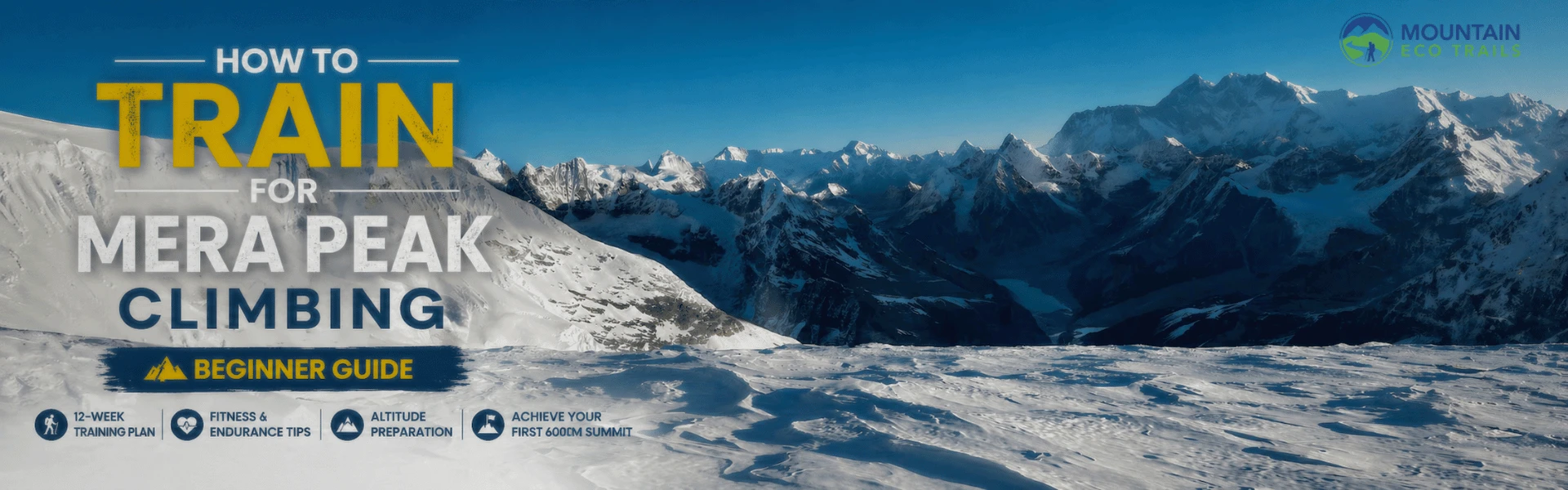
Training for Mera Peak climbing is about building endurance, strength, and altitude readiness over 12–16 weeks. Beginners can succeed without technical experience if they follow a structured training plan, practice long hikes, and prepare mentally. With proper guidance, Mera Peak is one of the most rewarding first Himalayan summits.
Mera Peak Climbing Training Plan & Tips
Introduction: Can You Really Train for Mera Peak as a Beginner?
You’re probably wondering: “Am I fit enough to climb Mera Peak?” That’s the biggest question every beginner asks—and honestly, it’s the right one. You can easily climb Mera Peak if you have trained and prepared well. Training for Mera Peak climbing requires 12–16 weeks of consistent preparation focused on endurance, leg strength, and altitude readiness.
Climbers should build the ability to hike 6–8 hours daily with a backpack, improve cardio fitness, and practice long uphill walks. While technical climbing skills are basic, the real challenge is high altitude above 6,000 meters. With proper training, acclimatisation, and guided support, Mera Peak is achievable for fit beginners
Mera Peak (6,476m) is often called one of the best beginner trekking peaks in Nepal. But don’t let the word “beginner” fool you. This is still a high-altitude Himalayan climb. The thin air, long summit day, and cold conditions can break even strong hikers who don’t train properly.
The good news? You don’t need to be an athlete—you need a structured training plan, consistency, and the right mindset.
This guide will show you exactly how to train for Mera Peak climbing step by step.
How to Train for Mera Peak Climbing
This is the most common question that climbers or beginners ask us. How to train for Mera Peak Climbing for a successful summit.
To train for Mera Peak:
- Build endurance with hiking (3–5 days/week)
- Strengthen legs with squats, lunges, and step-ups
- Train with a backpack (8–10 kg)
- Practice long hikes (5–7 hours)
- Prepare for altitude with gradual exposure or simulation
- Follow a 12–16 week plan
Can Beginners Climb Mera Peak?
Yes, beginners can climb Mera Peak—but only if they are physically prepared.
What makes it beginner-friendly:
- No advanced technical climbing required
- Basic use of crampons and rope
- Guided expeditions available
What makes it challenging:
- Extreme altitude (above 6,000m)
- Long trekking days (6–8 hours)
- Summit push (10–14 hours)
Reality check: If you can hike consistently, train properly, and stay disciplined, Mera Peak is achievable—even as your first Himalayan climb.
Mera Peak Fitness Requirements (Real Benchmarks)
Before you even think about booking, you should meet these minimum fitness standards. Without excellent fitness requirements, it is difficult to do any high altitude treks or climbs.
Physical Benchmarks
- Walk 10–12 km comfortably
- Hike 6–8 hours with breaks
- Carry 8–10 kg backpack
- Handle steep uphill terrain
Simple Fitness Test
Try this at home:
- Climb 10–15 floors of stairs without stopping
- Do a 5–6 hour hike on the weekend
Walk 10 km without fatigue the next day. If this feels manageable, you’re on the right track.
How Long Should You Train for Mera Peak?
Ideal Training Timeline
Level | Training Duration |
Beginner | 12–16 weeks |
Moderate fitness | 10–12 weeks |
Experienced trekker | 8–10 weeks |
Best approach: Train for at least 3 months if you're starting from average fitness.
12-Week Mera Peak Training Plan (Beginner Friendly)
For beginner climbers, having a perfect Mera Peak climbing Training plan is necessary. Our expert from Mountain Eco Trails has designed a structured training plan for the Mera Peak Climbing.
Phase 1: Weeks 1–4 (Build Base Fitness)
Focus:
- Walking 30–60 mins daily
- Light jogging or cycling
- Basic strength exercises
Phase 2: Weeks 5–8 (Strength + Endurance)
Focus:
- Hiking 2–3 times/week
- Add backpack (5–8 kg)
- Strength training (legs + core)
Phase 3: Weeks 9–12 (Peak Conditioning)
Focus:
- Long hikes (5–7 hours)
- Steep uphill training
- Backpack (8–10 kg)
- Back-to-back hike days
Best Exercises to Train for Mera Peak
The best exercises to train for the Mera Peak are a combination of cardio, Strength, endurance, and core training. If you can master these training exercises, then beginners can summit the peak without any difficulties.
Cardio Training
- Hiking (best option)
- Running or cycling
- Stair climbing
Strength Training
- Squats
- Lunges
- Step-ups
- Deadlifts
Endurance Training
- Long-distance hiking
- Incline treadmill walks
Core Training
- Planks
- Balance exercises
- Stability drills
Focus on legs + lungs—that’s your success formula.
How to Train for High Altitude (Critical Section)
Altitude is the hardest part of Mera Peak, not climbing. Mera Peak is the easiest trekking peak in Nepal. Having said that, it is not technically difficult, but altitude is challenging. It takes you to an altitude of 6476 meters.
What happens at altitude:
- Less oxygen
- Faster fatigue
- Slower recovery
How to prepare:
- Train consistently (build endurance)
- Do long hikes with elevation gain
- Stay hydrated
- Learn pacing
For US/UK/AUS/Europe climbers:
You likely train at sea level, so:
- Use staircases or hills
- Try altitude masks (optional)
- Focus on long-duration cardio
Mera Peak is not technically difficult, but high altitude makes it physically demanding. Training should focus on endurance, strength, and long hiking ability rather than technical climbing skills. Beginners can succeed if they train consistently for at least 12 weeks and follow a gradual fitness plan.
Do You Need Technical Skills for Mera Peak?
Not much—but some basics are required. Since Mera Peak is a trekking peak, you do not need technical skills compared to Manaslu or Everest Expeditions.
- Skills you’ll learn:
- Using crampons
- Ice axe basics
- Rope walking (fixed lines)
Our Guides from Mountain Eco Trails will teach you during the climb, so no prior experience is required. There will be a pre-climbing training session at Khare and High Camp before the summit day.
Mera Peak Training Mistakes to Avoid
Avoid these common beginner mistakes:
❌ Training only in the gym
❌ Ignoring long hikes
❌ Not using a backpack
❌ Overtraining and burnout
❌ Skipping rest days
The biggest mistake? Underestimating endurance. Endurance and cardio help your lungs while climbing at high altitude.
Mental Preparation for Mera Peak
Climbing Mera Peak is not just physical. Being mentally fit is also important. At some point, your mind and body will be tired. Pushing yourself being resilient is key for successful Mera Peak summit.
You’ll face:
- Cold mornings
- Long walking days
- Slow progress at altitude
Build mental strength:
- Train in tough conditions
- Stay consistent
- Practice patience
Strong mindset = successful summit.
Training Tips for US, UK, AUS & Europe Climbers
Most of the western countries and Europe do not have high-altitude mountains that is easy to climb. If you don’t have mountains nearby:
Smart alternatives:
- Stair climbing (best option)
- Incline treadmill
- Weekend hikes
- Weighted backpack walks
Consistency matters more than location.
Mera Peak Training Checklist
Before your climb, make sure:
✅ Can hike 6–8 hours
✅ Comfortable with a backpack
✅ Completed long hikes
✅ Mentally prepared
✅ Understand altitude risks
Comparison: Mera Peak vs Everest Base Camp Training
EBC Trek and Mera Peak are totally different types of Himalayan trips.
Factor | Mera Peak | Everest Base Camp |
Altitude | 6,476m | 5,364m |
Difficulty | Moderate | Moderate |
Technical Skill | Basic | None |
Training Required | Higher | Moderate |
Summit Push | Yes | No |
Mera Peak requires more physical preparation.
Compared to Everest Base Camp, Mera Peak requires stronger fitness and endurance due to the summit climb and higher altitude. However, it remains one of the most achievable trekking peaks for beginners with proper preparation.
FAQs
How hard is Mera Peak climbing?
Mera Peak is moderately difficult. The main challenge is altitude rather than technical climbing. Trekkers must handle long hiking days, cold weather, and a demanding summit push. With proper training and acclimatisation, beginners can successfully reach the summit.
Can I climb Mera Peak without experience?
Yes, you can climb Mera Peak without prior climbing experience. However, you must have good physical fitness, endurance, and a willingness to learn basic mountaineering skills like using crampons and ropes.
What is the best training for Mera Peak?
The best training includes hiking, cardio workouts, leg strength exercises, and long-duration endurance activities. A 12-week plan combining hiking and strength training is ideal for beginners.
How fit do I need to be for Mera Peak climbing?
You should be able to hike 6–8 hours daily with a backpack, climb steep terrain, and recover quickly. Strong cardiovascular endurance and leg strength are essential for success.
Is Mera Peak harder than Everest Base Camp?
Yes, Mera Peak is harder due to the higher altitude and the summit climb. Everest Base Camp is a trek, while Mera Peak involves glacier walking and a summit push.
How long is the Mera Peak summit day?
The summit day can take 10–14 hours, starting early in the morning. It requires endurance, mental strength, and proper pacing.
What is the biggest challenge of Mera Peak?
The biggest challenge is altitude. Low oxygen levels make even simple movements exhausting, especially above 6,000 meters.
Ready to Climb Mera Peak?
If you’ve read this far, you’re already ahead of most beginners. With the right training, Mera Peak is not just possible—it’s life-changing.
If you want a safe, beginner-friendly climb, consider a guided expedition with Mountain Eco Trails. We are experts in organising the Mera Peak Climbing. Mountain Eco Trails is a trusted and government-authorised trekking company in Nepal. Contact us today via email or WhatsApp us at +9779849790153 to book the Mera Peak Climbing.
Also check out:

Anil Lamsal
Call us on WhatsApp+977 9849790153OrChat with us