Planning your Annapurna Base Camp Trek itinerary? Compare 7-day, 10-day, and 12-day ABC Trek routes, including an extended itinerary via Ghorepani and Poon Hill. This ABC Trek itinerary guide compares trekking durations, daily walking hours, elevations, difficulty, and recommended starting points. Find out which itinerary best suits beginners, experienced trekkers, and travellers with limited time in Nepal. From Pokhara transfers to altitude planning and seasonal considerations, Mountain Eco Trails helps you select a realistic route and prepare for your Annapurna Base Camp adventure.
Best ABC Trek Itinerary Guide & Routes
Annapurna Base Camp Trek Itinerary: 7, 10 & 12-Day Routes Compared
The Annapurna Base Camp Trek itinerary typically takes 7–12 days, depending on your starting point, fitness, and preferred trekking pace.
A 7-day itinerary from Pokhara suits fit trekkers with limited time, while a 10-day route can include Kathmandu transfers and the complete trek.
A 12-day itinerary offers more flexibility for gradual altitude gain and shorter walking days. All routes reach Annapurna Base Camp (4,130 meters) through the Annapurna Sanctuary. Trekkers can also extend the journey via Ghorepani and Poon Hill for additional mountain views and cultural experiences.
The Best ABC Trek Itinerary Isn't Always the Shortest
Although Annapurna Base Camp is one destination, you can reach there via several ways or routes.
Not all trekkers have the same flexibility for the trekking itinerary. Some trekkers arrive in Pokhara with just a week available. Others have two weeks in Nepal and want to enjoy the villages, forests, and mountain scenery without rushing between teahouses.
The challenge is choosing an itinerary that matches your actual trekking ability, fitness, budget, and several other factors.
A shorter route may save time, but it can also mean longer descents and less flexibility at altitude. A longer itinerary can make the experience more enjoyable, provided those extra days are used wisely.
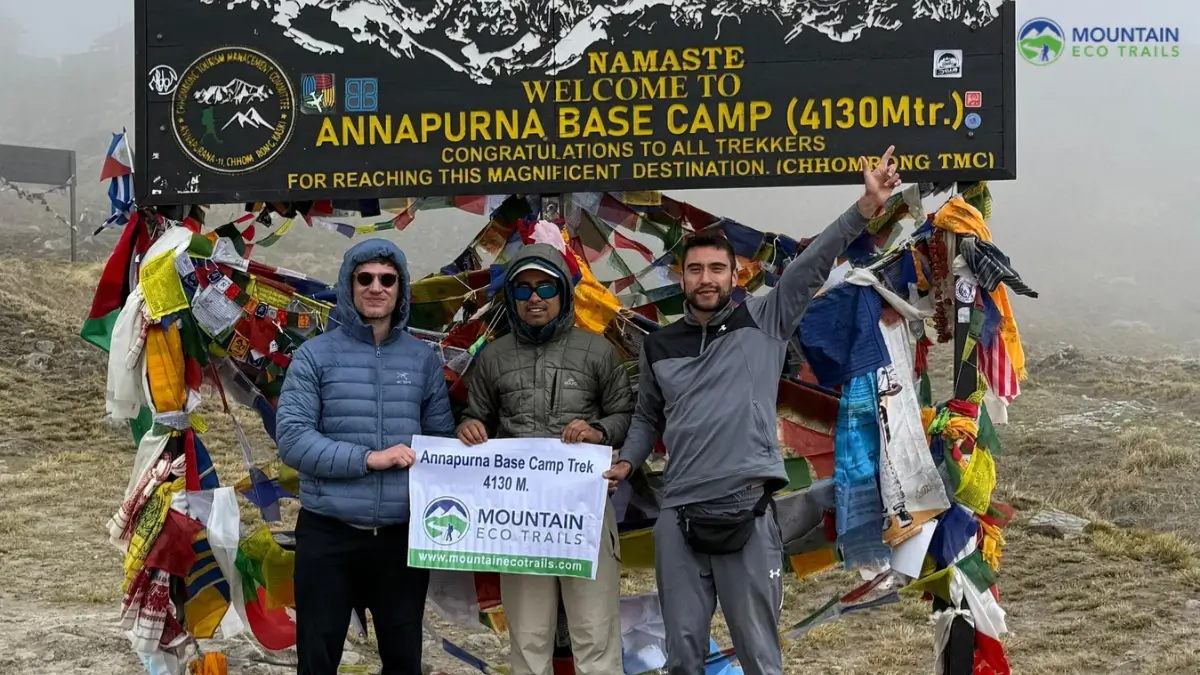
This guide from Mountain Eco Trails compares the 7-day, 10-day, and 12-day Annapurna Base Camp routes, including the Poon Hill extension, to help you choose an itinerary worth booking.
How Many Days Do You Need for Annapurna Base Camp?
The minimum number of days you need for the Annapurna Base Camp Trek is 5-7 days. However, you should plan your itinerary depending on where you start or finish, and also want to combine it with any other side trips such as Poon Hill Trek.
5-Day Short Rapid ABC Trek: Best for extremely fit and experienced trekkers.
7-day Annapurna Base Camp Trek: Best for fit trekkers starting and finishing in Pokhara.
10-day Annapurna Base Camp Trek:A practical Kathmandu-to-Kathmandu itinerary with tighter scheduling.
12-day ABC Via Poon Hill: Better for more gradual altitude gain and additional trekking flexibility.
Our suggestion for trekkers is to choose the itinerary according to your walking ability, altitude experience, and your availability for the travel days.
For trekkers, the main question is not only “How many days does the ABC Trek take?” The better question is: Which Annapurna Base Camp Trek itinerary fits your time, fitness, altitude comfort, and travel style?
Best Annapurna Base Camp Trek Itinerary: Which Route Fits You?
The best Annapurna Base Camp Trek itinerary depends on three things: how many days you have, how comfortably you walk at altitude, and whether you want a direct route or a longer scenic approach.
| Itinerary | Start / End | Best For | Trekking Style |
|---|---|---|---|
| 7-Day ABC Trek | Pokhara / Pokhara | Fit trekkers, short holidays | Faster, moderate–challenging |
| 10-Day ABC Trek | Kathmandu / Kathmandu | Travellers with fixed vacation dates | Balanced logistics, demanding upper days |
| 12-Day ABC Trek Via Poon Hill | Kathmandu / Kathmandu | First-time Himalayan trekkers, steady walkers | More gradual ascent |
Which ABC Itinerary Is Best?
The 7-day Annapurna Base Camp Trek Itinerary is best and suitable for physically prepared trekkers starting from Pokhara. The 10-day itinerary works for travellers combining trekking with Kathmandu and Pokhara transfers, although some trekking days remain demanding. The 12-day route is a better choice for trekkers who want more gradual altitude gain, while the Poon Hill extension offers greater scenic variety.
7-Day Annapurna Base Camp Trek Itinerary from Pokhara
The 7-day Annapurna Base Camp Trek itinerary is designed for trekkers who want to reach ABC without spending additional days in Kathmandu or on sightseeing.
The itinerary uses road access from Pokhara to shorten the lower approach. However, it still involves steep stone staircases, repeated ascents and descents, and several long walking days.
Detailed 7-Day ABC Trek Route
| Day | Itinerary | Overnight Altitude | Walking Time |
|---|---|---|---|
| 01 | Drive Pokhara to Jhinu-area trailhead; trek to Chhomrong | 2,170m | 3–5 hrs |
| 02 | Chhomrong to Dovan via Sinuwa and Bamboo | 2,600m | 6–7 hrs |
| 03 | Dovan to Deurali via Himalaya | 3,230m | 4–5 hrs |
| 04 | Deurali to Machhapuchhre Base Camp (MBC) | 3,700m | 2–3 hrs |
| 05 | MBC to Annapurna Base Camp (4,130m); descend to Bamboo | 2,310m | 7–9 hrs |
| 06 | Bamboo to Jhinu Danda | 1,780m | 6–7 hrs |
| 07 | Walk to accessible roadhead; drive to Pokhara | 820m | 1–3 hrs walking + drive |
Why choose this 7 Day ABC Trek itinerary?
The advantage is efficiency. You reach the Annapurna Sanctuary within a week while retaining a night at MBC before visiting ABC.
However, Day 5 is particularly demanding because you visit base camp and descend a long distance afterwards. An additional day may be necessary if you are tired, unwell, or affected by weather.
Best for: Experienced hikers, physically prepared travellers, and trekkers with limited time in Pokhara.
Not recommended for: Unprepared beginners, slow walkers, or anyone needing significant flexibility for altitude adjustment.
10-Day Annapurna Base Camp Trek Itinerary: A Practical Option from Kathmandu
The Annapurna Base Camp Trek itinerary 10 days combines international arrival, travel to Pokhara, the main trekking route, and return to Kathmandu.
This is a convenient option for travellers who have a limited holiday but want to complete the Annapurna Base Camp Trek.
It is important to understand that a 10-day Kathmandu-based itinerary is not the same as ten full trekking days. Travel takes up part of the schedule.
Detailed 10-Day ABC Trek Itinerary
| Day | Itinerary | Overnight Altitude | Duration |
|---|---|---|---|
| 01 | Arrive in Kathmandu | 1,400m | Arrival |
| 02 | Tourist bus or private transfer to Pokhara | 820m | 7–9 hrs by road, variable |
| 03 | Drive to trailhead; trek to Chhomrong | 2,170m | 4–6 hrs walking |
| 04 | Chhomrong to Dovan | 2,600m | 6–7 hrs |
| 05 | Dovan to Deurali | 3,230m | 4–5 hrs |
| 06 | Deurali to Machhapuchhre Base Camp | 3,700m | 2–3 hrs |
| 07 | MBC to Annapurna Base Camp; descend to Bamboo | 2,310m | 7–9 hrs |
| 08 | Bamboo to Jhinu Danda | 1,780m | 6–7 hrs |
| 09 | Walk to roadhead; drive to Pokhara | 820m | Walking + drive |
| 10 | Return to Kathmandu | 1,400m | Road transfer or flight |
What Makes the 10-Day Route Attractive?
You get a complete journey that starts in Kathmandu and ends after returning from the mountains.
The experience includes Gurung villages, suspension bridges, rhododendron and bamboo forests, the Modi Khola valley, and the spectacular Annapurna Sanctuary.
The route also includes an overnight stop at MBC, avoiding an immediate overnight jump from Deurali to ABC.
However, the return from ABC to Bamboo is long, and there is little spare time for delays.
Our recommendation: Choose this version if your travel dates are fixed and you already have good hiking fitness. Keep an additional day outside the published itinerary before an international departure whenever possible.
12-Day Annapurna Base Camp Trek Itinerary via Poon Hill
The Annapurna Base Camp itinerary with Poon Hill follows a longer approach through Ghorepani and Tadapani before joining the main Annapurna Sanctuary trail.
It adds another kind of Himalayan experience.
At Poon Hill (approximately 3,210m), trekkers can watch sunrise over Annapurna and Dhaulagiri on a clear morning. At Annapurna Base Camp, the mountains surround you from much closer range.
The two experiences complement each other, but Poon Hill sunrise is weather-dependent.
| Day | Itinerary | Overnight Altitude | Duration |
|---|---|---|---|
| 01 | Travel Kathmandu to Pokhara | 820m | 7–9 hrs by road, variable |
| 03 | Drive to trailhead; trek to Ulleri | 1,960m | 2–4 hrs walking |
| 04 | Ulleri to Ghorepani | 2874 m | 5–6 hrs |
| 05 | Hike Poon Hill and Trek to Tadhapani | 2,610m | 6-7 hrs |
| 06 | Tadhapani to Chommrong | 2170m | 6-7 hrs |
| 07 | Chommrong to Himalaya | 2920m | 7-8 hrs |
| 08 | Himalaya to MBC | 3,700m | 2–3 hrs |
| 09 | Hike to Annapurna Base Camp; descend to Dovan | 2,600m | 7–9 hrs |
| 10 | Dovan to Jhinu Danda | 1,780m | 6–7 hrs |
| 11 | Reach roadhead; return to Pokhara | 820m | Walking + drive |
| 12 | Return to Kathmandu | 1,400m | Road transfer or flight |
Walking days typically range from 4 to 8 hours, with the ABC summit-area visit and descent requiring longer.
Choose Poon Hill if: You want additional forest scenery, traditional villages, and wide mountain panoramas.
Skip Poon Hill if: You have fewer days or want to focus primarily on reaching ABC.
Direct ABC Route vs. ABC via Poon Hill
The direct Annapurna Base Camp route is shorter and more efficient for trekkers starting from Pokhara. The Poon Hill route adds Ghorepani, Tadapani, and sunrise views of the Annapurna and Dhaulagiri ranges. Choose the direct route when time is limited, and choose Poon Hill when scenic variety and village experiences matter more than speed.
Understanding the Annapurna Base Camp Trek Route
The standard Annapurna Base Camp Trek route follows the Modi Khola valley into the Annapurna Sanctuary.
A common route is:
Pokhara → Jhinu Danda or Ghandruk → Chhomrong → Sinuwa → Bamboo → Dovan → Himalaya → Deurali → Machhapuchhre Base Camp → Annapurna Base Camp.
The return usually follows the same upper valley before descending toward Jhinu Danda and a road connection to Pokhara.
The route can be divided into three distinct sections.
1. Lower Trail: Villages, Stone Steps and Forests
Ghandruk and Chhomrong introduce you to local mountain communities and terraced hillside landscapes. This section may look gentle on a map, but steep stone staircases and repeated descents make it physically demanding.
2. Middle Trail: Bamboo, Dovan and Deurali
Beyond Chhomrong, the route becomes more enclosed.
Forests, waterfalls, and the narrow valley create a different atmosphere. Lodges are simpler, and higher sections can be affected by landslides, snow, or avalanche hazards.
3. Upper Trail: MBC to Annapurna Base Camp
Above Deurali, the valley gradually opens into a high mountain landscape. Machhapuchhre Base Camp (approximately 3,700m) is an important overnight point on many itineraries.
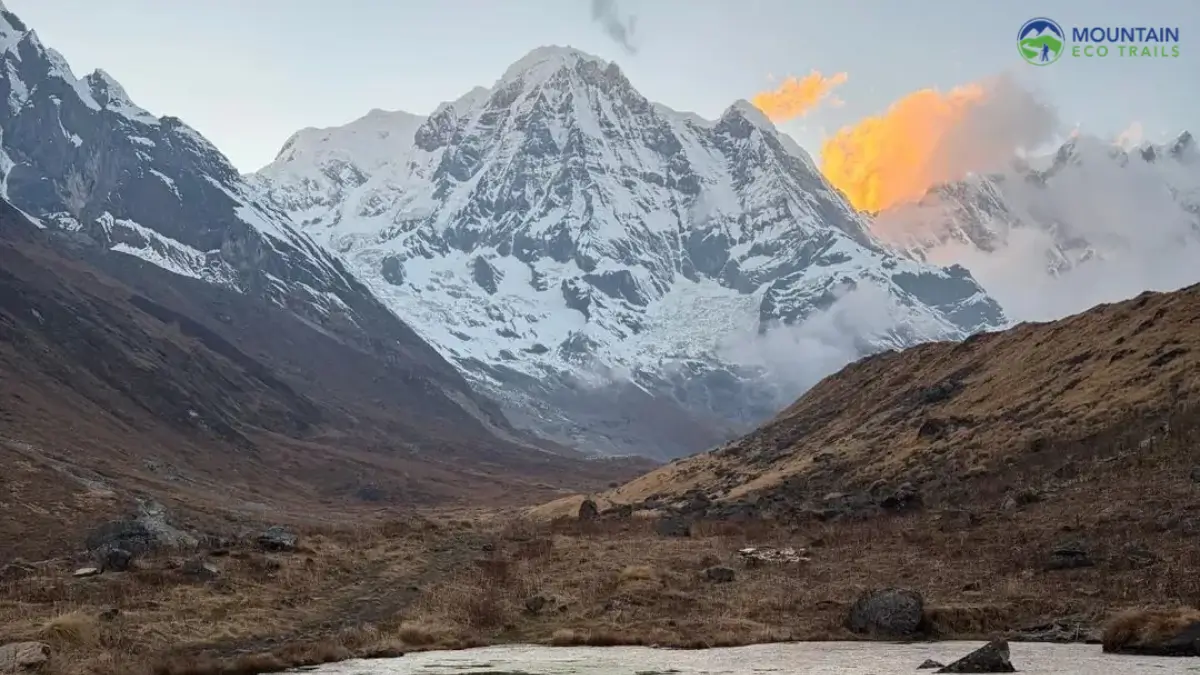
From there, the final ascent reaches Annapurna Base Camp at 4,130m, surrounded by some of the region's most impressive Himalayan peaks.
The Altitude Decision Most ABC Itineraries Overlook
Annapurna Base Camp is lower than Everest Base Camp, but altitude still deserves serious attention.
For example, sleeping at Deurali (3,230m) and then spending the following night at ABC (4,130m) means gaining approximately 900 meters in sleeping elevation.
That is faster than commonly recommended acclimatisation guidance above 3,000 meters.
Breaking the ascent with an overnight stay at MBC can help reduce this jump, although it does not eliminate altitude risk.
Practical advice:
- Watch for headache, nausea, dizziness, unusual fatigue, and appetite loss.
- Do not ascend to sleep higher if you have symptoms of altitude sickness.
- Descend when symptoms worsen or serious warning signs appear.
- Do not assume good fitness protects you from altitude illness.
- Let symptoms, conditions, and guide assessment determine whether the itinerary should change.
A reliable itinerary should leave room for mountain conditions rather than treating every scheduled destination as compulsory.
How to Choose Your ABC Trek Itinerary Without Regretting It
Before booking, consider the demands of the full journey rather than focusing only on the final destination.
Ask yourself these five questions:
- How many days do I actually have? Count Kathmandu transfers, flights, and recovery days separately from trekking.
- Can I manage long descents? Coming down from ABC can be harder on your knees than the ascent.
- Have I trekked above 3,000 meters? Previous experience helps with planning, but does not guarantee altitude tolerance.
- Do I want to explore or simply reach base camp? Include Poon Hill or Ghandruk if culture and scenery are priorities.
- What happens if the weather changes? A flexible itinerary is more valuable than a tightly scheduled one.
For experienced trekkers, a shorter route may be suitable. For first-time Himalayan visitors, the better choice is usually a route that allows more measured altitude gain and realistic walking hours.
ABC Trek from Pokhara: Practical Planning, Permits and Support
Pokhara is the main gateway for Annapurna Base Camp treks. Although you will travel by road to reach the starting point, the exact starting point can change if there are any weather delays or road obstacles.
The Annapurna Base Camp route lies inside the Annapurna Conservation Area, so trekkers need the relevant conservation-area entry permit.
For a comfortable trekking arrangement, consider:
- An experienced licensed trekking guide
- Porter support if needed
- Confirmed teahouse accommodation
- Necessary permits and transport arrangements
- Travel insurance covering trekking to at least 4,130m and emergency evacuation
- Flexible plans for bad weather or trail disruption
Mountain Eco Trails can help coordinate these arrangements around your travel dates and preferred itinerary.
How to Plan an ABC Trek
Start by deciding whether your trip begins in Kathmandu or Pokhara. Then select a route based on available trekking days, fitness, altitude experience, and seasonal conditions. Plan appropriate overnight elevations, verify permit requirements, and allow time for transport disruptions. A guided itinerary can help with local logistics and changes in mountain conditions.
Plan Your Annapurna Base Camp Trek with Mountain Eco Trails
There is no single Annapurna Base Camp itinerary that works equally well for everyone. A seasoned trekker may enjoy a demanding 7-day route. Another traveller may prefer 12 days with a more gradual ascent and extra time for villages and photography.
At Mountain Eco Trails, we help travellers choose a route based on their available days, trekking experience, travel dates, and comfort preferences.
Whether you want a private ABC Trek from Pokhara, a complete Kathmandu-based itinerary, or an extension through Poon Hill, we can help you plan a suitable journey.
Get your personalised ABC Trek itinerary and quotation.
- 📧 Email: [email protected]
- WhatsApp: +977 9849790153
Share your travel month, number of trekkers, starting city, and preferred duration. We can help you compare the options before you book.
Frequently Asked Questions About Annapurna Base Camp Trek Itineraries
1. What is the best Annapurna Base Camp Trek itinerary?
The best Annapurna Base Camp Trek itinerary depends on your available time and hiking experience. A 7-day route suits fit trekkers starting from Pokhara. A 10-day Kathmandu itinerary is practical for shorter holidays, while 12 days allows a more gradual approach.
2. Can I complete Annapurna Base Camp Trek in 7 days?
Yes, you can complete the Annapurna Base Camp Trek in seven days from Pokhara if you are physically prepared and trail conditions permit. However, some days involve long climbs or descents. This itinerary offers little flexibility for altitude symptoms, bad weather, or fatigue.
3. Is the 10-day Annapurna Base Camp Trek itinerary enough?
Ten days can be enough for Annapurna Base Camp, including Kathmandu and Pokhara transfers, with efficient road connections and a well-planned trekking schedule. However, this leaves limited extra time for unexpected delays. Additional days are preferable if you want more flexibility or a slower ascent.
4. How difficult is the Annapurna Base Camp Trek?
The Annapurna Base Camp Trek is generally considered moderate to challenging, depending on your itinerary. Steep staircases, uneven trails, long descents, and altitude make it physically demanding. Regular hiking preparation and an itinerary suited to your ability are more important than trekking speed.
5. Can beginners do the Annapurna Base Camp Trek?
Beginners can complete the ABC Trek with good preparation and a suitable itinerary. A longer schedule with gradual altitude gain is generally preferable to a rushed route. First-time Himalayan trekkers should train beforehand, understand altitude symptoms, and consider professional guide support.
6. Is the Annapurna Base Camp Trek better with Poon Hill?
Yes, the Annapurna Base Camp Trek Itinerary is better with Poon Hill if you want a gradual ascent and to enjoy the traditional villages, and to witness panoramic views from different angles. It is particularly rewarding for photographers and travellers interested in traditional villages. However, the extension requires extra walking time and does not guarantee a clear sunrise.
7. Can I start the ABC Trek directly from Pokhara?
Yes. Most Annapurna Base Camp treks use Pokhara as their starting gateway. You can travel by road toward Jhinu Danda, Ghandruk, or another accessible trailhead, depending on conditions. Starting from Pokhara avoids additional Kathmandu travel days and makes shorter itineraries possible.
8. Do I need a guide for Annapurna Base Camp?
Yes, you will need a guide for Annapurna Base Camp. A licensed trekking guide is strongly recommended for Annapurna Base Camp, particularly for route planning, altitude monitoring, and changing weather conditions. Nepal Tourism Board specifically lists the Poon Hill–ABC route under its guide and TIMS provisions. Verify the applicable requirements for your exact route before departure.
9. What is the best month for Annapurna Base Camp Trek?
October and November are popular for their often-clear mountain views, while March and April offer pleasant trekking conditions and rhododendron blooms. Conditions vary between years. Winter brings snow and cold, while monsoon months increase the risk of slippery trails and transport disruption.
Final Thoughts: Choose the Itinerary That Fits Your Journey
Reaching Annapurna Base Camp is memorable, but the days leading there are just as important.
The best route is not necessarily the fastest or the longest. It is the one that lets you enjoy the mountains while managing your time, energy, and altitude exposure.
Choose seven days if you are well prepared and short on time. Consider ten days for a compact Kathmandu-based journey, or twelve days for more gradual altitude gain. Add Poon Hill if you want a broader Annapurna experience.
The goal is not simply to reach 4,130 meters. It is to enjoy the journey and return safely.
Also Check Out:

Anil Lamsal
Call us on WhatsApp+977 9849790153OrChat with us