

Amphu Lapcha Pass Trek

The Amphu Lapcha Pass Trek is one of Nepal’s most technical and remote adventures, connecting the Hinku Valley with Everest. This 17–20 day journey crosses a glacier pass at 5,845m, requiring rope support and expert guidance. Amphu Lapcha Pass Trek Costs for 2026 range from USD 2,500 to USD 4,500, depending on group size, logistics, and whether peaks like Mera or Island are included.

  • DestinationNepal
  • Duration17 Days
  • Difficulty Level Challenging
  • Max. Altitude5845 meters
  • Starts/EndsKathmandu/Kathmandu
  • Trip StyleTrekking & Climbing
  • Group SizeMin 1 Pax
  • Best SeasonSpring & Autumn

The Amphu Lapcha Pass Trek is a technical trekking route in Nepal which connects the remote Hinku Valley to the Imja Valley of the Everest Region. This trekking route is one of the challenging trekking routes that joins the Makalu and Everest regions. The Amphu Lapcha Trek takes around 16-18 days, which takes you to the maximum elevation of 5845 meters at Amphu Lapcha Pass. The trek demands basic mountaineering skills and excellent physical fitness.

The Amphu Lapcha Pass Trek is a less crowded route taking you deep into the remote area of the Makalu and Everest regions. The Amphu Lapcha Pass Trek is built for trekkers who have already done high-altitude routes and want something raw, technical, and far less crowded. This route pushes beyond classic trekking into alpine-style adventure.

Mountain Eco Trails and our expert climbing guides have designed a 17 Day Amphu Lapcha Pass Trek itinerary with proper acclimatisation. With more than decades of experience on this route, our climbing guides have a stellar record of crossing this pass successfully around 85%. Join us and book this trek via email or WhatsApp us at +9779849790153.

Amphu Lapcha Pass Key Facts & Details

Feature

Details

Duration

17–20 Days

Max Altitude

~5,845 m

Difficulty

Very Challenging / Technical

Best Season

Spring & Autumn

Accommodation

Teahouse + Camping

Required Skills

Basic climbing & glacier travel

Region

Everest + Hinku Valley

Amphu Lapcha Pass Difficulty (Real Insight)

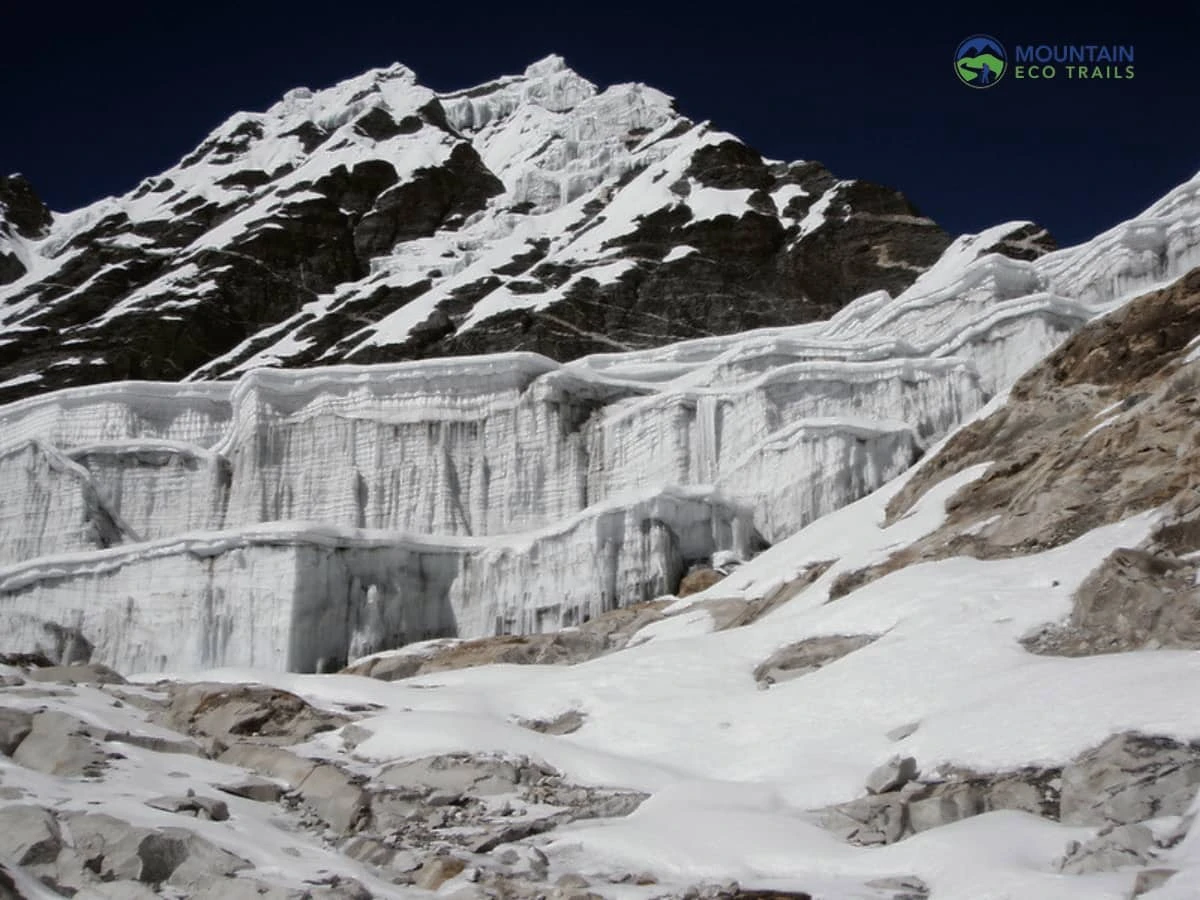
The Amphu Lapcha Pass difficulty is considered challenging for trekking standards. It includes glacier crossings, steep ice sections, and rope-assisted climbing, making it closer to an alpine expedition than a regular trek. The trek combines both trekking and basic mountaineering. Unlike the Everest Three High Pass Trek, it requires some technical skills and planning.

What Makes the Amphu Lapcha Pass Trek Difficult?

  • High altitude (above 5,800 m)
  • Glacier terrain with crevasses
  • Fixed rope sections
  • Remote camping logistics
  • Long trekking days (6–9 hours)

Who Should Do This Amphu Lapcha Trek?

  • Experienced trekkers
  • Previous high-altitude experience (5,000m+)
  • Basic climbing skills
  • Strong physical fitness

The Amphu Lapcha Trek is not for beginners. Also, it is not recommended without a trekking guide due to extreme difficulties.

Amphu Lapcha Pass Route and Itinerary

The Amphu Lapcha Pass itinerary typically starts from Lukla, moves through the Hinku Valley, crosses Amphu Lapcha Pass, and exits via Chhukung in the Everest region.

Route Overview

Lukla → Paiya → Panggom

Hinku Valley → Khare (Mera Peak base)

Amphu Lapcha Base Camp

Cross Amphu Lapcha Pass

Chhukung → Namche → Lukla

Amphu Lapcha Pass Trek cost for 2026,2027

The Amphu Lapcha Pass Trek costs 2026 and ranges from USD 2,500 to USD 4,500+, depending on group size, guide experience, equipment, and logistics.

Cost Component

Estimated Cost (USD)

Permits & Fees

60

Guide & Climbing Staff

600–1200

Food & Accommodation

500–900

Camping Equipment

300–600

Lukla Flights

500-520

Miscellaneous

200–500

Itinerary

Upon arrival in Kathmandu, you will be welcomed at the airport and transferred to your hotel in Thamel, the vibrant centre of trekking activity. After check-in, you can explore the local streets or relax after your journey. In the evening, there will be a detailed trek briefing where your guide explains the route, safety procedures, and gear requirements for the Amphu Lapcha Pass Trek. This is also a good time to finalise equipment and prepare mentally for the adventure ahead.

    An early morning flight takes you to Lukla, offering breathtaking aerial views of the Himalayas. After landing, the trek begins with a gradual ascent through forested trails. The path is relatively quiet compared to the main Everest route, giving you a more peaceful trekking experience. The walk to Chhutanga is short and gentle, allowing your body to begin adjusting to the altitude while enjoying the natural surroundings.

    • Max Altitude:3020 meters
    • Accommodation:Teahouse
    • Time:3-4 hours
    • Meals:Breakfast, Lunch, Dinner

    Today’s trek becomes more demanding as you ascend toward Zwatra La Pass, your first high pass of the journey. The trail climbs steeply, and as you gain elevation, the vegetation thins out, revealing expansive alpine landscapes. After crossing the pass, the descent toward Thuli Kharka offers wide views of the surrounding peaks. This day marks your transition into a more rugged and high-altitude environment.

    • Max Altitude:4300 meters
    • Accommodation:Teahouse
    • Time:5-6 Hours
    • Meals:Breakfast, Lunch, Dinner

    The trail descends into the Hinku Valley, following a river through a remote and scenic landscape. Compared to the busy Everest trails, this region feels untouched and quiet. The path winds through forests and open valleys, creating a relaxing trekking day while still maintaining a steady altitude. Kothey serves as a peaceful stop surrounded by nature.

    • Max Altitude:4182 meters
    • Accommodation:Teahouse
    • Time:5-6 hours
    • Meals:Breakfast, Lunch, Dinner

    As you continue deeper into the valley, the terrain gradually becomes more rugged and rocky. You begin to notice glacier-fed streams and moraine landscapes, indicating your approach toward higher alpine zones. The air becomes thinner, and the pace slows naturally. Thangnak is a small settlement that provides a perfect rest point before moving further toward higher elevations.

    • Max Altitude:4345 meters
    • Accommodation:Teahouse
    • Time:5-6 Hours
    • Meals:Breakfast, Lunch, Dinner

    The trek to Khare is shorter but steeper, taking you into a high-altitude environment. The views of surrounding peaks become more dramatic, including close perspectives of Mera Peak. This location is crucial for acclimatisation and preparation, as it marks the start of the more technical phase of the trek.

    • Max Altitude:5045 meters
    • Accommodation:Teahouse
    • Time:3-4 hours
    • Meals:Breakfast, Lunch, Dinner

    This day is dedicated to helping your body adjust to the altitude. You may take a short hike to a nearby ridge or viewpoint and return to Khare for rest. Many trekkers also use this time to practice basic climbing techniques, such as using crampons and ropes under the guidance of the climbing leader. Proper acclimatisation significantly reduces the risk of altitude sickness and prepares you for the upcoming challenges.

    • Max Altitude:5045 meters
    • Accommodation:Teahouse
    • Time:4 hours
    • Meals:Breakfast, Lunch, Dinner

    This is one of the longest and most physically demanding days of the trek. You ascend toward Mera High Camp, gaining significant altitude and experiencing expansive views of the Himalayan range. The terrain includes snow-covered slopes and exposed ridges. After reaching the high point, you descend toward Khongme Dingma. The combination of altitude gain and descent makes this day both challenging and rewarding.

    • Max Altitude:5700 meters
    • Accommodation:Teahouse
    • Time:8-9 hours
    • Meals:Breakfast, Lunch, Dinner

    This extra day is included as a safety buffer in case of bad weather or delays. It provides flexibility for acclimatisation or rest if needed. Having this contingency day improves the overall success rate of the trek and ensures that you do not feel rushed during critical sections.

      The trek continues through remote and less-travelled terrain toward Seto Pokhari, a pristine alpine lake. The environment here is wild and isolated, offering a true sense of expedition-style trekking. The landscape is dominated by rocky terrain and high-altitude vegetation, with very limited human presence.

      • Max Altitude:4850 meters
      • Accommodation:Tent Camping
      • Time:5-6 hours
      • Meals:Breakfast, Lunch, Dinner

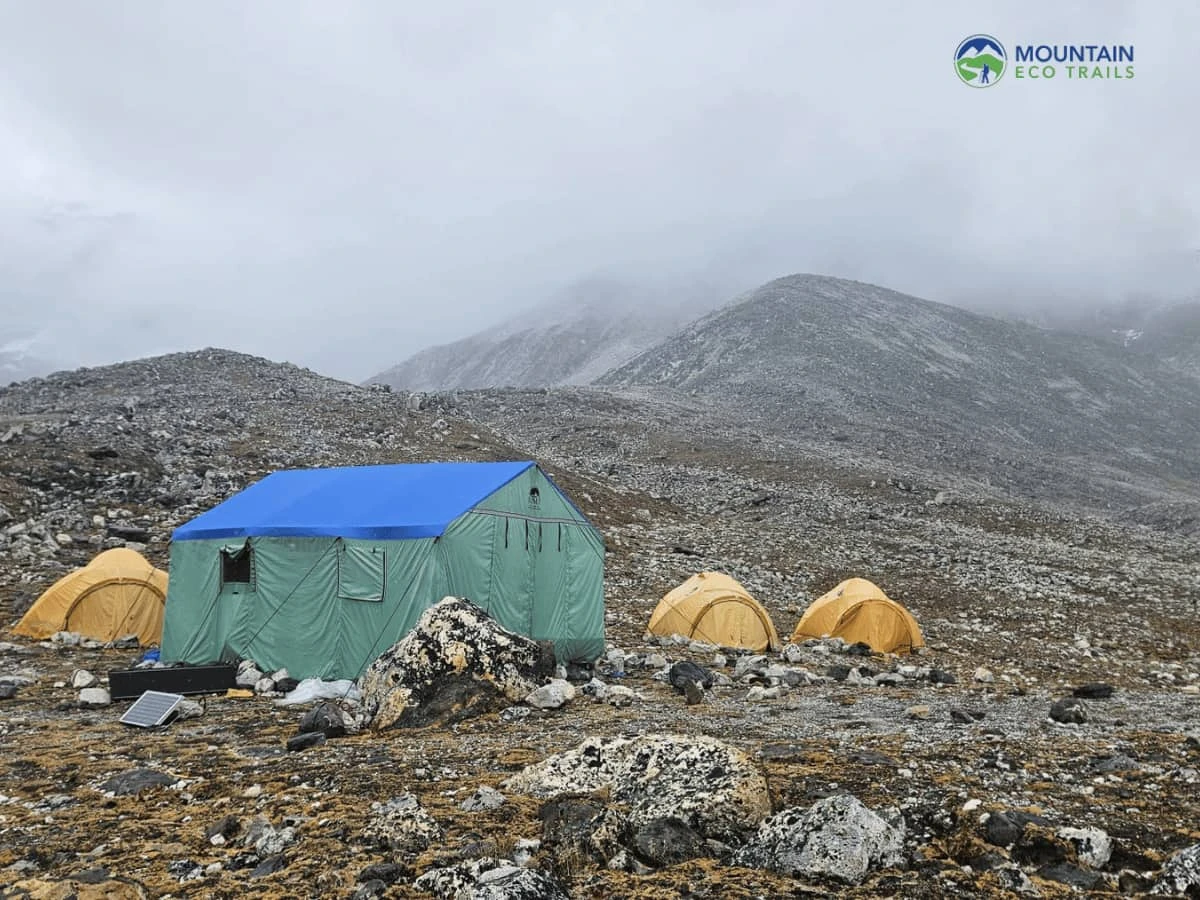
      As you move closer to the pass, the trail becomes more technical and rugged. You will traverse glacier sections and rocky paths before reaching base camp. Upon arrival, your guide will provide a detailed briefing about the next day’s crossing, including safety techniques and timing. Rest is essential, as the following day is the most challenging part of the trek.

      • Max Altitude:5527 meters
      • Accommodation:Tent Camping
      • Time:5-6 hours
      • Meals:Breakfast, Lunch, Dinner

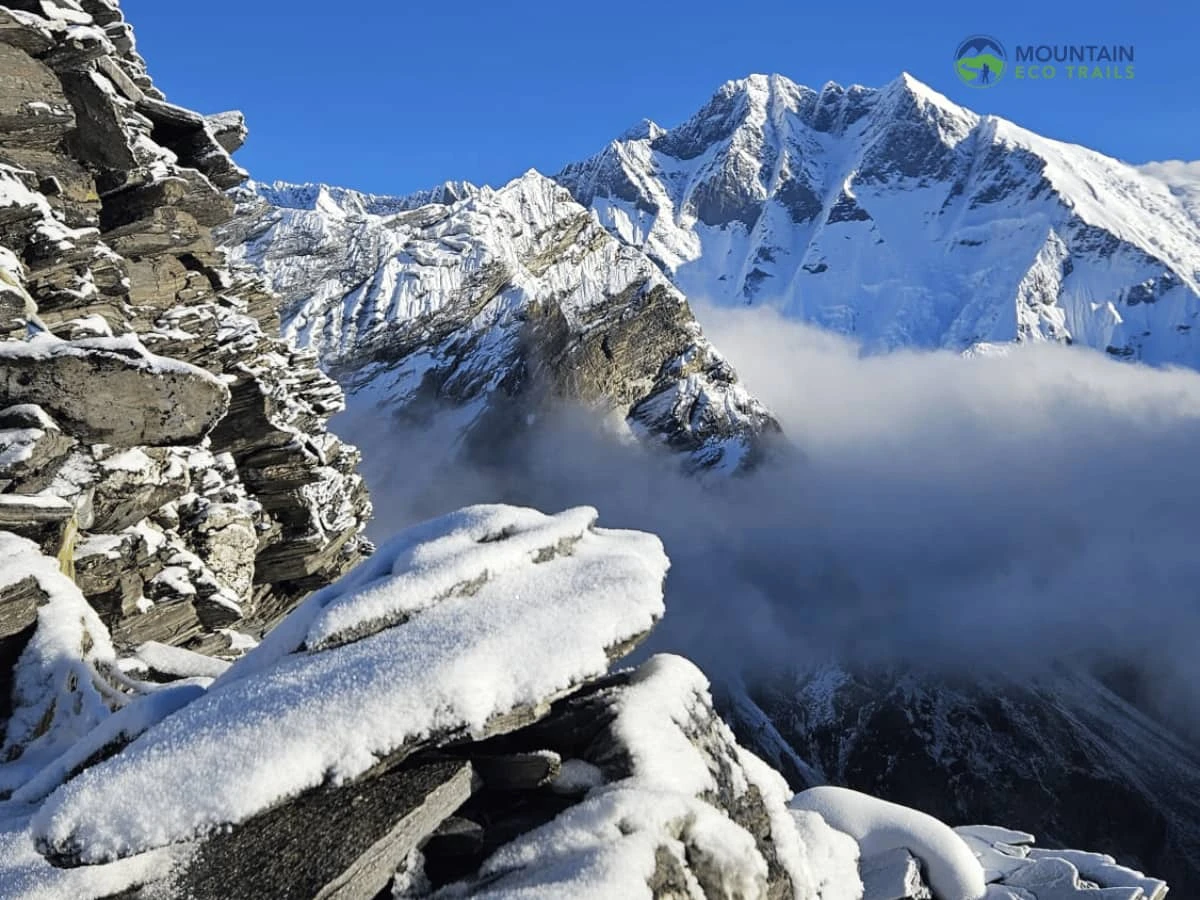
      This is the most demanding and rewarding day of the entire journey. You start early in the morning to cross the Amphu Lapcha Pass under stable conditions. The ascent involves steep sections where ropes and climbing equipment are used for safety. After reaching the top, you are rewarded with incredible panoramic views before descending carefully into the Everest region. The descent is long and technical, eventually leading to Chhukung, where you can rest after completing the toughest section.

      • Max Altitude:5845 meters
      • Accommodation:Teahouse
      • Time:9-10 hours
      • Meals:Breakfast, Lunch, Dinner

      The trail now becomes more comfortable as you rejoin the Everest trekking route. The descent continues through villages and well-established trails. After several days in remote wilderness, Namche Bazaar feels lively, offering better facilities, shops, and cafes. It is a great place to relax and reflect on your achievements.

      • Max Altitude:3440 meters
      • Accommodation:Teahouse
      • Time:7-8 hours
      • Meals:Breakfast, Lunch, Dinner

      This final trekking day follows a gradual descent through forests and traditional Sherpa villages. The trail is familiar and easier compared to previous days. Upon reaching Lukla, you can celebrate the completion of your trek with your team.

      • Max Altitude:2800 meters
      • Accommodation:Teahouse
      • Time:7-8 hours
      • Meals:Breakfast, Lunch, Dinner

      You take an early morning flight back to Kathmandu, enjoying one last view of the mountains from above. Once in the city, you can relax, explore, or enjoy a farewell dinner to celebrate the successful completion of your adventure.

      • Accommodation:3-star Hotel

      Your journey concludes with a transfer to the airport for your departure. You leave Nepal with unforgettable memories of one of the most challenging and rewarding trekking experiences in the Himalayas.

        Cost Includes
        • Private airport pick-up and drop-off services are provided for a smooth arrival and departure experience.
        • Two nights of accommodation in a 3-Star Hotel with BB Plan
        • Round-trip domestic flights between Kathmandu–Lukla–Kathmandu or Ramechhap–Lukla–Ramechhap for both guest and guide, including private transfers if flights operate via Ramechhap.
        • Three meals a day during the trek (breakfast, lunch, and dinner)
        • Fresh seasonal fruits are served every evening after dinner during the trek.
        • Accommodation in tea houses with twin-sharing rooms throughout the trek 
        • Tented Camping between Khare and Chukkung.
        • A government-licensed, English-speaking trekking guide along with required support staff including porters and cooks.
        • Each porter carries a load of approximately 20 to 25 kg of trekking equipment.
        • All required trekking permits and fees. 
        • A first aid kit and oximeter are available to monitor health and altitude conditions during the trek.
        • Guide and porter expenses, including salary, meals, accommodation, and insurance, are fully covered.
        • Down jacket, sleeping bag, and trekking poles are available for use with a small maintenance and cleaning fee of USD 10 per item.
        • A duffel bag is provided free of charge for packing trekking gear and must be returned after the trip.
        • A trekking completion certificate is provided at the end of the journey.
        • Government and Local Taxes 
        • Farewell Dinner with the team official after the end of the trek. 
        Cost Excludes
        • Nepal entry visa fee of USD 50 for a 30-day visa on arrival.
        • Lunch and dinner expenses while staying in Kathmandu.
        • Additional hotel nights in Kathmandu or extra trekking days beyond the planned itinerary.
        • Personal travel insurance including emergency rescue and evacuation coverage.
        • Personal expenses such as phone calls, laundry, drinks, bottled water, battery charging, hot showers, shopping, and donations.
        • Tips for guides, porters, and trekking staff.
        • Any costs or services not specifically mentioned in the included section above.
        Availability
        Select a Departure Month
        Start DateEnd DatePriceStatus 
        Start DateStarts: SundayMay 10, 2026End DateEnds: TuesdayMay 26, 2026PricePriceUS$3399StatusStatusAvailable
        Start DateStarts: SundayMay 17, 2026End DateEnds: TuesdayJun 02, 2026PricePriceUS$3399StatusStatusAvailable
        Start DateStarts: SundayMay 24, 2026End DateEnds: TuesdayJun 09, 2026PricePriceUS$3399StatusStatusAvailable
        Start DateStarts: SundayMay 31, 2026End DateEnds: TuesdayJun 16, 2026PricePriceUS$3399StatusStatusAvailable
        Good to Know

        Amphu Lapcha Pass with Climbing Guide

        Hiring an Amphu Lapcha Pass climbing guide is essential. The pass includes glacier travel and rope work, making professional support critical for safety. That’s why our Amphu Lapcha Pass Trekking Package also include an experienced Sherpa Guide.

        Why a Guide is Mandatory

        • Route finding in remote terrain
        • Fixing ropes on steep sections
        • Safety during glacier crossing
        • Emergency decision-making

        Best Time for the Amphu Lapcha Pass Trek

        The best time for the Amphu Lapcha Pass Trek is March–May and September–November, offering stable weather and safer crossing conditions.

        Seasonal Breakdown

        • Spring (Best) – Clear skies, stable snow
        • Autumn (Best) – Dry weather, great visibility
        • Winter – Too risky (heavy snow, ice)
        • Monsoon – Poor visibility, dangerous trails

        Amphu Lapcha vs Everest Three Passes Trek

        Feature

        Amphu Lapcha

        Three Passes

        Difficulty

        Extreme

        Very Challenging

        Technical

        Yes (ropes, glacier)

        No

        Crowds

        Very Low

        Moderate

        Experience Needed

        High

        Moderate

        Adventure Level

        Expedition-style

        Trekking

        FAQs
        • The Amphu Lapcha Pass Trek is a high-altitude, technical trek in eastern Nepal, connecting the Hinku Valley (Mera Peak area) to the Everest region. The Amphu Lapcha Trek involves crossing glaciers, and remote camping is suitable only for experienced trekkers.

        • The Amphu Lapcha Pass Trek is extremely challenging, suitable only for experienced trekkers who have basic mountaineering skills.

        • No, you can’t do the Amphu Lapcha Pass without basic climbing experience. You must know how to use ropes and an ice axe.

        • The Amphu Lapcha Pass Trek cost starts from USD 2500 to 4500 per person, depending on the service and group size.

        • You will need personal gear such as trekking boots, crampons, layers, a down jacket, Trekking pants, warm gloves, warm hats, and more. Check out our Common Trekking Gear List for the high altitude trekking in Nepal.

        • Yes, the Amphu Lapcha Pass Trek is harder than the Everest Three High Passes Trek due to technical sections.

        • You will need between 17 and 20 days for the Amphu Lapcha Trek, depending on acclimatisation and route variations.

        • The safest route for the Amphu Lapcha Pass starts from Lukla, Chutanga, Thulikharka, Thagnak, Khare, and passes through Kongma Dingme & Seto Pokhara to Amphu Lapcha Pass.

        • Yes, you can combine Mera Peak Climbing with the Amphu Lapcha Pass Trek.

        • Yes, for experienced trekkers. It offers a rare combination of technical challenge, remote landscapes, and low crowds, making it one of Nepal’s most rewarding adventure routes.

        • Yes. Due to technical sections like glacier crossing and rope climbing, a professional climbing guide is essential for safety.

        SimilarTrips
        You may also like
        Did not find what you are looking for? No worries!

        Let us help you plan your perfect holiday.