
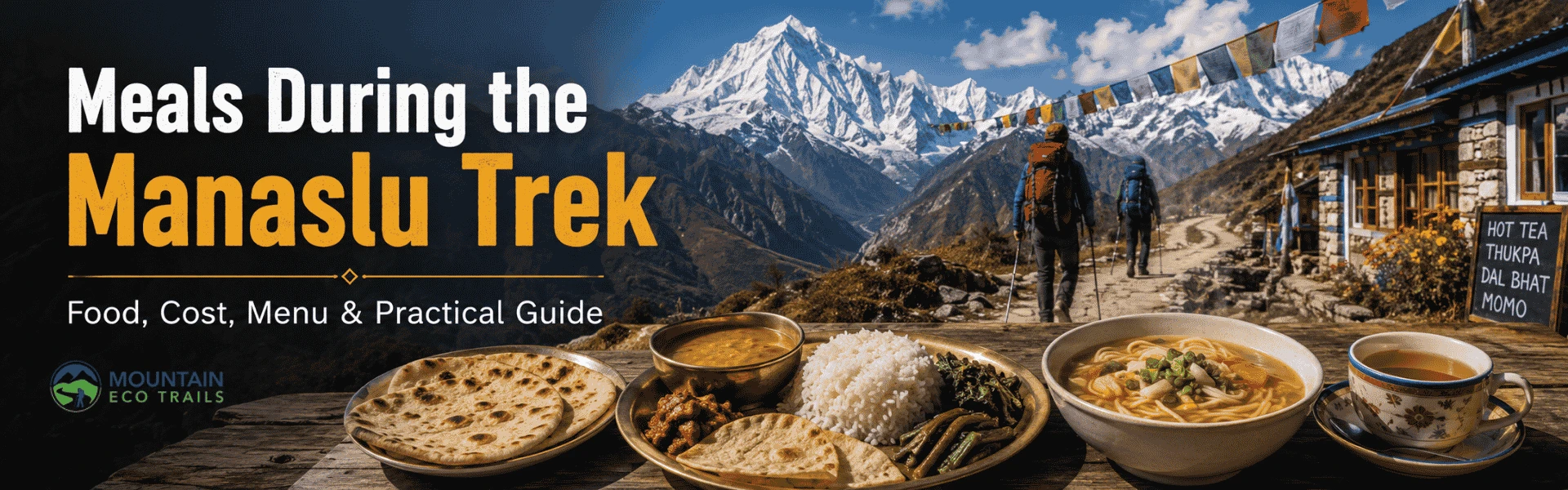
Meals During the Manaslu Trek: Food, Cost, Menu & Practical Guide
Meals during the Manaslu Trek are simple, filling, and mostly served in local teahouses along the route. The most common food is dal bhat, a Nepali meal with rice, lentil soup, vegetables, pickle, and sometimes curry. Trekkers can also find noodles, fried rice, pasta, soup, eggs, pancakes, potatoes, Tibetan bread, tea, coffee, and boiled water. Food costs usually rise with altitude because supplies are carried by jeep, mule, or porter. A realistic food budget is about USD 25 to 45 per day, depending on drinks, snacks, and appetite.
Introduction: What Food Is Really Like on the Manaslu Trek
Food is one of the most important parts of the Manaslu Circuit Trek. You walk for many hours each day, cross remote villages, sleep in basic teahouses, and climb toward Larkya La Pass at 5,106 meters. Your body needs warm, clean, and energy-rich meals.
The good news is that food in the Manaslu Region is better than many first-time trekkers expect. You will not find luxury dining, but you will find hot meals, local hospitality, and enough choices to keep you fueled.
Most meals in the Manaslu Trek are cooked fresh in teahouse kitchens. The menu is simple, but it works well for high-altitude trekking. This guide explains what you can eat, how much meals cost, what drinks are available, what to avoid, and how to plan your food budget wisely.
What Meals Do You Get During the Manaslu Trek?
During the Manaslu Trek, you usually get breakfast, lunch, and dinner in local teahouses. Common meal items include dal bhat, noodles, fried rice, soup, potatoes, pasta, eggs, pancakes, Tibetan bread, tea, coffee, and boiled water. Dal bhat is the best-value meal because it is warm, filling, and often served with refills.
Manaslu Trek Food at a Glance
Meals in Manaslu Circuit Trek are teahouse-based, simple, and practical for trekking. Dal bhat is the most reliable food because it gives carbohydrates, protein, salt, and vegetables in one plate. Western-style meals like pasta, pancakes, pizza, and fried rice are available in many villages but may become limited at higher elevations. Trekkers should budget USD 25 to 45 per day for food and drinks.
Meals During the Manaslu Trek: What to Expect
The Manaslu Circuit is a remote Himalayan trek, but it is now a teahouse trek. Nepal Tourism Board notes that the Manaslu trail has teahouses for overnight halts, although camping is also possible.
A teahouse is a family-run mountain lodge. It usually provides:
- A basic room
- A dining hall
- Breakfast, lunch, and dinner
- Hot drinks
- Boiled water
- Simple snacks
- Charging, Wi-Fi, or hot shower in some places for extra cost
Meals are usually cooked after you order. This means food can take time, especially when the lodge is busy. On cold evenings, the dining room becomes the warmest and most social place in the lodge.
The food is not fancy, but it is made for trekkers. Most dishes are warm, high in carbohydrates, and easy to digest. That is exactly what you need on long walking days.
Common Manaslu Trek Meal Items
The menu changes slightly from village to village, but most teahouses serve similar food. Lower villages usually have more choices. Higher places near Samdo, Dharamsala, and Larkya La area may have fewer options because supplies are harder to transport.
Breakfast Items on the Manaslu Trek
Breakfast is usually served before you start walking. Most trekkers eat between 6:30 am and 8:00 am, depending on the day’s distance.
Common breakfast items include:
- Tibetan bread with jam or honey
- Pancakes & Porridge
- Oatmeal & Toast with eggs
- Boiled eggs or Omelette
- Chapati or Muesli
- Tea or coffee
- Hot lemon & Ginger tea
Best breakfast choice: Porridge with eggs or Tibetan bread is a strong option. It gives steady energy without feeling too heavy.
Lunch & Dinner Items on the Manaslu Trek
Lunch is usually taken at a teahouse on the trail. Your guide often recommends the best place based on walking time, cleanliness, and available food.
Common lunch & Dinner items include:
- Dal bhat & Vegetable fried rice
- Egg fried rice& Chowmein
- Thukpa and Thenduk
- Potato dishes
- Noodle soup & Garlic soup
- Momos in some villages
- Pasta & Macaroni
- Pizza and Burger
Comparison Table: Local Food vs Western Food on the Manaslu Trek
| Food Type | Common Items | Best For | Cost Level | Trekking Value |
|---|---|---|---|---|
| Local Nepali food | Dal bhat, curry, rice, lentils | Energy and full meals | Medium | Excellent |
| Tibetan-style food | Tibetan bread, thukpa, noodle soup | Warmth and comfort | Medium | Very good |
| Western-style food | Pasta, pancakes, pizza, toast | Variety | Medium to high | Good |
| Snacks | Biscuits, chocolate, chips | Quick energy | High at altitude | Useful but costly |
| Hot drinks | Tea, coffee, hot lemon, ginger tea | Warmth and hydration | Low to medium | Very useful |
| Boiled water | Safe drinking water | Hydration | Extra cost | Essential |
Why Dal Bhat Is the Best Food in the Manaslu Region
Dal bhat is the most popular meal during the Manaslu Trek. It includes steamed rice, lentil soup, vegetables, pickle, and sometimes potato curry or spinach.
It is the best trekking meal for three reasons.
First, it is filling. You get enough rice and lentils to support long walking days. Second, it is warm and fresh. Teahouses cook it daily, and it is usually safer than cold or old food. Third, it offers good value. Many lodges provide extra rice or lentil soup.
For trekkers, dal bhat may feel simple at first. But after a few days on the trail, many people understand why guides say, “Dal bhat power, 24 hour.”
Best Food to Eat on the Manaslu Trek
The best food during the Manaslu Trek is dal bhat because it is warm, filling, widely available, and good value. Trekkers can also eat porridge, eggs, Tibetan bread, soup, thukpa, fried rice, potatoes, and pasta. At higher altitudes, simple meals are better than oily or heavy food because they are easier to digest and help maintain steady energy.
Food Cost in Manaslu Trek: Daily Budget Guide
Food cost in Manaslu Trek depends on altitude, appetite, drinks, and snack choices. Recent trekking cost guides place daily food and drink expenses around USD 25 to 45 per person per day, while basic meals alone may average around USD 30 per day.
Prices rise as you go higher because everything becomes harder to transport. A meal that feels affordable in lower villages may cost more near Samagaon, Samdo, or Dharamsala.
Estimated Food and Drink Cost Table
| Cost Component | Estimated Price |
|---|---|
| Breakfast | USD 5 to 9 |
| Lunch | USD 6 to 10 |
| Dinner | USD 7 to 12 |
| Tea or hot lemon | USD 1 to 4 |
| Boiled water | USD 1 to 4 per bottle/liter |
| Snacks | USD 2 to 6 |
| Daily basic food budget | USD 25 to 35 |
| Daily food + drinks + snacks | USD 35 to 45 |
For Nepali trekkers, costs may feel higher than normal village food prices because trekking trails work differently. Teahouses must carry supplies into remote areas, fuel costs are high, and the short trekking season affects pricing.
Why Food Becomes More Expensive at Higher Altitude
Food and drinks in Manaslu Circuit become more expensive as you move higher. This is normal on remote trekking routes.
The main reasons are:
- Road access becomes limited.
- Supplies are carried by mules, porters, or local transport.
- Gas, rice, vegetables, and bottled items cost more to move.
- Fresh food is harder to store.
- Teahouses have a short earning season.
- Higher villages have fewer suppliers.
A cup of tea, plate of noodles, or boiled water can cost more near Samdo and Dharamsala than in Machha Khola or Jagat. This does not mean teahouses are overcharging. It reflects the real cost of mountain logistics.
Food and Drinks in Manaslu Circuit: What You Can Drink
Staying hydrated is very important on the Manaslu Trek. You walk long distances, gain altitude, and breathe dry mountain air.
Common drinks include:
- Boiled water
- Hot lemon & Ginger tea
- Mint tea & Milk tea
- Black tea & Coffee
- Hot chocolate
- Garlic soup
- Bottled water in some villages
Boiled water is widely used by trekkers, but it costs extra in most teahouses. Some places may also sell bottled water, but carrying a reusable bottle and using boiled or purified water is better for cost and waste reduction.
Best Drink Choices
Hot lemon, ginger tea, and boiled water are the best choices for most trekkers. They are warm, simple, and useful in cold weather. Coffee is available, but too much caffeine may not suit everyone at altitude.
Should You Eat Meat During the Manaslu Trek?
It is better to avoid meat during most parts of the Manaslu Trek, especially at higher altitude.
In remote mountain areas, meat may not always be fresh. Refrigeration is limited. Transport takes time. For this reason, many experienced guides recommend vegetarian meals on high Himalayan treks.
Better protein options include:
- Lentils
- Eggs
- Beans when available
- Cheese in some places
- Peanut butter if you carry it
- Nuts and trail mix
- Dal bhat
A vegetarian diet is usually safer, lighter, and easier to digest during the trek.
Best Foods for Energy on Long Trekking Days
Some days on the Manaslu Circuit are physically demanding. The walk to Samagaon, the acclimatization hike near Birendra Lake or Manaslu Base Camp, and the Larkya La Pass crossing require steady energy.
Good energy foods include:
- Dal bhat & Porridge
- Boiled potatoes & Noodle soup
- Thukpa & Fried rice
- Eggs & Tibetan bread
- Peanut bars & Nuts
- Dried fruits
Try to eat enough even when your appetite drops at altitude. Small, warm meals are often easier than large heavy meals.
Food Tips for Larkya La Pass Day
Larkya La Pass day is the hardest day for many trekkers. You may start before sunrise, walk in very cold conditions, and cross the highest point of the trek at 5,106 meters.
For this day, plan your food carefully.
Eat an early breakfast such as:
- Porridge
- Tibetan bread
- Eggs
- Tea or hot lemon
- Carry trail snacks such as:
- Energy bars
- Chocolate
- Biscuits
- Nuts
- Dried fruit
- Electrolyte powder
- A thermos of hot water or tea if available
Avoid trying a new or heavy meal before the pass. Keep your food simple and familiar.
Food Budget and Planning
A safe food budget for the Manaslu Trek is USD 25 to 45 per day. Basic meals cost less, but hot drinks, boiled water, snacks, and extra tea can increase the total. Food prices are lower in villages like Machha Khola and Jagat and higher near Samagaon, Samdo, and Dharamsala. Trekkers should carry enough cash because card payments and ATMs are not reliable on the trail.
Can You Find Vegan or Vegetarian Food in Manaslu?
Yes, vegetarian food is easy to find during the Manaslu Trek. Vegan food is possible, but you need to explain clearly.
Vegetarian options include:
- Dal bhat without meat
- Vegetable fried rice
- Vegetable noodles
- Potato curry
- Vegetable soup
- Thukpa
- Chapati
- Tibetan bread
- Porridge with water
- Plain rice and lentils
For vegan trekkers, ask for no egg, no milk, no butter, and no cheese. In remote villages, communication may be basic, so a guide helps a lot.
Food Safety Tips During the Manaslu Trek
Food safety matters on remote treks. A stomach problem can make the journey difficult.
Follow these practical tips:
- Eat freshly cooked hot meals.
- Choose busy teahouses when possible.
- Avoid raw salad in remote villages.
- Avoid meat at higher altitudes.
- Drink boiled or purified water.
- Wash or sanitise hands before meals.
- Keep personal snacks sealed.
- Do not overeat fried food before big walking days.
Simple food is often the safest food in the mountains.
How Mountain Eco Trails Helps With Meals on the Manaslu Trek
A well-planned trek makes food easier, safer, and more predictable. Mountain Eco Trails helps trekkers choose reliable teahouses, plan realistic meal stops, and understand daily food costs before the trek begins.
This is especially helpful for:
- First-time trekkers in Nepal
- Travellers unfamiliar with teahouse trekking
- Nepali trekkers planning a budget-friendly trip
- Vegetarian or vegan trekkers
- Trekkers worried about altitude and appetite
- Private groups want smoother logistics
Our guides know where to stop, what to order, and how to avoid common food mistakes on the Manaslu Circuit.
Planning your Manaslu Circuit Trek? Contact Mountain Eco Trails for a locally guided trek with safe meals, trusted teahouses, permit support, and practical food budgeting. Email or WhatsApp us at +9779849790153.
FAQs About Meals During the Manaslu Trek
1. What food is available during the Manaslu Trek?
Food during the Manaslu Trek includes dal bhat, noodles, fried rice, pasta, soup, potatoes, eggs, pancakes, Tibetan bread, porridge, tea, coffee, and boiled water. Lower villages offer more menu choices, while higher villages have simpler meals because supplies are harder to transport.
2. How much does food cost in Manaslu Trek?
A realistic food budget for the Manaslu Trek is around USD 25 to 45 per day. This includes three basic meals, hot drinks, and some snacks. Costs increase at higher altitude, especially near Samagaon, Samdo, Dharamsala, and Larkya La Pass.
3. Is dal bhat available every day on the Manaslu Circuit?
Yes, dal bhat is available in almost every teahouse on the Manaslu Circuit. It is the most reliable meal on the trek. It usually includes rice, lentil soup, vegetables, pickle, and sometimes curry. Many trekkers eat it daily for energy.
4. Can I get vegetarian meals on the Manaslu Trek?
Yes, vegetarian meals are easy to find on the Manaslu Trek. Dal bhat, vegetable noodles, fried rice, soup, potatoes, porridge, Tibetan bread, and chapati are common vegetarian options. Many guides also recommend vegetarian food because it is safer at higher altitude.
5. Is drinking water available during the Manaslu Trek?
Yes, drinking water is available, but safe water usually costs extra. Most trekkers use boiled water from teahouses or carry purification tablets, filters, or UV purifiers. Bottled water may be available in some villages, but it creates plastic waste and costs more.
6. Should I eat meat during the Manaslu Trek?
It is better to avoid meat during the Manaslu Trek, especially above lower villages. Refrigeration is limited, and meat may take time to reach remote areas. Vegetarian meals, eggs, lentils, soup, and dal bhat are safer and easier to digest.
7. Are snacks available on the Manaslu Circuit?
Yes, snacks like biscuits, chocolate, chips, and instant noodles are available in many villages. However, prices rise with altitude. It is better to carry energy bars, nuts, dried fruit, and electrolyte powder from Kathmandu to save money and prepare for long days.
8. What is the best breakfast for the Manaslu Trek?
The best breakfast for the Manaslu Trek is porridge, eggs, Tibetan bread, pancakes, or toast with tea. These foods are warm, filling, and easy to digest. On long walking days, choose a meal that gives slow energy without making you feel heavy.
9. Can I get coffee during the Manaslu Trek?
Yes, coffee is available in most teahouses, but it is usually basic instant coffee. Tea, hot lemon, ginger tea, and black tea are more common. At higher altitude, hot lemon or ginger tea may feel better because they are warm and lighter.
10. Do I need to carry cash for food in Manaslu?
Yes, you should carry enough Nepali rupees for food, drinks, snacks, hot showers, charging, and Wi-Fi. ATMs and card payments are not reliable along the Manaslu Circuit. Cash planning is important before leaving Kathmandu or the lower road-access towns.
Conclusion: Eat Simple, Stay Fueled, Trek Better
Meals during the Manaslu Trek are not luxury meals, but they are warm, practical, and good enough for a remote Himalayan journey. Dal bhat, soup, noodles, porridge, potatoes, eggs, tea, and boiled water will support you through long walking days and cold evenings.
The best food strategy is simple: eat freshly cooked meals, drink safe water, carry a few snacks, avoid risky meat, and budget more for higher altitude villages. With the right guide and teahouse plan, food in Manaslu becomes part of the adventure, not a problem.
For a smoother Manaslu Circuit Trek with trusted teahouses, experienced local guides, and clear food budgeting, plan your trip with Mountain Eco Trails.