
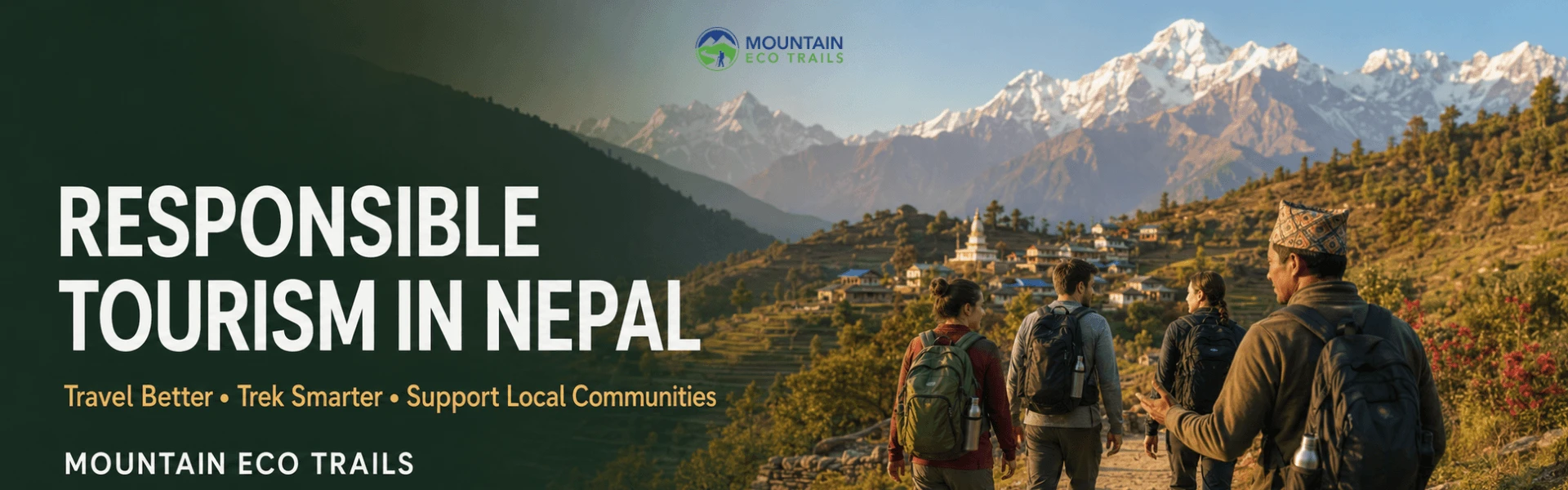
Responsible Tourism in Nepal: How to Travel Better, Trek Smarter & Support Local Communities
Responsible tourism in Nepal means making travel choices that reduce environmental and cultural harm while creating meaningful benefits for local people. It includes hiring fairly treated guides and porters, staying in locally owned accommodation, reducing single-use waste, conserving mountain resources, respecting local traditions and choosing experiences that distribute tourism income more fairly.
The goal is not to leave absolutely no impact—every journey has one. The goal is to understand the impact and make it more positive.
Responsible Tourism in Nepal at a Glance
A responsible traveller in Nepal should:
- Choose a licensed, locally operated trekking company.
- Confirm that guides and porters receive fair wages, insurance and suitable equipment.
- Carry a reusable bottle and use safely treated tap water for refills.
- Carry batteries, wrappers and other non-biodegradable waste out of remote areas.
- Stay in locally owned teahouses, hotels and homestays.
- Respect monasteries, temples, sacred sites and photography customs.
- Avoid loud music and never disturb or feed wildlife.
- Use water, electricity and heating carefully.
- Explore suitable lesser-visited destinations when possible.
- Ask operators for evidence of their environmental and staff-welfare policies.
What Is Responsible Tourism in Nepal?
Responsible tourism is an approach in which travellers, tourism businesses and host communities accept responsibility for the effects of travel. It aims to reduce negative environmental, social and cultural impacts while improving local livelihoods and the visitor experience.
In Nepal, this applies to much more than keeping trekking trails clean. Responsible travel also means considering who receives the money from tourism, how trekking staff are treated, whether local customs are respected and how visitor behaviour affects water, fuel, wildlife and waste systems.
Responsible Tourism vs Sustainable Tourism vs Ecotourism
| Concept | Meaning | Example in Nepal |
|---|---|---|
| Responsible tourism | The choices and actions taken by travellers and tourism businesses | Hiring an insured local guide and carrying waste out |
| Sustainable tourism | The long-term goal of balancing environmental, social and economic needs | Managing a trekking destination so it remains viable for future generations |
| Ecotourism | Nature-based tourism that supports conservation and education | A low-impact wildlife or trekking experience with conservation benefits |
These concepts overlap, but they are not identical. Responsible tourism is about accountability and action; sustainable tourism describes the long-term outcome that those actions should help create.
Why Responsible Tourism Matters in Nepal
Nepal’s mountains, forests, temples and villages are not simply tourism products. They are homes, sacred landscapes, wildlife habitats, grazing areas, water sources and places of cultural identity.
Tourism provides income for guides, porters, cooks, drivers, teahouse owners, farmers, craftspeople and many other local workers. However, poorly managed tourism can also create waste, increase pressure on water and firewood, disturb wildlife, commercialise cultural traditions and concentrate money in a small number of popular destinations.
Mountain Waste Is a Practical Challenge
Waste is difficult and expensive to transport from high-altitude regions. Plastic packaging, batteries, cans and broken equipment may remain in remote settlements unless appropriate collection and transport systems are available.
The Sagarmatha Pollution Control Committee reported managing more than 60,000 kilograms of expedition waste at Everest Base Camp during the 2023 spring season, in addition to waste carried down from higher camps. Although this figure relates mainly to expeditions rather than ordinary trekking, it demonstrates the scale and complexity of waste management in mountain environments.
Tourism Income Is Not Always Distributed Equally
Busy routes can generate substantial tourism income, but the benefits may remain concentrated around major gateways and established destinations. Responsible trekking can help distribute visitor spending by using locally owned services and introducing suitable travellers to lesser-visited regions.
This does not mean sending large numbers of visitors to every “hidden” destination. New routes should be promoted according to local capacity, environmental conditions and community interest.
15 Ways to Travel Responsibly in Nepal
1. Choose a Responsible Local Operator
Look beyond environmental slogans. Ask the company how it hires staff, manages porter loads, handles waste and selects accommodation.
A credible operator should be able to explain its practices clearly and provide evidence where appropriate.
2. Check Guide and Porter Welfare
Guides and porters are essential to Nepal’s trekking industry. Before booking, ask whether trekking staff receive:
- Agreed wages are paid on time
- Appropriate insurance
- Suitable clothing and equipment
- Safe accommodation and meals
- Reasonable working loads
- Rest and assistance if they become ill
Avoid asking a porter to carry extra personal items beyond the agreed baggage allowance.
3. Pack Light and Carefully
A lighter trekking bag reduces the load placed on porters and transport systems. Bring only necessary clothing and equipment, but do not compromise essential weather protection or personal safety.
Remove unnecessary packaging in Kathmandu or Pokhara, where waste is easier to manage.
4. Carry a Reusable Water Bottle
Single-use plastic bottles create a major disposal challenge on remote routes. Carry a durable refillable bottle and use boiled, filtered or appropriately treated water according to local conditions and your guide’s advice.
Never assume that untreated stream or tap water is safe to drink.
5. Carry Difficult Waste Out
Do not leave batteries, wipes, medicine packaging, broken electronics, plastic wrappers or hygiene products in remote villages unless a reliable collection system exists.
Keep a separate waste bag and carry difficult non-biodegradable items back to a location with suitable disposal facilities.
6. Stay in Locally Owned Accommodation
Locally operated teahouses, hotels and homestays can keep more tourism income within the destination. They also provide opportunities to learn about local food, family life and traditions.
Community-based tourism should benefit residents without turning their culture or private lives into a performance.
7. Choose Local Food When Practical
Meals made from locally available ingredients may reduce the need to transport imported products into remote areas. Eating local dishes also directs spending toward farmers, shopkeepers and teahouse operators.
Order an amount you can reasonably finish. Food waste is particularly avoidable in places where ingredients require several days of transport.
8. Conserve Water and Energy
Hot showers, device charging and room heating require significant energy in mountain settlements. Use these services thoughtfully.
Keep showers short, switch off unused lights and avoid demanding excessive room heating. Where heating is provided, do not burn rubbish or request unnecessary firewood.
9. Respect Local Customs
Nepal contains many ethnic, linguistic and religious traditions. Customs can vary between regions, so follow your guide’s advice.
As a general rule:
- Dress respectfully around villages and religious sites.
- Ask permission before photographing people.
- Remove shoes where requested.
- Do not touch religious objects without permission.
- Walk clockwise around Buddhist stupas and mani walls where local practice requires it.
- Avoid interrupting ceremonies or entering restricted areas.
10. Photograph People With Consent
A photograph is not automatically harmless. Ask before taking close portraits, especially of children, monks, ceremonies or people at work.
If someone declines, accept the answer without pressure. Do not offer money merely to obtain a photograph.
11. Protect Wildlife and Natural Habitats
Observe animals from a respectful distance. Do not feed wildlife, remove plants, collect stones from protected or sacred places, or play loud music on the trail.
Speakers can disturb wildlife, residents and other trekkers. Headphones are a more considerate option where they do not affect trail awareness or safety.
12. Remain on Established Trails
Shortcuts can damage vegetation and accelerate erosion. Use designated trails, campsites and rest areas whenever possible.
Follow local instructions concerning fires, sanitation, waste separation and protected areas.
13. Avoid Unplanned Gifts to Children
Giving sweets, money or stationery directly to children can create unhealthy expectations and disrupt local systems. If you want to contribute, ask a trusted local organisation, school or community group what is genuinely needed.
Community support should respond to local priorities rather than what visitors assume a village needs.
14. Consider Lesser-Visited Routes
Where conditions and community capacity allow, trekking outside the busiest corridors can spread tourism income and offer a more personal experience.
Options may include:
A lesser-visited trail is not automatically sustainable. Group size, local infrastructure, season, waste management and community preferences still matter.
15. Leave Useful Feedback
After the trek, mention responsible practices in your review. Comment on staff treatment, local accommodation, waste management and cultural respect—not only the scenery.
Constructive reviews encourage tourism companies to make responsible practices visible and accountable.
How Mountain Eco Trails Practices Responsible Tourism in Nepal
At Mountain Eco Trails, we do not claim that trekking has zero impact. Instead, we work to make each journey more respectful of the people, cultures and environments that make travel in Nepal possible.
Local Employment
We prioritise working with Nepali guides, porters, drivers and support staff. Whenever practical, we involve people with knowledge of the specific trekking region.
Local professionals add far more than logistical support. They help travellers understand mountain conditions, village etiquette, regional history and everyday life.
Fair Treatment of Trekking Staff
We are committed to agreed wages, reasonable loads, appropriate equipment, insurance and safer working conditions for guides and porters.
Before publishing this section, Mountain Eco Trails should link to a detailed staff-welfare policy explaining its porter-load limit, insurance arrangements and wage standards.
Small-Group and Private Treks
Small groups place less sudden pressure on accommodation, water and village resources. They can also provide better communication between guides, travellers and host communities.
Mountain Eco Trails therefore focuses on private and small-group trekking rather than high-volume departures.
Locally Owned Services
Wherever practical, we select locally operated teahouses, homestays, restaurants and transport providers. This helps tourism spending remain closer to the communities travellers visit.
We also encourage guests to purchase locally made products when their origin and pricing are transparent.
Waste Awareness
Our pre-trek briefings explain how to reduce packaging, use refillable bottles and manage personal waste. During the trek, guides remind travellers not to leave wrappers, batteries, wipes or other difficult waste on the trail.
Mountain Eco Trails should strengthen this commitment by documenting how waste is collected, separated and transported from each operating region.
Respectful Cultural Encounters
Our guides advise travellers about dress, photography, religious etiquette and appropriate behaviour in villages, temples and monasteries.
Cultural interaction should be based on consent and respect rather than on treating local traditions as a tourism performance.
Supporting Alternative Trekking Regions
We introduce suitable travellers to routes such as Ruby Valley, Mohare Danda, Khopra Danda, Tsum Valley and Nar Phu Valley. This can spread tourism income beyond the busiest trekking corridors while offering guests a quieter Himalayan experience.
We consider trail conditions, local capacity and seasonal suitability before recommending a destination.
How to Identify a Responsible Trekking Company in Nepal
Before making a booking, ask the operator:
- Is the company legally registered and appropriately licensed?
- What insurance is provided to guides and porters?
- What porter-load limit does the company follow?
- How are staff wages, meals and accommodation handled?
- What happens to waste generated during the trek?
- How are local teahouses and suppliers selected?
- Can the company show recent examples of community or environmental work?
A vague answer such as “we care about the environment” is not enough. A responsible operator should be able to explain what it does, who benefits and how its commitments are monitored.
Frequently Asked Questions
What is responsible tourism in Nepal?
Responsible tourism in Nepal means reducing the negative environmental, cultural and social effects of travel while increasing benefits for local communities. It includes ethical staff treatment, waste reduction, local spending, resource conservation and respect for Nepal’s diverse traditions.
How can tourists support local communities in Nepal?
Travellers can stay in locally owned accommodation, hire local guides, eat local food, buy locally made products and visit suitable community-based destinations. Booking directly with a Nepal-based operator can also keep more operational spending within the country.
How can trekkers reduce plastic waste?
Carry a reusable bottle, use safely treated refill water, remove unnecessary packaging before the trek and carry difficult waste back to a suitable disposal point. Do not leave batteries, wipes or plastic wrappers in remote settlements.
Is responsible trekking more expensive?
Not necessarily. Many responsible choices—carrying a refillable bottle, reducing waste and respecting local customs—cost little or nothing. Ethical staffing and appropriate insurance may affect package prices, but unusually cheap packages can hide costs transferred to guides, porters or local suppliers.
What is community-based tourism in Nepal?
Community-based tourism involves residents in planning, operating and benefiting from tourism. Examples include locally managed homestays, community lodges, guiding services and cultural activities developed with community participation.
Why are small trekking groups more responsible?
Small groups generally place less pressure on teahouses, water, trails and village infrastructure. They can also make cultural interaction more personal and easier to manage respectfully.
Trek Responsibly With Mountain Eco Trails
Responsible tourism in Nepal begins with everyday choices: who you employ, where you stay, what you carry, how you treat people and what you leave behind.
Mountain Eco Trails creates private and small-group journeys designed around local knowledge, ethical trekking practices and respect for Himalayan communities.
Email: [email protected]
WhatsApp: +977 9849790153
Contact us to plan a responsible trekking experience shaped around your timeframe, interests and preferred level of adventure.