Bhoto Jatra is one of Nepal's most fascinating living festivals — a single afternoon in Jawalakhel, Lalitpur, when a jewel-studded vest is held up before thousands, the President of Nepal, and the living goddess Kumari, as part of an unresolved centuries-old legend. It marks the dramatic close of the month-long Rato Machhindranath Jatra, one of the world's longest-running chariot festivals. This guide breaks down what Bhoto Jatra means, the story behind it, the confirmed 2026 date, and practical tips for attending respectfully — whether you're a cultural traveler, history lover, or planning your first trip to Nepal's festival season.
Bhoto Jatra Festival in Nepal
Bhoto Jatra: The Complete Guide to Nepal's Sacred Vest Festival
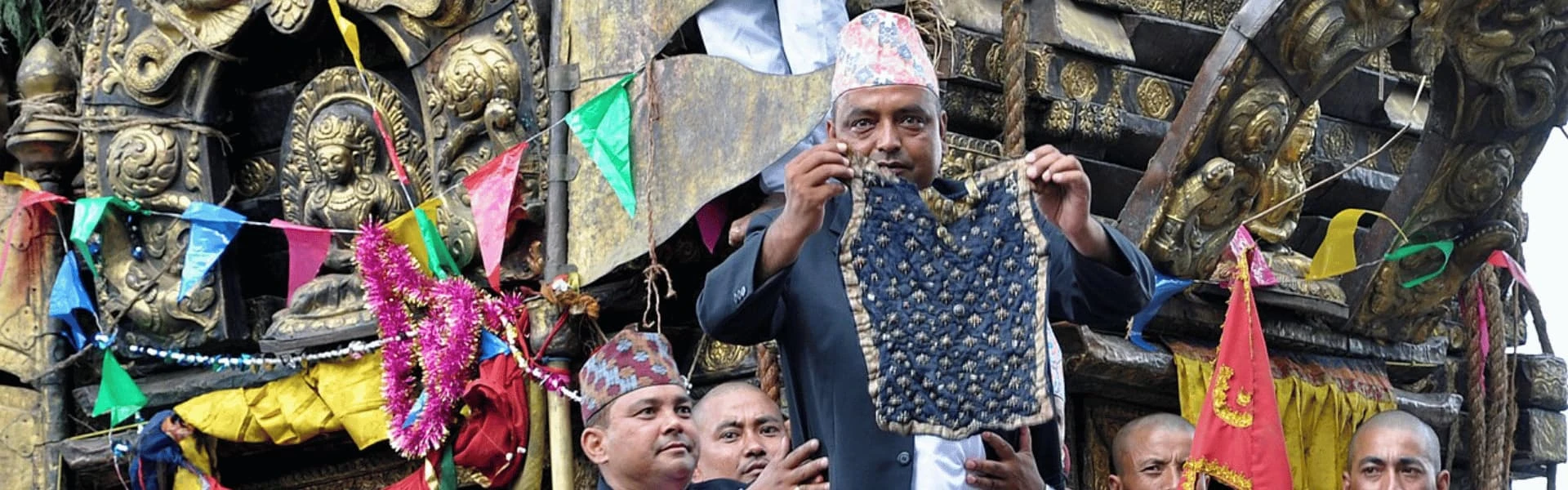
Bhoto Jatra is a centuries-old Nepali festival held in Jawalakhel, Lalitpur, where officials publicly display a jewel-studded vest (bhoto) from atop the Rato Machhindranath chariot. It marks the dramatic finale of the month-long Rato Machhindranath Jatra. According to legend, a farmer and a demon (Lakhey) both claimed the vest, so a king entrusted it to the deity until the true owner could prove ownership — no one ever has. In 2026, the ceremony was held on Saturday, June 20, in Jawalakhel.
Why Bhoto Jatra Captures the Imagination of Cultural Travellers
If you've ever wondered why thousands of people gather in an open field once a year to watch a vest get held up in the air, you're not alone. Bhoto Jatra looks simple from the outside — a few minutes of ritual at the end of a long chariot festival. But underneath it sits one of South Asia's most unusual living traditions: an unsolved, centuries-old property dispute, still re-enacted every year in front of the President of Nepal.
For cultural enthusiasts planning a trip to Nepal, Bhoto Jatra offers something rare — a festival that hasn't been reshaped for tourists. This guide covers the meaning, the legend, the 2026 dates, and how to experience it respectfully and safely.
What Does Bhoto Jatra Mean?
"Bhoto Jatra" combines two Nepali words: bhoto, meaning a sleeveless vest or jacket, and jatra, meaning festival. Together, the name translates to "the Vest-Showing Festival." Locally, it's also called Bhoto Dekhaune Jatra — "the festival of showing the vest."
The name refers to one object: a black, jewel-studded vest held up to the crowd from a tall wooden platform. Despite its modest size, this single garment has anchored a major religious and cultural event in the Kathmandu Valley for generations.
Bhoto Jatra is not a standalone festival. It's the closing ceremony of a much larger event, the Rato Machhindranath Jatra (also spelt Rato Machindranath Jatra), one of the longest-running chariot festivals in the world.
The Story Behind Bhoto Jatra: Legend of the Farmer and the Jewelled Vest
Like most Newar festivals, Bhoto Jatra is rooted in oral legend rather than a single written record, so versions vary slightly by storyteller. The core narrative, however, stays consistent.
A Jyapu farmer from the Kathmandu Valley once cured a painful eye ailment suffered by the wife of Karkotak Nagraj, the serpent king believed to rule beneath Taudaha Lake. Grateful for the cure, the Nagraj rewarded the farmer with a vest embroidered with precious jewels.
The farmer wore his new vest constantly — until one day, while working in his fields, he set it aside, and it disappeared. Legend says a Lakhey, a demon figure from Newar folklore, had stolen it.
Years later, at the Rato Machhindranath festival, the farmer spotted the Lakhey wearing his vest. A heated dispute broke out in front of the crowd, and the matter was brought before the king. Without solid proof from either side, the king made a decision that shaped the centuries that followed: he entrusted the vest to the deity Rato Machhindranath, to be returned only when someone could prove rightful ownership beyond doubt.
No one ever has. So every year, the vest is held up and shown to the crowd from every direction — a quiet, recurring invitation for the true owner to finally step forward.
What Is the Origin of the Rato Machhindranath Festival?
The wider Rato Machhindranath Jatra dates back to the Licchavi era, roughly the 7th century AD, during the reign of King Narendra Deva. Tradition holds that a 12-year drought struck the valley after the sage Gorakhnath trapped the rain-bringing serpent deities (Nagas) in meditation. To free them, the king sent a delegation to Assam, India, to bring Gorakhnath's own teacher, Rato Machhindranath, back to the valley. When the deity arrived, the Nagas were released, the rains returned, and the annual chariot procession began — a tradition that has continued for roughly 1,300 years.
Bhoto Jatra 2026: Date, Time, and Location
When Is Bhoto Jatra 2026?
Bhoto Jatra never falls on a fixed Gregorian date. It follows the Nepal Sambat lunar calendar and depends on exactly when the Rato Machhindranath chariot reaches Jawalakhel after weeks of being pulled through Patan's streets. Astrologers and the Guthi Sansthan, the government body managing the festival, confirm the date only as the chariot procession nears its end.
In 2026, the chariot reached Jawalakhel from Lagankhel on the evening of June 19, and the Rato Machhindranath Bhoto Jatra ceremony was held the next day, Saturday, June 20 — the auspicious day of Kumar Khasti, also called Sithi Nakha, on the Nepali calendar. Earlier estimates had pointed to late May or early June, which shows how much the date can shift even within the same season.
For travellers planning, expect Bhoto Jatra to fall somewhere between late May and late June, with the exact date confirmed only a week or two in advance.
Where Is Bhoto Jatra Held?
Bhoto Jatra Jawalakhel takes place on the open grounds of Jawalakhel in Lalitpur (Patan), on the western edge of the city near Jawalakhel Zoo. This is the traditional finishing point of the Rato Machhindranath chariot's month-long route through Patan's old town.
Bhoto Jatra 2026 at a Glance
| Detail | Information |
|---|---|
| Festival name | Bhoto Jatra (Bhoto Dekhaune Jatra) |
| Part of | Rato Machhindranath Jatra |
| 2026 date | Saturday, June 20, 2026 |
| Typical time window | Late afternoon, around 3 PM–5 PM |
| Location | Jawalakhel, Lalitpur (Patan) |
| Ceremony duration | 2–3 hours |
| Calendar basis | Nepal Sambat lunar calendar (Jestha month) |
| Public holiday | Yes, in Lalitpur and parts of Kathmandu Valley |
| Typical attendees | President of Nepal, Kumari (living goddess), Guthi Sansthan |
How the Bhoto Jatra Ceremony Unfolds
When the chariot finally arrives at Jawalakhel, the ceremony follows a sequence that has barely changed in generations:
The chariot is parked. The towering wooden chariot, built without a single iron nail, is positioned on the Jawalakhel grounds.
Officials and dignitaries take their places. The President of Nepal, government representatives, and Guthi Sansthan officials gather near the chariot.
The Kumari arrives. Kathmandu's living goddess is brought to the site to bless the proceedings, adding a sacred layer to the event.
A senior official climbs the chariot. A representative of the Guthi Sansthan or a senior government officer ascends the structure carrying the bhoto.
The vest is shown in four directions. It's held up to the north, south, east, and west, then to the sky, then to the crowd below.
The unanswered question is asked. As has happened every year for generations, the crowd is asked whether anyone can prove ownership of the vest.
The bhoto is put away for another year. With no claimant, the vest is stored again until the next Rato Machhindranath Jatra.
Throughout, traditional music, ceremonial hymns, and crowd cheers fill the grounds, making the final minutes of the festival feel more like a live performance than a static ritual.
Rato Machhindranath Jatra vs. Bhoto Jatra: What's the Difference?
People often use "Bhoto Jatra" and "Rato Machhindranath Jatra" interchangeably, but they aren't quite the same thing.
Rato Machhindranath Jatra is the full festival — a month-long chariot procession through Patan honouring Rato Machhindranath, the deity of rain and good harvest.
Bhoto Jatra is the final ceremony of that festival — the single afternoon when the jewelled vest is publicly displayed at Jawalakhel.
In short, every Bhoto Jatra is part of a Rato Machhindranath Jatra, but the wider festival includes weeks of chariot-building, processions, and rituals before that final day.
Bhoto Jatra vs. Other Major Kathmandu Valley Festivals
Cultural travellers often plan their Nepal trips around the festival season. Here's how Bhoto Jatra compares to two other major Kathmandu Valley festivals:
| Festival | Main Location | Typical Timing | Core Tradition | Duration |
|---|---|---|---|---|
| Bhoto Jatra | Jawalakhel, Lalitpur | Late May–June (lunar) | Public display of a jewelled vest; finale of a chariot festival | Single afternoon |
| Indra Jatra | Kathmandu Durbar Square | September | Kumari chariot procession and masked dances honouring Indra | About 8 days |
| Gai Jatra | Kathmandu Valley-wide | August | Costume procession honouring deceased family members | 1 day, with related events |
If your travel dates only allow for one Kathmandu Valley festival, Bhoto Jatra stands out for its combination of state ceremony, ancient folklore, and a genuinely unresolved mystery at its centre.
How to Attend Bhoto Jatra: A Festival Guide for Cultural Enthusiasts
Getting to Jawalakhel
Jawalakhel sits in Lalitpur, roughly 20–30 minutes by taxi from Thamel or central Kathmandu under normal traffic. On Bhoto Jatra day, expect heavier congestion, so:
- Book a hotel in Patan or Jawalakhel if you want to walk to the venue.
- Use ride-hailing apps or taxis well ahead of the ceremony's start time.
- Avoid driving yourself, since road closures around the chariot route are common.
Best Viewing Spots
- Arrive at least 90 minutes before the expected display time to find a clear sightline.
- The open ground around the chariot offers the best direct view, but it fills up fast.
- Rooftops and upper floors of nearby buildings, where accessible, offer a wider view of the crowd and chariot together.
- Joining a small guided group often secures a better vantage point than navigating alone.
What to Wear and Bring
- Lightweight, modest clothing — this is a religious event, not a street party.
- Comfortable closed shoes, since you'll likely be standing for hours.
- Water, a hat, and sun protection, since the ceremony often runs in strong afternoon heat.
- A power bank, since phone networks get congested in dense crowds.
Etiquette Tips for Respectful Participation
- Don't push toward the chariot platform; space is shared, especially near priests and officials.
- Avoid loud commentary during prayers and hymns.
- Photography is generally welcome, but keep flash photography to a minimum near the ceremony itself.
- Follow the lead of local families around you — most have attended for years and know the unspoken rules.
Can Tourists Attend Bhoto Jatra?
Yes. Bhoto Jatra is open to the public, including foreign visitors. No ticket or permit is required to stand in the open grounds at Jawalakhel. The event draws large crowds, so arriving early, dressing modestly, and staying aware of your surroundings makes for a smoother, safer experience.
Why Join a Guided Bhoto Jatra Cultural Tour
Bhoto Jatra is rewarding to witness, but it's also easy to misunderstand without context. The ceremony moves fast, much of the commentary happens in Nepali, and the meaning behind each gesture isn't obvious to a first-time visitor.
- A guided Bhoto Jatra cultural tour solves that. A local guide can:
- Secure a reliable viewing spot before the crowds build up
- Translate the ritual in real time, including the legend behind each step
- Handle transport to and from Jawalakhel on a day when roads get difficult
Pair the festival with a walking tour of nearby Patan Durbar Square, a UNESCO World Heritage Site just minutes away
For cultural enthusiasts visiting Nepal specifically for the festival season, booking ahead matters. Bhoto Jatra's exact date is confirmed only days in advance, so a flexible, locally connected tour operator is far better positioned to adjust your itinerary than a fixed online booking made months out.
If your 2026 or 2027 travel plans include the Kathmandu Valley, reach out early to book your Bhoto Jatra cultural tour and avoid scrambling once the date is officially announced.
Frequently Asked Questions About Bhoto Jatra
1. What does Bhoto Jatra mean?
"Bhoto Jatra" means "Vest Festival" in Nepali. Bhoto refers to a sleeveless vest, and jatra means festival. It's also called Bhoto Dekhaune Jatra, or "the festival of showing the vest," named after the jewel-studded garment displayed during the ceremony.
2. When is Bhoto Jatra celebrated?
Bhoto Jatra follows the lunar Nepal Sambat calendar, so its date shifts each year. It typically falls between late May and late June, once the Rato Machhindranath chariot reaches Jawalakhel. In 2026, the ceremony was held on Saturday, June 20.
3. Where does Bhoto Jatra take place?
Bhoto Jatra is held on the open grounds of Jawalakhel in Lalitpur (Patan), at the end of the Rato Machhindranath chariot's month-long procession through Patan's old town, near Jawalakhel Zoo.
4. What is the story behind Bhoto Jatra?
According to legend, a serpent king gave a jewelled vest to a farmer who cured his wife's eye ailment. A Lakhey later stole it, sparking a dispute the king couldn't resolve, so the vest was entrusted to Rato Machhindranath until proven otherwise.
5. Is Bhoto Jatra a public holiday in Nepal?
Yes. Bhoto Jatra is typically declared a public holiday in Lalitpur and parts of Kathmandu Valley, since it draws massive crowds and significant road closures around Jawalakhel and the surrounding festival route.
6. How long does the Rato Machhindranath Jatra last?
The full Rato Machhindranath Jatra runs for about a month, including chariot construction, several stages of procession through Patan, and pauses for rituals, before concluding with the single-day Bhoto Jatra ceremony at Jawalakhel.
7. Can foreign tourists attend Bhoto Jatra?
Yes, Bhoto Jatra is open to everyone, including international visitors. No ticket or registration is required. Dress modestly, arrive early for a good viewing spot, and follow local etiquette, since it remains an active religious ceremony, not a staged show.
8. Has anyone ever claimed the bhoto vest?
No. Despite the ceremony being repeated for generations, no one has ever come forward with conclusive proof of ownership. The vest remains in the custody of Rato Machhindranath's priests, and the same question is asked again every year.
9. Is Bhoto Jatra the same as Rato Machhindranath Jatra?
Not exactly. Rato Machhindranath Jatra is a full month-long chariot festival in Patan. Bhoto Jatra is its closing ceremony — the specific afternoon when the jeweled vest is displayed publicly at Jawalakhel.
Final Thoughts
Bhoto Jatra packs a lot into a single afternoon: a centuries-old legend, a living goddess's blessing, a head of state in attendance, and a mystery that's never been solved. For cultural enthusiasts, it's one of the few major South Asian festivals that hasn't been rebuilt around tourism — it still runs on its own terms, exactly as it has for generations.
If your Kathmandu Valley itinerary lines up with festival season, build your trip around the Bhoto Jatra date once it's confirmed, and consider a local guide who can help you watch it with context, not just curiosity.
Contact us via email or WhatsApp us at +9779849790153, if you would like to experience this popular Bhoto Jatra Festival of Nepal.
References & Useful Links:

Anil Lamsal
Call us on WhatsApp+977 9849790153OrChat with us