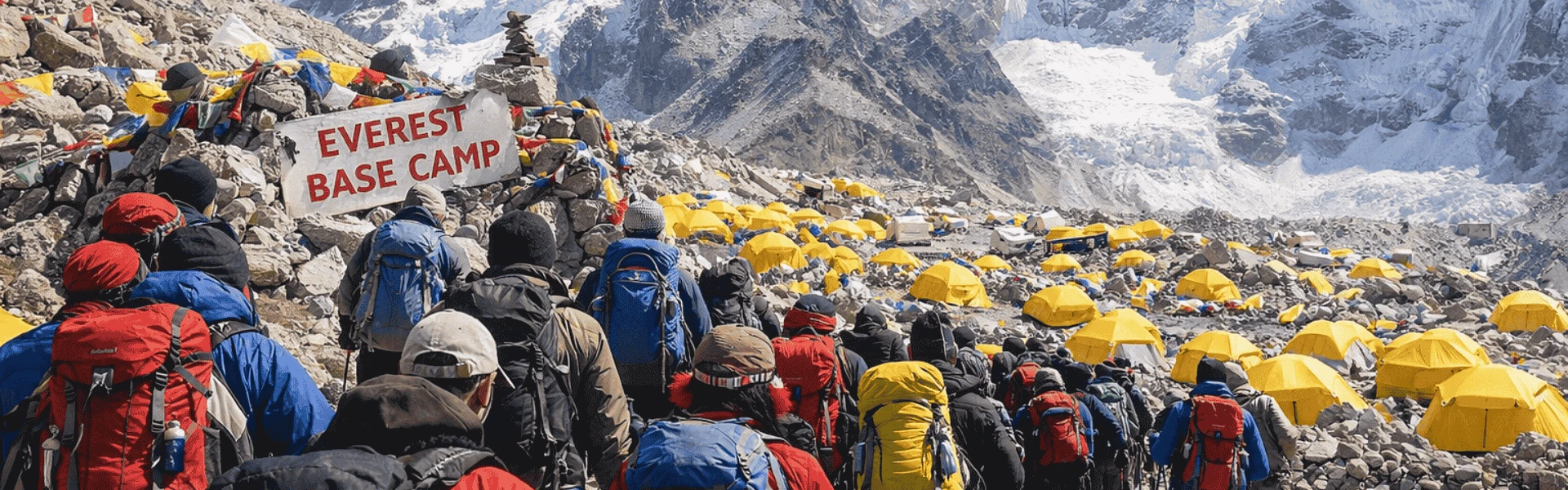
Everest Base Camp is crowded because it is the world’s most famous trek. Easy Lukla flights, short 12–14-day itineraries, strong social media exposure, and bucket list appeal attract thousands of trekkers annually. April and October are the busiest months. However, choosing shoulder seasons or alternative routes like Gokyo Valley or Three High Passes can reduce crowds significantly.
Everest Base Camp Crowds Explained
If you search online, you will see photos of long lines of trekkers near Lukla, busy teahouses in Namche Bazaar, and large groups walking toward Everest Base Camp. Many travellers ask us Why is Everest Base Camp so crowded? Is Everest too crowded to enjoy? Should I still trek there?
Everest Base Camp is the world's most famous trek. Thousands of people visit every year. But crowds do not happen by accident. Clear reasons explain why the Everest trail gets so busy.
In this complete guide, you will learn:
- How many people trek to Everest each year
- What makes Everest more crowded than other Nepal treks
- When peak season happens
- Whether crowds ruin the experience
- How to avoid busy trails
- The best quieter alternatives
How Many People Trek to Everest Each Year?
The Everest region welcomes tens of thousands of trekkers every year. Sagarmatha National Park issues a high number of trekking permits annually. However, the visitors also depends on the time and the season.
Most visitors come from:
- United States
- Europe
- Australia
- Asia
The Everest Base Camp trek remains Nepal’s most internationally recognised trekking route.
During peak months like October and April, the trail feels especially busy because most trekkers follow the same path from Lukla to Base Camp.
Unlike the Annapurna region, which offers multiple route options, the Everest Base Camp route follows a single main corridor. That design naturally increases visible crowd density.
What Makes Everest Base Camp So Popular?
Several strong factors drive the popularity of the Everest trek. The name Mount Everest is popular due to its being the highest peak in the world. Who doesn’t want to see the highest peak of the world from the base camp? Within 10-12 days of walking, you can reach the Everest Base Camp. Hence, both beginners and experienced travellers want to step into the EBC once in a lifetime. This is the main reason why EBC Trek is so popular.
1. Mount Everest Is the Highest Mountain on Earth
People feel emotionally connected to Mount Everest. Even if they do not climb the summit, they want to stand near it.
The idea of visiting the base of the tallest mountain in the world carries a strong psychological appeal.
For many travellers, Everest sits on their lifetime adventure list.
2. Easy Access Through Lukla Airport
The flight from Kathmandu to Lukla takes about 30 minutes.
That short flight reduces total trekking time. You avoid long bus journeys that other regions require.
Because access feels convenient, more people choose Everest over remote areas like Upper Dolpo or Kanchenjunga.
However, Lukla flight congestion becomes common in peak season. Flights get delayed, and schedules shift.
Some travellers even do the Everest Heli Tour within 4-5 hours and reach the Base Camp within a day from Kathmandu.
3. Perfect Length for Vacation Time
The classic Everest Base Camp itinerary takes 12 to 14 days.
Most travellers can fit that timeframe into paid time off. They do not need a month-long expedition.
That flexibility increases demand significantly. The most popular Everest trek package is 14 Days Everest Base Camp Trek.
4. Strong Global Marketing and Social Media Influence
Social media has changed trekking.
You constantly see:
- Everest signboard photos
- Sunrise at Kala Patthar
- Prayer flags with snow peaks
- Helicopter shots over Everest
This constant visibility drives more people to choose Everest. The Everest trail benefits from decades of international exposure.
5. Well-Developed Infrastructure
The Everest region offers:
- Comfortable teahouses
- Reliable food options
- Experienced Sherpa guides
- Good rescue coordination
- Strong communication networks
First-time trekkers often choose Everest because it feels structured and supported. That comfort increases traffic.
When Is Everest Base Camp Most Crowded?
Timing matters in this case. Most of the popular trekking trail in Nepal is crowded during the months of the Spring & Fall including Everest.
Peak Season Months:
- April
- October
High Season:
- March to May
- September to November
During these months:
- Skies remain clear
- Weather stays stable
- Mountain views appear sharp
- Trails remain dry
Because conditions feel ideal, most trekkers choose these months. Teahouses fill quickly. Dining halls get crowded. The Lukla airport becomes busy. If you travel in October, expect heavier trail traffic between Lukla and Namche Bazaar.
Why Everest Feels More Crowded Than Annapurna or Manaslu
Many trekkers compare Everest vs the Annapurna crowds. As mentioned above, the name Everest is itself enough to make the trail crowded. The moment you fly from Kathmandu to Lukla, you can start the trek on the same day.
Everest feels busier because:
- It follows one main route.
- It attracts stronger global branding.
- It offers faster air access.
- It does not require restricted permits like Manaslu.
The Manaslu Circuit Trek limits independent trekking and requires licensed guides. That regulation controls crowd size. Everest allows freer access, so numbers increase. No trekkers need a restricted permit card for the Everest Trek.
Check our Everest vs Annapurna Trekking for more details.
Is Everest Base Camp Too Crowded to Enjoy?
The honest answer: it depends on expectations. During the trek, you will often find many trekkers. Also, the trail can be noisy due to heavy traffic. It depends on how social a person you are during the trek. If you like to walk and socialise with other trekkers, then you can definitely enjoy the crowded EBC Trek. You will see other trekkers. You will share trails. You will meet groups in dining halls.
But:
- The Himalayas still feel vast.
- Higher elevations spread people out.
- Early morning hiking remains peaceful.
- Side viewpoints feel quiet.
Most congestion happens in the lower sections between Lukla and Namche. After Tengboche, the trail feels more open.
Does Overcrowding Impact the Experience?
Overcrowding can create:
- Limited room options in peak season
- Shared dining space
- Slower movement in narrow sections
- Flight delays in Lukla
However, smart planning reduces most problems.
When you trek with an experienced operator like Mountain Eco Trails, you secure rooms in advance and schedule departures strategically. Early departures reduce trail overlap. Small group trekking also improves comfort.
Environmental Impact and Overtourism in Everest
Everest overcrowding has raised environmental concerns.
More trekkers means:
- Increased waste
- Greater pressure on local resources
- Strain on the teahouse infrastructure
Sagarmatha National Park now enforces waste return systems and sustainability rules. Responsible trekking matters more than ever.
Mountain Eco Trails promotes:
- Leave No Trace principles
- Waste awareness
- Cultural respect
- Sustainable travel practices
Overtourism challenges exist, but responsible operators actively work to reduce impact.
How to Avoid Crowds on the Everest Trail
You can still enjoy Everest without heavy congestion.
1. Choose Shoulder Seasons
Late November and early March see fewer trekkers. Weather remains manageable, though colder. Clear skies often continue after peak months end.
2. Start Early Each Morning
Most groups leave around 7:30–8:00 AM. If you leave at sunrise, you walk quieter sections and enjoy better photography.
3. Select Alternative Everest Routes
Instead of the classic Everest Base Camp path, consider quieter options.
Everest Three High Passes Trek
Longer and more challenging. Fewer casual trekkers attempt it.
Offers turquoise lakes and panoramic views with lighter foot traffic.
Scenic and less commercial.
Traditional route with gradual ascent and lower crowd density.
These alternatives reduce congestion while preserving the Everest views.
Are Teahouses in Everest Full During Peak Season?
Yes, in October and April, teahouses can fill quickly. However, organised groups book rooms in advance. Booking early solves most problems. That’s why when you book the Everest Base Camp Trek with Mountain Eco Trails, we pre-book your accommodation so that you can enjoy the trek without any stress.
Is Everest Still Worth Trekking Despite Crowds?
Yes. Absolutely, despite the heavy traffic and crowd, Everest Trek is still a go to destination for any travellers.
Everest remains:
- Culturally rich
- Spiritually meaningful
- Visually breathtaking
- Historically iconic
You experience:
- Sherpa hospitality
- Buddhist monasteries
- Suspension bridges
- Himalayan panoramas
Crowds do not erase the scale of the mountains. They only remind you that many people share the same dream.
Smart Planning for a Better Experience
If you want to avoid the Everest crowd somewhat, then smart planning is necessary. You improve your Everest experience by:
- Travelling outside peak dates
- Private Everest Trek
- Booking experienced local guides
- Adding acclimatisation days
- Choosing alternative routes
Mountain Eco Trails designs itineraries that balance comfort, safety, and quieter experiences.
FAQS
Why is Everest Base Camp so crowded?
Everest Base Camp is crowded because it is the world’s most famous trek. Easy Lukla flights, a 12–14 day itinerary, strong social media exposure, and bucket list appeal attract thousands of trekkers every year, especially in April and October peak seasons.
When is Everest Base Camp most crowded?
Everest Base Camp is most crowded in April and October. These months offer clear skies and stable weather, which attract the highest number of trekkers. Trails, teahouses, and Lukla flights experience heavy traffic during these peak seasons.
How can I avoid crowds on the Everest trail?
You can avoid crowds by trekking in shoulder seasons like late November or early March, starting your hikes early each day, or choosing alternative routes such as Gokyo Valley, Three High Passes, or Everest via Jiri.
Is Everest too crowded to enjoy?
Everest is not too crowded to enjoy. While lower sections may feel busy in peak months, higher elevations feel peaceful. Smart planning and alternative routes help create a quieter and more enjoyable trekking experience.
Final Thoughts – Why Everest Gets Crowded (And Why It Still Inspires)
Everest Base Camp is crowded because it is the world’s most famous trek. Its accessibility, short itinerary, global marketing, and bucket list status attract thousands every year. April and October remain the busiest months. But crowds do not define Everest. The Himalayas remain massive. The culture remains authentic. The journey remains life-changing.
If you plan wisely, you can enjoy Everest without feeling overwhelmed.
Do not hesitate to reach out to us via email or WhatsApp us at +9779849790153 to plan this Everest Trek.

Anil Lamsal
Call us on WhatsApp+977 9849790153OrChat with us