Everest Base Camp Silent Festival Announced for October 2026
This article is based on an original news report published by The Himalayan Times. Full news credit goes to The Himalayan Times.
Everest Base Camp may soon become the stage for an unusual meeting of music, adventure and environmental awareness. The Green Tara Foundation has announced plans to organise The Base Camp Sessions, described by organisers as the world’s first silent music festival at Everest Base Camp, on October 17, 2026.
Instead of broadcasting music through loudspeakers, participants will listen through LED wireless headphones. The proposed format is designed to deliver a live festival experience while limiting noise in one of the world’s most sensitive mountain environments.
Organisers are also seeking Guinness World Records recognition for the highest-altitude silent-headphone event. That recognition has not yet been confirmed.
Everest Base Camp Silent Festival: Key Facts
| Event detail | Announced information |
|---|---|
| Event name | The Base Camp Sessions |
| Proposed date | October 17, 2026 |
| Location | Everest Base Camp, Nepal |
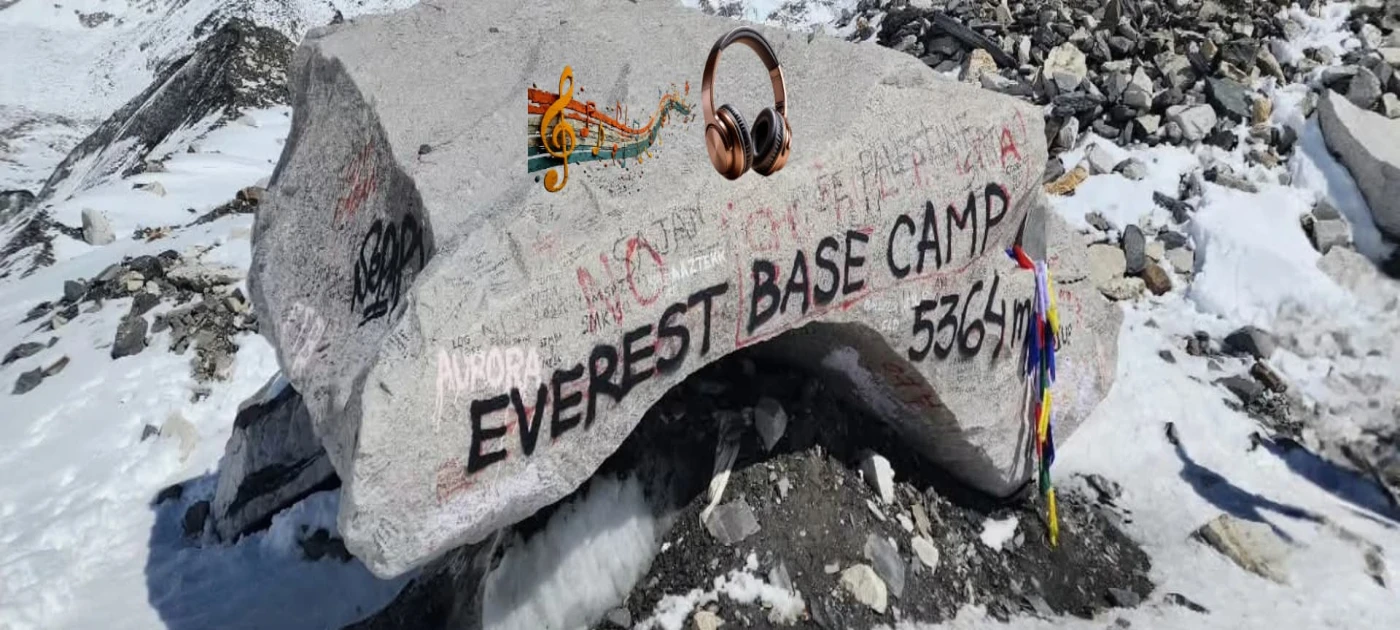
| Elevation | 5,364 metres |
| Festival format | Music transmitted through LED wireless headphones |
| Trek requirement | Proposed 12-day guided trek through the Khumbu |
| Kathmandu event | Parallel gathering limited to 1,000 participants |
| Online access | Proposed global livestream with a US$1 pass |
| Environmental focus | Leave-no-trace operations and environmental fundraising |
| Guinness status | Organisers plan to apply; record not yet confirmed |
What are the Base Camp Sessions?
The Base Camp Sessions are a proposed high-altitude silent music event at the foot of Mount Everest. According to The Himalayan Times, attendance at the Base Camp venue would be restricted to people completing a 12-day guided journey through the Khumbu region.
The trek-based participation model appears intended to ensure that attendees reach the venue gradually rather than arriving solely for a one-night event. This is particularly important because Everest Base Camp stands at 5,364 metres, where high altitude, cold temperatures and rapidly changing weather require careful planning.
The organisers’ published working plan describes an expedition departing from Lukla in early October, followed by a 12-day acclimatisation trek. It also refers to medical screening, weather monitoring and a formal go-or-no-go procedure before the event. However, the plan indicates that several operational and government permissions are part of the preparation process, meaning arrangements could still change before October. Green Tara Foundation’s event plan
How Will a Silent Festival Work at Everest Base Camp?
A silent festival allows participants to hear music through wireless headphones while the surrounding venue remains largely free from amplified sound.
For the Everest event, the reported concept involves LED headphones connected to different music channels. This could allow attendees to select their preferred performance without using conventional speaker systems.
The silent format may offer several advantages at Base Camp:
- It reduces amplified noise around the mountain environment.
- It allows organisers to control sound without constructing a large speaker system.
- It creates a more personal listening experience.
- It may reduce disruption to trekkers, guides and expedition teams nearby.
- It connects the festival’s entertainment value with a visible sustainability message.
Although headphones address noise, the environmental performance of the event will also depend on waste removal, energy use, transport, sanitation and the number of participants.
Sustainability at the Centre of the Festival Proposal
The organisers say equipment will be transported under leave-no-trace procedures using yaks and limited helicopter support. Their published plan also states that the site will be dismantled after the event, to remove more material than the production brings into the area.
According to The Himalayan Times, proceeds are expected to support glacier monitoring, Sherpa community initiatives and other environmental programmes. Organisers have also pledged to publish revenue and expenditure information and release audited accounts within 90 days of the event.
These commitments could make The Base Camp Sessions more than a publicity-driven music festival. Nevertheless, its long-term environmental value should be judged through measurable results, including:
- The number of people permitted at Base Camp
- Waste generated and removed
- Helicopter movements associated with the event
- Energy sources used for production
- Local employment and Sherpa participation
- Funds ultimately directed toward community and conservation projects
Transparent post-event reporting will therefore be essential to the festival’s sustainability claims.
Why This Event Could Matter for Nepal Tourism
Everest Base Camp is already one of Nepal’s best-known trekking destinations. The trail passes through Namche Bazaar, Tengboche, Dingboche, Lobuche and Gorak Shep before reaching the base of the world’s highest mountain.
The proposed silent festival introduces a different type of tourism narrative. Rather than presenting the Khumbu only as a destination for trekking and mountaineering, it positions the region as a setting for carefully managed cultural and creative events.
If implemented responsibly, the festival could:
- Generate international media attention for Nepal
- Introduce new audiences to the Everest region
- Promote guided and acclimatisation-focused trekking
- Create work for local guides, porters, lodges and suppliers
- Strengthen conversations around responsible Himalayan tourism
- Support community and environmental projects
However, Everest Base Camp is not a conventional concert ground. Any event at this elevation must place mountain safety, local consultation and environmental protection ahead of audience size or publicity.
A Parallel Festival and Worldwide Livestream
Not everyone interested in the event will need to travel to Everest Base Camp. The announcement includes a parallel event in Kathmandu, reportedly limited to 1,000 attendees.
Organisers also plan to broadcast the festival globally through a livestream available with a proposed US$1 online pass. This digital element could make the event accessible to a worldwide audience while keeping physical attendance at Base Camp limited.
A public competition to design the festival’s headset was also announced, with an entry deadline of August 31, 2026, according to The Himalayan Times.
Is It Officially the World’s First Silent Festival at Everest Base Camp?
The event is being promoted by its organisers as the world’s first silent music festival at Everest Base Camp. It is important to present this as an organiser claim until it is independently verified.
The organisers are reportedly applying to Guinness World Records for recognition as the highest-altitude silent-headphone event. Applying for a record does not mean the record has already been awarded.
Future news updates should confirm the status of permits, performers, attendance, environmental assessment and Guinness verification before describing the proposed record as officially achieved.
Can Travellers Join the Everest Base Camp Silent Festival?
The announcement suggests that access to the Base Camp event will be linked to a designated 12-day guided trek. General Everest Base Camp trekkers should not assume that reaching Base Camp independently will provide admission.
Travellers interested in the event should wait for official information covering:
- Registration and ticket availability
- Participant limits
- Age and health requirements
- Trekking itinerary and acclimatisation schedule
- Insurance requirements
- Weather-related cancellation policies
- Permits and government approval
- Confirmed artists and performance schedule
Because the event is planned at extreme altitude, participation should be considered only through an appropriately paced, professionally managed itinerary.
Frequently Asked Questions
When is the Everest Base Camp silent festival?
The Base Camp Sessions is proposed for October 17, 2026. The date remains subject to final operational arrangements, permits and mountain conditions.
Where will The Base Camp Sessions take place?
The main event is planned for Everest Base Camp in Nepal at approximately 5,364 metres above sea level.
Why is it called a silent festival?
Participants will hear music through wireless LED headphones instead of large external speakers. The surrounding environment will therefore not be exposed to conventional amplified festival sound.
Is the Guinness World Record confirmed?
No. The organisers have announced their intention to apply for recognition as the highest-altitude silent-headphone event, but the record has not been officially confirmed.
Will there be an event in Kathmandu?
Yes. A parallel Kathmandu gathering with a reported capacity of 1,000 participants has been proposed.
Can the Everest Silent Festival be watched online?
Organisers plan to offer a global livestream through a US$1 online pass. Final access details should be checked through official event channels.
Experience the Everest Base Camp Trek with Mountain Eco Trails
The silent festival may last for one evening, but the real story of Everest unfolds throughout the trail—inside Sherpa villages, beneath the prayer flags of Tengboche, along the Khumbu Glacier and across the high Himalayan landscape.
Mountain Eco Trails offers a professionally guided 14-Day Everest Base Camp Trek with a balanced itinerary, experienced local guides and acclimatisation days in Namche Bazaar and Dingboche.
Festival attendance is not automatically included and should be confirmed separately with the official organiser. Mountain Eco Trails can, however, help travellers plan a responsible Everest journey around their dates, experience and preferred pace.
Plan your Everest Base Camp Trek:
- Email: [email protected]
- WhatsApp: +977 9849790153
- Website: Mountain Eco Trails
Source acknowledgement: Event information was originally reported by The Himalayan Times on July 17, 2026. Details may change as permits, performers and operational plans are finalised.