Can you trek in Nepal after 50, 60 or 70? Yes—but the right route and itinerary matter more than age. This practical guide compares senior-friendly Nepal treks by altitude, walking time, terrain, comfort and support.
Trekking in Nepal after 50: Choosing right trails for your fitness not age
Nepal Trekking for Seniors: Choosing the Right Trail for Your Fitness, Not Your Age
There is no birthday after which the Himalayas suddenly become off-limits. Travellers in their 50s, 60s and 70s trek successfully in Nepal every season. But there is also no value in pretending that age, recovery time, joint comfort and personal health never matter.
The sensible question is not, “Am I too old to trek in Nepal?” It is: “Which route, pace and level of support suit the person I am today?”
This guide compares the best Nepal treks for seniors using factors that actually affect the experience: altitude, ascent profile, trail surface, daily walking time, steep descents, lodge comfort, porter support and itinerary flexibility. It is designed to help you identify a rewarding challenge—not simply the easiest tour someone believes an older traveller should accept.
Can seniors trek in Nepal?
Yes. Seniors above age 50 can trek in Nepal. If you are above 50,60, &70, with the right preparation and a healthy physical state, you can trek in Nepal. There is no age limitation that determines whether you can complete a trek or not. Fitness, mobility, previous walking experience, current health, altitude exposure and itinerary determine your trekking capacity as a senior trekker.
Senior trekkers should choose a route with realistic daily distances, gradual altitude gain and enough recovery time. Trekkers with concerns involving the heart, lungs, blood pressure, balance, joints or regular medication should discuss the itinerary and maximum altitude with a qualified medical professional before departing for the trek.
The goal is not to negotiate any trekking factors but to select the right factors and complete the trek in a prepared way.
Why age alone is a poor way to choose a Nepal trek
The word “senior” is vague. It ranges from 50 to 75, even 80. Same 50 years old maynot have experience of walking, whereas, 60 years old can be a weekend walker, and 75 years old has spent several years hiking inthe Alps. A generic age label tells us very little about what each person can enjoy safely.
Senior trekkers must clarify whether they can walk 5-6 hours daily on uneven paths. Likewise, how their knees respond while descending, their experience sleeping above 2500 meters, and their flexibility for the itinerary to have extra days in the mountains. Also, the teahouse expectation and remote facilities matter.
A good and experienced trekking company should get all this information from trekkers before recommending a particular route.
What makes a Nepal trek genuinely senior-friendly?
A senior-friendly trek is not defined by the distance you cover. A short day can still contain relentless stairs, a sharp climb or a difficult descent. Likewise, a longer trail may feel manageable when the ascent is gradual, and the itinerary provides time to recover.
Look for the following features.
A manageable sleeping-altitude profile
While trekking in Nepal, sleeping point and its altitude matter a lot. A properly designed itinerary avoids unnecessary rush, includes acclimatisation where appropriate and never treats a fixed schedule as more important than symptoms.
Honest walking times and terrain
The trekking duration in Nepal is approx. but honest. The itinerary shouldn’t be rushed and should allow the trekkers to rest in between. Descending can be harder on knees and hips than climbing. So, make sure you ask about the staircases, route, longest downhill walk, and so on.
Flexibility
If your duration, recovery process and the pace are uncertain, private treks work really well. They provide flexibility and seamless travel. The guide can adjust departure times, rest stops and, where the route permits, overnight locations without creating pressure from a mixed group.
Appropriate Trekking support for seniors
During the trek, seniors get support from ground level. A porter carries the main duffel bag of a maximum of 18-20 KG. While the trekker walks with water, layers, sun protection, medication and essential personal items.
Suitable accommodation
Room privacy, stairs, toilets, warmth and access to charging may matter more with age—or simply with personal preference. Conditions are more basic in remote or high-altitude settlements, so discuss comfort honestly before the trip.
Best Nepal treks for seniors: quick comparison
There is no universally “best” trek unless and until you prepare yourself for some difficulties. The best Nepal trek for a senior traveller is the one whose hardest day, highest sleep, accommodation and recovery demands all fit that individual—not merely the route with the most famous name.
The table below is a planning guide, not a medical judgment. Walking times and conditions vary with the exact itinerary, trail changes and individual pace.
Trek | Typical trekking duration | Highest point | Typical daily walking | Best suited to | Important consideration |
Australian Camp–Dhampus | 2–3 days | About 2,060 m | 3–5 hours | First-time and low-altitude walkers | Short but may include steps |
Ghandruk Trek | 3–5 days | About 2,000 m | 3–5 hours | Cultural and lower-altitude trekking | Stone stairs and descent |
Ghorepani–Poon Hill | 4–6 days | 3,210 m | 4–6 hours | Active beginners wanting classic views | Numerous stone steps; early viewpoint climb |
Mohare Danda | 5–7 days | About 3,300 m | 4–6 hours | Quieter trails and community lodges | Some longer, more remote stages |
Everest View Trek | 7–10 days | Up to about 3,860 m | 4–6 hours | Fit walkers wanting Everest scenery | Namche climb and meaningful altitude |
Langtang Valley | 8–11 days | About 3,870 m at Kyanjin Gompa | 4–7 hours | Experienced walkers wanting a flexible valley route | Rough sections and cumulative ascent |
Annapurna Base Camp | 10–14 days, relaxed | 4,130 m | 4–7 hours | Fit seniors comfortable with stairs and altitude | Repeated ascent/descent and many steps |
Everest Base Camp | 16–20 days, senior-paced | 5,364 m; higher if Kala Patthar is included | 4–7 hours | Very fit, prepared seniors seeking a major goal | High altitude, cold, basic upper lodges and limited escape options |
1. Australian Camp and Dhampus: a gentle Himalayan introduction
Australian Camp is best for those who want just a glimpse of mountain scenery from a distance. A short itinerary around Australian Camp and Dhampus can combine forest paths, rural settlements and views towards Machhapuchhre and the Annapurna range.
Best for: first-time senior trekkers, lower-altitude preferences and short holidays.
2. Ghandruk Trek: culture, scenery and flexible access
Ghandruk is one of the best treks for seniors above 50. It not only provides mountain views but also cultural depth and scenery. The Gurung village, mountain views and range of route options make it a 3-5 day trip for seniors.
Road access allows some sections to be shortened, but stone staircases deserve attention. Travellers with sensitive knees may find descending more demanding than the altitude; poles, a porter and a route that reduces the longest descent can help.
Best for: cultural travellers, active beginners and seniors who prefer moderate altitude.
3. Ghorepani–Poon Hill: classic views, but not effortless
Ghorepani Poon Hill is already one of the best short and easy treks in Nepal for all kinds of trekkers, from kids to seniors. Although the trekking route is short, some parts of the trek contain extensive stone steps. The pre-dawn climb to Poon Hill also begins early and can be cold.
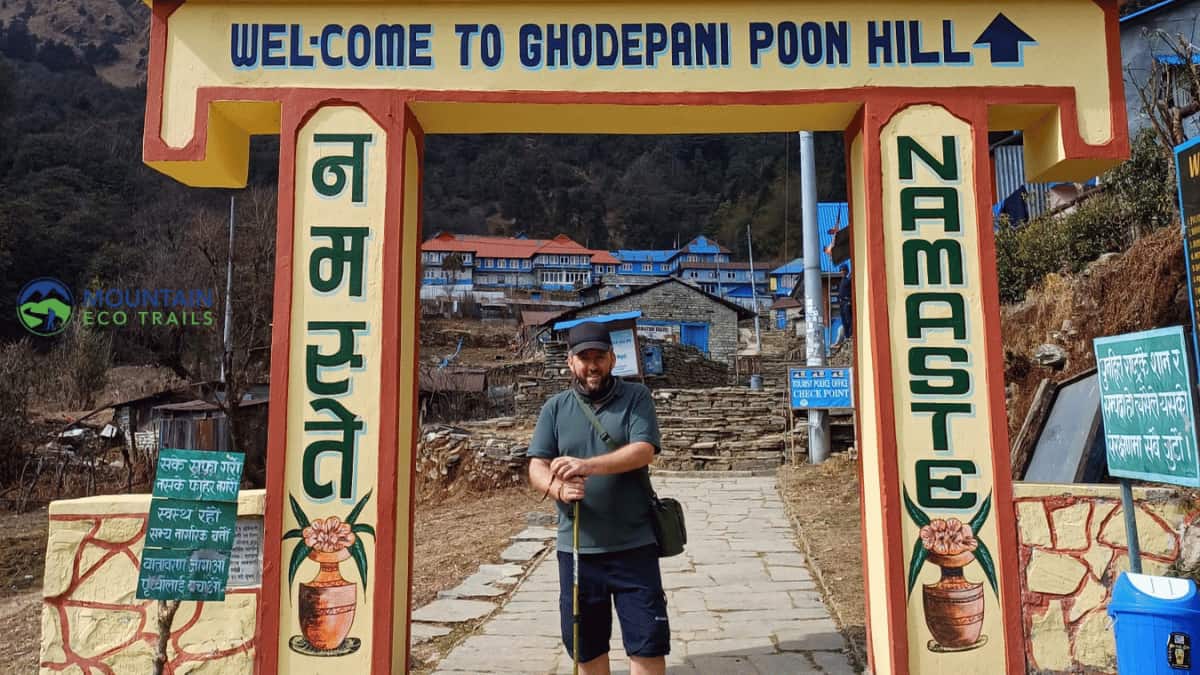
For seniors trained on hills or stairs, it can be a superb first Nepal trek. A relaxed 5–6-day itinerary plan is best. Those who skip the pre-dawn viewpoint can still enjoy Ghorepani and the surrounding forest.
Best for: active first-time trekkers who are comfortable with repeated stairs.
4. Mohare Danda: a quieter alternative to Poon Hill
Another best Senior trekking in Nepal is Mohare Danda. The trek is more community-based and less crowded in the Annapurna Region. However, for seniors with no experience can be tricky on this trail.
The trade-off is that quieter trails may have simpler facilities and fewer convenient stopping points. Some days can be longer, so the exact itinerary needs careful design. It is safe to say it is not as easy as Poon Hill Trek.
Best for: fit seniors seeking quiet trails, local connection and moderate altitude.
5. Everest View Trek: see Everest without reaching Base Camp
If you are over 50 and want to view Everest, the Everest View Trek is an excellent choice. An Everest View Trek follows the famous Khumbu route towards Namche Bazaar and, depending on the itinerary, villages or viewpoints farther ahead. It offers Sherpa culture, suspension bridges and views of Himalayan giants without continuing to Everest Base Camp.
For the seniors, the ascent to Namche can be difficult. Also, sleeping above 3,000 metres can be a challenge. Hence, a well-designed Everest View Trek itinerary with proper acclimatisation and avoiding rushing the return.
Best for: fit seniors who want Everest scenery and Sherpa culture without the full EBC commitment.
6. Langtang Valley: rewarding for capable senior trekkers
Langtang Valley combines forests, mountain settlements and a dramatic upper valley. You can reach the starting point within 6-7 hours' drive from Kathmandu. The trek may be accessible and short but needs excellent stamina, strength, & endurance.
Trail conditions can be uneven, daily walking can be substantial, and the cumulative climb to Kyanjin Gompa deserves respect.
For seniors, this 8 Day Langtang Valley Trek Itinerary can take another 2-3 days extra to complete. The hardest part will be the optional hike between Kyanjin Ri and Tsergo Ri.
Best for: active, experienced senior trekkers.
For now, the Langtang Valley Trek is closed due to recent flooding in Rasuwa District on August 26th 2026.
7. Annapurna Base Camp: possible for fit seniors, but stair-heavy
Annapurna Base Camp is doable for many prepared senior trekkers over 50 and 60. The trek offers changing landscapes, close mountain views and the sense of completion of reaching near the 10th highest peak in the world.
The trek is challenging in itself due to altitude, repeated ascent & descent, and stone staircases. For the senior standard, the Annapurna Base Camp Trek itinerary may be too rushed.
A senior-friendly Annapurna Base Camp trek should contain a longer routine, sensible overnight stops and porter support.
Best for: well-trained seniors with good balance, strong knees and multi-day walking experience.
8. Everest Base Camp trek for seniors: a serious but realistic goal
Everest Base Camp Trek is never an easy trek for any age group. The trek involves lengthy exposure to high altitude, cold conditions, rough ground and increasingly basic facilities. Yet a fit, medically prepared older trekker with sufficient time can reasonably do it.
The senior- friendly EBC Trek itinerary shouldn’t be a standard itinerary. It should provide a gradual ascent, acclimatisation, shorter transitions where feasible, a contingency day and an experienced personalised trekking guide.
Kala Patthar should be optional for seniors. It climbs higher than Base Camp and demands an early or cold ascent. Reaching Base Camp is already a complete achievement. Senior’s trekkers should never feel forced to add a viewpoint because it appears on a checklist.
The return also deserves attention. Several days of descending can be tiring, especially after the high point of the trek. Some seniors choose to return by Helicopter by choosing Everest Base Camp Heli Trek.
Best for: very fit senior trekkers with prior multi-day hiking experience, careful preparation and realistic expectations.
Trekking in Nepal over 50, 60 and 70
People in their 50s often bring patience and significant walking experience. However, general fitness does not replace trek-specific preparation for uneven pathways and continuous walking days.
After 60, recovery time may deserve more space in the itinerary. After 70, recent walking history, balance, joint resilience, health and medication call for especially individual planning.
At every age, private departures and porter support can expand the range of realistic options. A shorter or lower-altitude trek remains a complete Himalayan experience, not a consolation prize.
Altitude safety for older trekkers
Trekkers of any age can get altitude sickness if they are not acclimatised properly. Being young or extremely fit does not create immunity. The best measures are gradual ascent, sensible sleeping-altitude gains, acclimatisation time, honest symptom reporting and prompt descent when required.
Common early symptoms are headache, unusual fatigue, dizziness, nausea, reduced appetite and disturbed sleep. Symptoms should never be hidden to protect the whole trip. A guide needs accurate information from trekkers to make safe decisions.
Hence, trekkers should also distinguish altitude symptoms from other health problems. Breathlessness, weakness or chest discomfort should not be mistaken for normal altitude symptoms. Pre-trip advice from a qualified doctor is particularly important for travellers managing cardiovascular, respiratory or other ongoing conditions.
Check out: High Altitude Sickness and Prevention guide for more information.
How fit should a senior be for a Nepal trek?
For the moderate treks in Nepal, trekkers must be able to walk 5-6 hours a day through uneven pathways for consecutive days. Harder routes require a stronger base and longer preparation.
Hence, senior trekkers, they need to be careful while maintaining their fitness for the Nepal Trek. Walk through the hills for 4-5 hours a day with a backpack and repeat it for several days.
Include sustained climbing and descending, note joint pain and recovery, and share the result honestly with the trekking company. A 10- to 12-week plan can combine aerobic walking, stairs, leg and hip strength, balance work and consecutive-day hikes.
Guided Nepal treks for seniors: private or group?
Both private and group can work, but you may experience the difference.
A group departure may cost less and provide companionship. However, there can be a problem with flexibility. Seniors may have differences in pace, rest preferences and acclimatisation.
A private Nepal trek for seniors offers greater control. The day can begin earlier or later, rest stops can be adjusted, and route changes can be discussed around the needs of one traveller, a couple or a private party. It can be valuable and important for seniors trekking for the first time.
Ask who will guide, how large the group will be, whether overnight stops can change, what happens if one person must descend, how emergency communication works and how porter welfare is managed. A guide should monitor the group, communicate clearly and make it easy for a traveller to report discomfort without embarrassment.
Should senior trekkers hire a porter?
Yes, senior trekkers should hire a porter. A Nepal trek with porter support reduces the repetitive load on knees, hips and back and leaves more energy for walking safely. The trekker still carries a daypack containing water, spare layers, sun protection, valuables, medication and anything required before reaching the lodge.
Mountain Eco Trails provides the Duffel bag for our trekkers to make it easier to carry the weight.
We believe ethical porter treatment matters: load limits, suitable equipment, accommodation, meals, insurance and fair working conditions should be part of our system, not treated as optional charity.
Accommodation, food and comfort on the trail
Most popular trekking routes use teahouses for accommodation with basic comfort and facilities. Lower villages may offer attached bathrooms, showers and broader menus; high settlements may have simple twin rooms, shared toilets and limited heating.
Ask where private bathrooms, western-style toilets, charging and dietary support are realistically available, and whether bedrooms require steep stairs.
The common food available are senior friendly and organic. Meals like Daal Bhat, Plain Rice, Vegetables, egg items, Soup items, etc. are available.
Nepal trek for seniors’ cost
Nepal Trek for seniors can cost around USD 799 to USD 2999 per person. Low altitude treks for Seniors can cost somewhere between USD 79andto 1299, whereas high altitude treks for seniors cost around USD 1300+.
The cost of a Nepal trek for seniors depends on the route, duration, group size, accommodation standard, domestic transport and amount of private support. A properly paced & relaxed itinerary can cost more than a standard & compressed package. This is because it includes additional lodge nights, meals and staff days.
In general, a short lower-altitude trek costs less than a long high-altitude trek. A solo private departure costs more per person than a couple or small party.
Porters, room upgrades, private transport, domestic flights and helicopter services affect the total. Insurance, international flights, visas, tips and personal purchases are commonly separate.
When comparing Nepal trekking packages for seniors, examine what is included rather than choosing the lowest headline price. Ask whether the quotation covers permits, airport transfers, domestic transport, guide, porter, staff insurance, accommodation, meals, water treatment and emergency coordination.
A cheap itinerary becomes poor value if it is rushed, inflexible or excludes services the traveller reasonably assumed were included.
Need more details regarding the cost? Feel free to contact our trekking expert via email or WhatsApp us at +9779849790153.
Travel insurance and emergency planning
Travel insurance should cover the activity and the highest elevation on the actual itinerary, not merely “walking” or a holiday in Nepal. Confirm in writing whether the policy covers altitude illness, emergency medical care, helicopter evacuation, trip interruption and relevant pre-existing conditions.
Carry the policy details and emergency contact process so they can be reached offline. Some assistance companies require approval before arranging evacuation, so the guide and traveller should understand the procedure before leaving Kathmandu.
Insurance does not make a risky decision safe. It provides financial and logistical support when a genuine emergency occurs. The first response to worsening altitude illness is normally to stop ascending and descend under appropriate guidance, not to continue upwards because helicopter cover exists.
Best time for senior-friendly treks in Nepal
Spring and autumn are the main trekking seasons for all trekkers, including seniors. Autumn often offers clearer views; spring brings warmer conditions and rhododendron blooms. The best month also depends on cold tolerance, crowds, daylight and route elevation. Winter can suit lower trails but becomes severe higher up, while monsoon rain makes many paths slippery. Keep time around mountain flights and avoid a tight international connection immediately after a remote trek.
How to choose the right Nepal trek for seniors
To choose the right Nepal trek for seniors,s follow the steps below:
- The experience you want
- Your recent ability rather than what you did years ago
- The route's hardest walking day and highest sleeping point
- Enough margin for rest, contingencies, & acclimatisation
- The support that improves your safety and enjoyment.
Ask for ascent and descent figures because an average difficulty grade can hide the day's real demands.
Frequently asked questions
What is the best Nepal trek for seniors?
The best Nepal treks for seniors are Ghandruk, Poon Hill, and Australian Camp suit lower-altitude beginners; Mohare Danda suits those seeking quieter trails; Everest View and Langtang suit fitter walkers; and ABC or EBC may suit highly prepared seniors on longer itineraries.
Not all treks are best unless you are actively fit.
What is the easiest trek in Nepal for seniors?
A short Australian Camp–Dhampus or Ghandruk trek is the easiest trek in Nepal for seniors. It stays relatively low and can be adjusted using road access. Trail steps, daily ascent and personal mobility should still be reviewed.
Is 60 too old to trek in Nepal?
No. Many seniors after 60 have trekked in Nepal in the past. Recent fitness, joint health, balance, previous walking experience, altitude history and itinerary quality are more informative than age alone. A personal medical consultation may be advisable depending on the route and individual health.
Can a 70-year-old trek in Nepal?
Yes, some travellers in their 70s can trek in Nepal. A private, conservative itinerary with porter support and good exit options may be a good option.
Is Everest Base Camp safe for senior trekkers?
Everest Base Camp may be realistic for a fit, prepared senior, but it is never risk-free. High altitude, cold, rough trails and limited medical access make itinerary design essential. Extra acclimatisation, honest symptom reporting, experienced guidance and suitable insurance are crucial.
Does age increase altitude-sickness risk?
Age alone is not a reliable predictor of altitude illness. Unacclimatised trekkers of any age can be affected, and excellent fitness does not prevent it. Previous response to altitude, speed of ascent and sleeping-altitude profile are more useful planning considerations.
How many hours do seniors walk each day in Nepal?
Seniors aim to walk around 3-5 hours a day during the Nepal Trek. A shorter day with steep stairs may be harder than a longer gradual trail.
Should seniors choose a private trek?
Yes, seniors should choose a private trek for flexible pacing, additional rest, personalised support or the ability to modify overnight stops.
What should senior trekkers carry themselves?
Even with a porter, carry water, waterproof and warm layers, sun protection, essential medication, valuables, snacks and emergency information. The porter normally carries a duffel that is transported separately between lodges.
How much does a Nepal trek for seniors cost?
Senior Treks in Nepal cost between USD 799ando USD 2999 per person. The cost varies according to route, duration, group size, transport, accommodation and support. A senior-friendly itinerary may cost more than a rushed version because it includes more days and flexibility.
Walk the Himalayas at the pace that lets you enjoy them
Nepal trekking after 50, 60 or 70 is not about proving that age does not exist. It is about using experience wisely: choosing the right trail, preparing properly, allowing time and accepting support where it adds value.
The most memorable trek may be a quiet week around Mohare Danda, a comfortable journey through Ghandruk, an unhurried walk into Langtang Valley or a carefully planned approach to Everest Base Camp. The name of the route matters less than how well it fits you.
Mountain Eco Trails can design private, guided Nepal treks for seniors around your recent walking experience, preferred daily pace, altitude background and comfort expectations. Tell us what kind of traveller you are and what you hope to see. We will recommend a realistic route and explain honestly why it suits you.
Plan your Senior-Friendly Nepal Trek with us. Contact us via email or WhatsApp us at +9779849790153.
Share your age range, recent walking experience, preferred trip length and any concerns about altitude, knees or accommodation. We will suggest a route and pace for an informed discussion; personal medical advice should come from your qualified healthcare professional.

Anil Lamsal
Call us on WhatsApp+977 9849790153OrChat with us