The Everest Base Camp Trek cost ranges from USD 1400 to 2000 for the standard package. But the cost is only for the trekking part. Moreover, the cost also depends on the service you choose, level of comfort & luxury, and many other factors. Trekkers are likely to plan the budget for the EBC Trek from Home to the base camp and back home. This complete 2026/27 budget guide explains what international trekkers should realistically plan for, including Lukla flights, permits, guides, porters, teahouses, meals, insurance, equipment, tips, and hidden trail expenses. Compare guide-only, standard, private, luxury, and helicopter-return options while understanding the difference between a package price, a complete Nepal budget, and door-to-door cost from the US, UK, Europe, or Australia.
What does the Everest Base Camp Trek really cost in 2026/27? Complete Budget Guide
The Real Cost of Everest Base Camp Trek in 2026/27: From Home to Base Camp
The Everest Base Camp Trek costs about USD 1,400–2,000 for a standard guided package from a local Nepal operator like Mountain Eco Trails.
However, most international trekkers should budget USD 2,200–3,500 for their complete Nepal expenses before international airfare. Once you include flights to Nepal, insurance, equipment, tips, personal spending, and contingency money, the realistic door-to-door total is often USD 3,000–5,000 per person. Private, luxury, and helicopter-return trips can cost USD 3,000–6,000 or more.
Price estimates last reviewed: August 24, 2026. Airfares, exchange rates, lodge prices, permits, and insurance premiums can change.
Most of the Everest Base Camp prices tell only part of the story. A package might include your guide, Lukla flights, permits, meals, and teahouses—but exclude international flights, insurance, equipment, tips, Wi-Fi, charging, and weather-delay expenses.
That is where many otherwise careful trekkers underestimate their budget.
This guide examines the total cost of the Everest Base Camp Trek from three angles: the standard package, the complete Nepal journey, and the door-to-door cost from popular countries like the United States, the United Kingdom, Europe, or Australia. The goal is not to find the cheapest possible trek. It is to help experienced trekkers understand what they are paying for, compare offers fairly, and avoid financial surprises in the Khumbu.
How Much Does It Cost to Trek to Everest Base Camp?
It costs around USD 1,400 to USD 2,000 for a standard 12- to 14-day guided package to trek to Everest Base Camp. Guide-only service may look cheaper but requires travellers to pay for meals, rooms, permits, and flights separately.
However, if you choose to add on the luxury and helicopter shuttle from Everest them the cost can be more.
Everest Base Camp Trek cost at a glance
Travel style | Estimated cost per person | What the figure generally represents |
Guide-only or pay-as-you-go trek | USD 1,200–1,900 | Guide and essential logistics, with some trail expenses paid separately |
Budget guided package | USD 1,200–1,500 | Basic lodging, standard meals, permits, flights, and shared support |
Standard full-board package | USD 1,400–2,000 | Local guide, permits, Lukla flights, meals, teahouses, and core logistics |
Private or premium guided package | USD 1,800–2,800 | Private guide, smaller group, flexible service, and better lower-trail lodging |
Helicopter-return trek | USD 2,800–3,500+ | Trek to Gorak Shep or Base Camp area with a shared helicopter return |
Luxury EBC Trek | USD 4,000–6,000+ | Premium Kathmandu hotels, upgraded lodges, private support, and helicopter services |
Complete Nepal-trip budget | USD 2,200–3,500 | Trek plus visa, equipment, insurance, tips, and personal spending |
Door-to-door international budget | USD 3,000–5,000+ | Complete Nepal budget plus international airfare |
The above Everest Base Camp Costs are approximate ranges, not fixed quotations. Duration, group size, season, accommodation, porter support, inclusions, and flight arrangements can move the final price significantly.
Package Price, Nepal Budget, and Door-to-Door Cost Are Not the Same
A USD 1,500 package does not mean the complete journey will cost USD 1,500.
A useful Everest Base Camp Trek cost breakdown separates three figures.
1. The package price
This is the amount paid to the trekking company. Depending on the service, it may include:
- Kathmandu–Lukla return flights
- Trekking permits
- A licensed guide
- Porter support
- Teahouse rooms
- Breakfast, lunch, and dinner
- Airport transfers
- Kathmandu hotel nights
- Staff insurance
- Administrative costs and taxes
Never assume these services are included. Two packages with the same price can offer very different levels of support.
2. The complete Nepal trip cost
This includes the package plus expenses such as:
- Nepal tourist visa
- Travel insurance
- Personal trekking equipment
- Tips
- Trail snacks and drinks
- Showers, Wi-Fi, and charging
- Extra Kathmandu meals
- Weather-delay expenses
- Contingency money
3. The door-to-door international cost
This is the true total from your home country. It includes international airfare, airport travel, stopover costs, and any equipment purchased before departure.
A package price tells you what an operator charges for the trekking part only. A complete Nepal budget adds visa fees, insurance, equipment, tips, personal expenses, and contingency money. A door-to-door budget also includes international airfare. Compare quotations only after separating these three figures and checking every inclusion and exclusion.
Complete Everest Base Camp Trek Cost Breakdown for 2026/27
The following table helps estimate the complete journey. Do not add every figure to an inclusive package; many items may already be covered.
Cost category | Realistic planning range | Important note |
International airfare | USD 750–1,600+ | Depends on origin, dates, and connections |
Nepal tourist visa | USD 30–50 | Most EBC travellers need a 30-day visa |
Kathmandu accommodation and meals | USD 150–400 | Depends on hotel standard and extra nights |
Return Lukla flights | USD 500-550 | Route may operate through Ramechhap |
EBC permits and local fees | About NPR 6,000 | Reconfirm current local fee before departure |
Trekking guide | USD 35–50 per day | Experience and service level affect the rate |
Porter | USD 22–30 per day | Confirm load, equipment, insurance, and tips |
Teahouse room | USD 5–15 per night | More for upgraded rooms or private bathrooms |
Trail meals | USD 30–45 per day | Costs generally rise with altitude |
Water and hot drinks | USD 5–15 per day | Depends on consumption and treatment method |
Showers, Wi-Fi, and charging | USD 80–200 total | Usage and altitude make a major difference |
Travel insurance | USD 100–300+ | Must cover the trek’s altitude and evacuation |
Equipment | USD 100–800+ | Lower if you already own gear or rent in Kathmandu |
Guide and porter tips | USD 150–300+ | Depends on service, group size, and duration |
Contingency fund | USD 200–500 | For delays, extra nights, or changed arrangements |
Everest Base Camp Trek Package Cost: What Are You Paying For?
The cheapest quotation is not automatically the best value. Experienced trekkers should examine the operating model behind the price.
Budget package
A budget Everest Base Camp Trek usually costs around USD 1,200–1,500. It may use basic teahouses, shared departures, limited Kathmandu services, and fewer included extras.
Check whether it includes:
- All three daily meals
- Both Lukla flights
- A porter
- Kathmandu hotels
- Ramechhap transfers
- Staff insurance
- Airport transfers
- Taxes
- Emergency coordination
A low price can be reasonable when exclusions are clearly stated. It becomes risky when essential services are hidden behind vague wording.
Everest Base Camp Standard full-board package with Meals & Accommodation Included
A standard local package generally costs USD 1,400–2,000. This is the most practical range for travellers who want one company to coordinate flights, permits, meals, rooms, and guide services.
Our 14-Day Everest Base Camp Trek Package offers this standard package. Its exact price depends on group size and the services selected.
Guide-only or pay-as-you-go trek
A guide-only arrangement offers more control. You pay the guide service and agreed logistics in advance, then settle meals, rooms, drinks, and other expenses along the trail.
This can suit seasoned trekkers who understand teahouse travel and prefer to control their daily spending. However, the initial quote should not be compared directly with a full-board package.
Mountain Eco Trails’ 12-day EBC private guide service is structured for travellers who want professional guidance with greater control over personal trail expenses.
Everest Base Camp Trek cost with Helicopter-return package
A helicopter return saves several descent days but raises the price. Shared helicopter-return packages commonly cost around USD 2,800–3,500 or more, depending on the itinerary, flight sector, group size, and accommodation.
These trips should state where the helicopter boards. Standard commercial departures usually operate from Gorak Shep or another approved location—not from the trekking marker at Everest Base Camp.
Luxury package
Luxury EBC trips can reach USD 4,000–6,000 or more. The price may include premium Kathmandu hotels, the best available lodges, private guides, upgraded meals, helicopter transfers, and personalised support.
Luxury improves comfort and logistics, but it does not remove altitude, weather, or flight uncertainty.
Kathmandu to Lukla Flight Cost
The Kathmandu to Lukla flight cost is one of the largest fixed expenses in an EBC budget.
International travellers should currently allow approximately:
- Kathmandu–Lukla return: USD 480–520
- Ramechhap–Lukla return: approximately USD 350–400
- Kathmandu–Ramechhap shared road transfer: usually extra unless included
- Excess baggage: charged according to the airline and current allowance
Current direct Kathmandu fares are being advertised at approximately USD 240–257 each way, while Ramechhap departures are normally cheaper. Prices should be reconfirmed before booking.
Peak-season flights may operate from Ramechhap rather than Kathmandu. Summit Air states that high-season Lukla operations are rerouted through Ramechhap to reduce congestion and backlogs.
This creates expenses that a simple airfare comparison may miss:
- A four- to five-hour road transfer
- A very early departure from Kathmandu
- Private versus shared vehicle costs
- Meals during the transfer
- Extra accommodation after cancellations
- Helicopter alternatives when fixed-wing flights do not operate
Keep flexible days after the trek. Buying a helicopter seat to protect a nonrefundable international flight can cost far more than one additional Kathmandu hotel night.
Everest Base Camp Permit Cost
Trekkers do not need the expensive permit required to climb Mount Everest. Trekking to Base Camp and climbing Everest are completely different activities.
For the classic Lukla route, budget for:
- Sagarmatha National Park entry: NPR 3,000 per foreign visitor
- Khumbu local trekking fee or Trek Card: commonly quoted at NPR 3,000 for most international visitors in 2026
The Nepal Tourism Board lists the Sagarmatha National Park fee at NPR 3,000 for foreign visitors and NPR 1,500 for SAARC nationals. Local systems and fees can change, so the Khumbu charge should be verified shortly before departure.
Mountain Eco Trails arranges or explains the required permits. Ask whether permit charges are included in your quotation.
Everest Base Camp Guide and Porter Cost
A licensed Everest trekking guide generally costs USD 35–50 per day. A porter commonly costs USD 22–30 per day. Senior guides, private departures, language skills, group leadership, and peak-season demand can increase these rates.
A professional guide does more than identify the trail. The guide manages pace, rooms, checkpoints, communication, changing conditions, and emergency coordination.
Before comparing staff rates, ask:
- Does the fee include the guide’s food and accommodation?
- Is staff insurance covered?
- What equipment will the guide or porter receive?
- What is the agreed porter load?
- Are flights and local transport covered?
- Is the quoted person a licensed guide, porter-guide, or porter?
- Is the recommended tip included?
If two trekkers share one porter, the per-person cost falls. However, baggage limits should protect the porter’s working conditions—not simply maximise how much travellers can send ahead.
Everest Base Camp Food and Accommodation Cost
Teahouses make the EBC route accessible without carrying tents or expedition food. Rooms remain relatively affordable, but meals become more expensive with altitude because supplies must travel by aircraft and then by porter or pack animal.
Typical teahouse prices
Item | Lower and middle trail | Higher trail |
Basic twin room | USD 5–10 | USD 8–15+ |
Breakfast | USD 5–8 | USD 7–10 |
Lunch or dinner | USD 6–10 | USD 8–12+ |
Hot drink | USD 1–3 | USD 2–5 |
Boiled water | USD 2–4 per liter | USD 4–6 per liter |
Hot shower | USD 3–6 | USD 5–8 |
Device charging | USD 2–5 | USD 4–8 |
Wi-Fi | USD 3–6 | USD 5–10 |
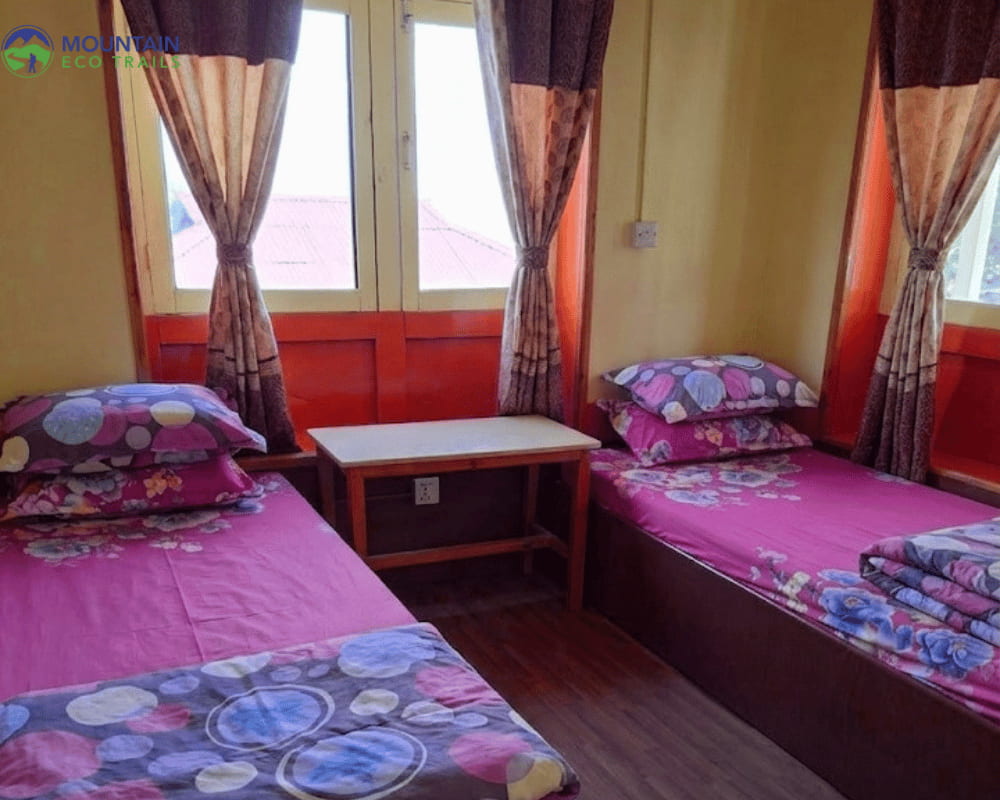
Recent 2026 teahouse guides show rooms around NPR 500–1,500, meals around NPR 600–1,400, and separate charges for boiled water, showers, charging, and Wi-Fi. Prices vary by village, season, lodge standard, and availability.
A realistic food budget is USD 30–45 per day. Larger appetites, desserts, bottled drinks, coffee, and repeated snacks will push it higher.
What Is a Realistic Everest Base Camp Trek Daily Budget?
Your daily budget depends on what the package includes.
Full-board package traveler
Allow approximately USD 15–30 per day for:
- Drinks
- Snacks
- Showers
- Wi-Fi
- Charging
- Small purchases
Package without meals
Allow approximately USD 40–60 per day for meals, drinks, basic extras, and occasional utilities.
Guide-only traveler
Allow approximately USD 50–75 per day for rooms, meals, water, hot drinks, Wi-Fi, showers, and charging. Keep additional money for permits, flights, guide fees, porter service, and tips.
Carry Nepali rupees. ATMs are available in Lukla and Namche Bazaar, but they should not be your only plan. Machines may be empty, offline, or affected by power and connectivity.
Everest Base Camp Trek Hidden Costs
Hidden-cost summary: Most unexpected EBC expenses come from services excluded from packages rather than from the trail itself. Ramechhap transfers, extra baggage, delayed flights, tips, showers, charging, Wi-Fi, bottled drinks, snacks, equipment rental, single-room upgrades, and extra Kathmandu nights can add USD 300–800 to the advertised price.
Ramechhap transfers
A quotation may include the flight but not the road journey between Kathmandu and Manthali Airport.
Flight delays
Bad weather can create extra hotel nights, meals, transport changes, or helicopter costs. Flexible time is often cheaper than emergency rebooking.
Equipment
Seasoned trekkers may already own boots, layers, and a suitable daypack. First-time Himalayan trekkers may need a down jacket, sleeping bag, poles, duffel, and cold-weather accessories.
Renting bulky items in Kathmandu can reduce the initial cost, but personal footwear should be tested well before departure.
Tips
Tips may not be included. Set aside a separate staff gratuity budget rather than using whatever cash remains at the end.
Trail utilities
One shower, one charging session, and one Wi-Fi connection can feel inexpensive. Repeating them across 10 or 12 trail days changes the total.
Single supplements and upgrades
Private rooms may be limited or unavailable at higher settlements. Paying a supplement does not always guarantee an attached bathroom or single room in Lobuche or Gorak Shep.
Extra baggage
Lukla flights have strict weight limits. Excess baggage may be charged and remains subject to aircraft capacity.
Travel Insurance Cost for Everest Base Camp Trek
Travel insurance suitable for EBC commonly costs USD 100–300, although age, nationality, trip duration, benefits, and medical history can raise the premium.
Do not choose insurance on price alone. Everest Base Camp sits at 5,364 meters, while the popular Kala Patthar hike goes higher. Many standard policies stop covering trekking around 3,000 meters.
Confirm in writing that your policy covers:
- Trekking to the itinerary’s maximum altitude
- Emergency medical treatment
- Helicopter evacuation when medically necessary
- Trip interruption
- Flight delays or cancellations where applicable
- Lost or delayed baggage
- Your nationality and country of residence
- Any pre-existing medical conditions
Some specialists recommend coverage to at least 6,000 meters for the standard EBC and Kala Patthar itinerary. Read the wording carefully; “mountain rescue” does not always mean unrestricted helicopter evacuation.
Everest Base Camp Trek Cost Including International Flights
International airfare is the most variable part of the complete trip budget. The ranges below are practical saving targets, not live ticket quotations.
Traveler origin | International flight allowance | Realistic complete trip budget |
United States | USD 900–1,600 | USD 3,100–5,200 |
United Kingdom | USD 800–1,400 | USD 2,900–4,800 |
Europe | USD 750–1,300 | USD 2,800–4,700 |
Australia | USD 850–1,500 | USD 3,000–5,100 |
These totals assume a standard guided journey. Premium economy or business-class flights, new equipment, private services, longer Kathmandu stays, and helicopter returns will increase them.
Book the Nepal trip and international flights as separate budget lines. This prevents a USD 1,500 trek package from being mistaken for a USD 1,500 holiday.
How to Reduce the Cost Without Reducing Safety
Experienced trekkers can make sensible savings without weakening the itinerary.
- Travel with a small private group and share guide or porter costs.
- Rent a sleeping bag and down jacket in Kathmandu.
- Bring a power bank and limit paid charging.
- Use treated or properly purified refill water where appropriate.
- Avoid unnecessary Wi-Fi purchases.
- Compare written inclusions, not only headline prices.
- Use a guide-only arrangement if you understand pay-as-you-go teahouse travel.
- Keep flexible days instead of relying on a last-minute helicopter.
- Choose standard lodges rather than premium rooms.
- Bring proven equipment instead of buying fashionable replacements.
Do not save money by removing acclimatisation days, buying insurance without appropriate altitude cover, overloading a porter, or hiring staff without clear insurance and working terms.
Which EBC Option Fits Your Budget?
Mountain Eco Trails offers different service levels because one package cannot suit every experienced trekker.
- Choose the 12-day private EBC guide service if you want more control over daily spending.
- Choose the 14-day complete Everest Base Camp package if you prefer one coordinated price for core logistics.
- Consider the short Everest Base Camp Trek only if its faster pace matches your experience and acclimatisation background.
- Choose the Everest Base Camp heli trek when saving descent time matters more than minimising cost.
- Consider the luxury EBC Trek for upgraded comfort, private support, and helicopter services.
For an accurate quotation, provide your travel dates, group size, preferred duration, porter needs, accommodation expectations, and whether you want a guide-only or inclusive service. A transparent quote should show both inclusions and exclusions before you pay a deposit.
Frequently Asked Questions
How much does it cost to trek to Everest Base Camp in 2026/27?
A standard guided Everest Base Camp package generally costs USD 1,400–2,000. The complete Nepal journey usually reaches USD 2,200–3,500 before international airfare. Travellers from the US, UK, Europe, or Australia should often plan a total budget of USD 3,000–5,000.
What is normally included in an Everest Base Camp Trek package?
A standard package may include Lukla flights, trekking permits, guide services, teahouse accommodation, meals, airport transfers, and some Kathmandu hotel nights. Porter service is not always included. Request a written list because packages with similar prices can cover very different services.
How much money should I carry each day on the EBC Trek?
Full-board package travellers should allow around USD 15–30 per day for drinks, snacks, showers, Wi-Fi, and charging. Travellers paying for their own rooms and meals may need USD 50–75 per day. Carry Nepali cash rather than depending entirely on ATMs.
How much do Everest Base Camp permits cost?
Foreign visitors should budget approximately NPR 6,000 for the Sagarmatha National Park entry and the current Khumbu local trekking fee. The national park charge is NPR 3,000. Local fees and systems can change, so verify them shortly before the trek.
How much do an EBC guide and porter cost?
An experienced licensed guide generally costs USD 35–50 per day, while a porter commonly costs USD 22–30 per day. Confirm whether these rates include staff meals, lodging, flights, equipment, and insurance. Tips are normally separate and should be included in the overall budget.
Is international airfare included in the EBC package cost?
International airfare is rarely included in a Nepal-based EBC package. Most local packages begin and end in Kathmandu. Travellers should budget separately for flights to Nepal, travel insurance, personal equipment, visa fees, tips, trail extras, and accommodation outside the stated itinerary.
What is the cheapest sensible way to trek to Everest Base Camp?
For experienced trekkers, a guide-only service with pay-as-you-go meals and rooms can control costs. Small groups can also share guide or porter expenses. Avoid saving through rushed acclimatisation, inadequate insurance, unclear staff conditions, or essential equipment compromises.
How much does travel insurance for Everest Base Camp cost?
A suitable policy commonly costs USD 100–300, but age, residence, duration, benefits, and medical history affect the premium. Confirm that the policy covers the itinerary’s maximum altitude and medically necessary helicopter evacuation. Standard low-altitude travel insurance is usually insufficient.
What are the highest hidden costs on the EBC Trek?
The main hidden expenses are Ramechhap transfers, excess baggage, delayed flights, tips, extra hotel nights, gear rental, hot showers, charging, Wi-Fi, bottled drinks, snacks, single-room upgrades, and emergency transport. Together, these can add several hundred dollars to the advertised package price.
Final Everest Base Camp Trek Budget Recommendation
Budget USD 3,000–5,000 per person for a realistic door-to-door Everest Base Camp journey from the US, UK, Europe, or Australia. This range covers a standard local package, international airfare, visa, insurance, basic equipment, tips, personal expenses, and contingency money. Luxury or helicopter-return travel requires a higher budget.
The cheapest figure is rarely the most useful. The best budget is the one that matches the itinerary, explains every inclusion, protects the trekking team, and leaves room for the uncertainty of mountain travel.
Plan around the complete journey—not only the number displayed beside the Book Now button. Contact our EBC Trek specialist today and plan your budget for the next adventure to the Everest Base Camp Trek.
Also check out: